Trump Xi Summit Signals Managed Rivalry
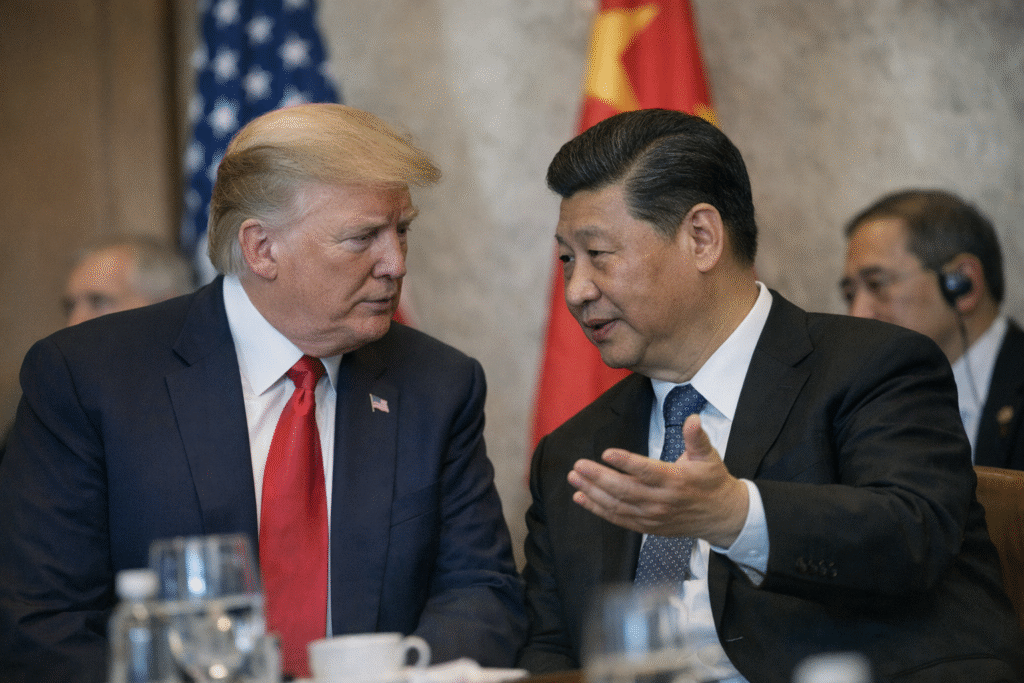
The Wall Street Journal’s article “Five Takeaways From the Trump-Xi Summit” presents a measured assessment of a high-stakes meeting that underscored both the persistence of deep structural tensions between the United States and China and the pragmatic incentives driving continued engagement. The summit, as described, did not resolve the most contentious issues dividing the two powers, but it did clarify priorities, revive stalled channels of communication, and sketch the contours of a managed rivalry likely to define the near-term trajectory of bilateral relations.
A central takeaway is that trade frictions remain entrenched, even as both sides signal a desire to stabilize economic ties. The talks reflected enduring disagreement over tariffs, industrial policy, and market access. While there were indications of willingness to revisit certain restrictions or expand targeted cooperation, neither side appeared prepared to make the kinds of concessions that would fundamentally reset the economic relationship. Instead, the emphasis has shifted toward preventing escalation and preserving limited areas of mutual benefit, particularly in sectors where decoupling would carry high costs.
Another key point highlighted is the strategic importance of communication mechanisms. The summit reportedly led to renewed commitments to maintain high-level dialogue, including military-to-military contacts that had lapsed amid rising tensions. This effort to reduce the risk of miscalculation suggests that both Washington and Beijing recognize the dangers inherent in an increasingly adversarial relationship, especially in sensitive regions such as the Taiwan Strait and the South China Sea. Restoring these channels does not resolve underlying disputes, but it provides a buffer against unintended escalation.
Security concerns remained prominent, particularly around Taiwan and regional stability. The article indicates that both leaders reiterated long-standing positions, with the United States emphasizing its commitments and China underscoring its claims of sovereignty. The absence of any substantive breakthrough on this front reflects the rigidity of core national interests, but the willingness to continue dialogue suggests a shared interest in avoiding immediate crisis.
The summit also touched on cooperation in narrower, issue-specific areas, including counternarcotics and climate-related initiatives. According to the Wall Street Journal’s reporting, these domains offer limited but meaningful opportunities for collaboration, even as competition intensifies elsewhere. Such cooperation can serve as a stabilizing factor, though it remains vulnerable to broader geopolitical shifts.
Finally, the article underscores the broader strategic framing of the relationship as one of long-term competition rather than imminent confrontation. Both governments appear to be adjusting to this reality by pursuing a dual approach: reinforcing their respective positions while maintaining engagement to manage risks. This dynamic, marked by selective cooperation alongside persistent rivalry, reflects a recalibration rather than a resolution of tensions.
Taken together, the summit outcomes portrayed in “Five Takeaways From the Trump-Xi Summit,” published by The Wall Street Journal, suggest a relationship that is neither improving nor collapsing, but instead settling into a complex equilibrium. The emphasis on communication, incremental progress, and containment of disputes points to a cautious but deliberate effort to coexist within an increasingly competitive global landscape.