Security Concerns Mount Over Qatari-Linked Presidential Aircraft Amid Scrutiny of Vetting Process
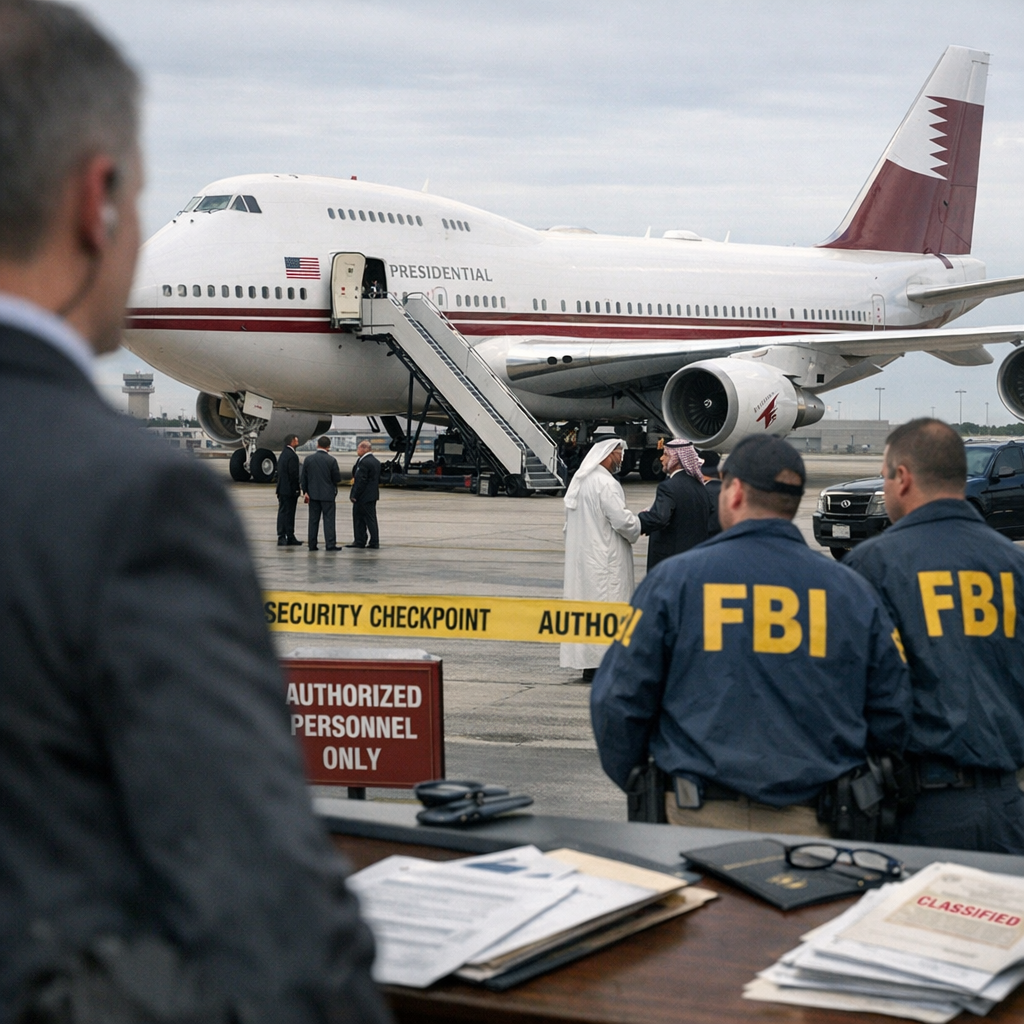
Concerns over potential security vulnerabilities in a newly acquired presidential aircraft linked to Qatar have drawn increased scrutiny, according to a report published by The Daily Wire titled “Questions Swirl Around Security Lapses for New Qatari Air Force One.”
The report describes mounting questions from lawmakers and security experts about how thoroughly the aircraft was vetted before being considered for use in a role as sensitive as transporting the president of the United States. At the center of the issue is whether standard protocols for counterintelligence, electronic surveillance detection, and structural security inspections were adequately followed.
Presidential aircraft are among the most secure and technologically complex assets in the U.S. government’s fleet. According to the U.S. Air Force’s overview of Air Force One (VC-25 aircraft), these planes are equipped with advanced communications and defensive systems. Before any plane is cleared for use as Air Force One, it typically undergoes extensive retrofitting and inspection to eliminate vulnerabilities, including the possibility of hidden surveillance devices or compromised communication systems. Even minor lapses in this process can present significant national security risks.
According to The Daily Wire’s reporting, critics are particularly concerned about the origin and prior handling of the aircraft, which may not have been subject to the same rigorous controls as domestically produced or long-vetted military planes. Questions have been raised about whether foreign involvement in the aircraft’s design, manufacture, or maintenance could introduce exploitable weaknesses, an issue often discussed in U.S. counterintelligence guidelines.
Security analysts cited in the report suggest that any aircraft with ties to external governments must undergo exhaustive deconstruction and rebuilding in secure facilities to ensure its integrity. That process can take years and cost billions of dollars, raising additional concerns about timelines and decision-making surrounding the aircraft’s deployment. A Government Accountability Office (GAO) report on presidential aircraft modernization highlights the complexity and cost of such efforts.
The controversy has also attracted attention on Capitol Hill, where some lawmakers are calling for briefings and documentation detailing the inspection and certification process. They argue that transparency, even in classified settings, is essential to maintaining confidence in presidential security measures, a principle frequently emphasized by the U.S. Congress.
Officials familiar with aviation security protocols emphasize that even hypothetical risks must be treated as credible until definitively ruled out. The nature of modern surveillance technology, including miniaturized and deeply embedded devices, makes detection increasingly difficult without complete component-level analysis, as noted in discussions of advanced threats by agencies like the National Security Agency.
The Daily Wire article underscores broader tensions between cost, diplomacy, and security in the procurement of high-profile government assets. While international partnerships can offer logistical and financial benefits, they also introduce layers of complexity that must be carefully managed.
As scrutiny continues, the issue is likely to remain a focal point for both national security professionals and policymakers tasked with ensuring the safety of the nation’s highest office.