Used EV Prices Dip as Gas Costs Shift Demand
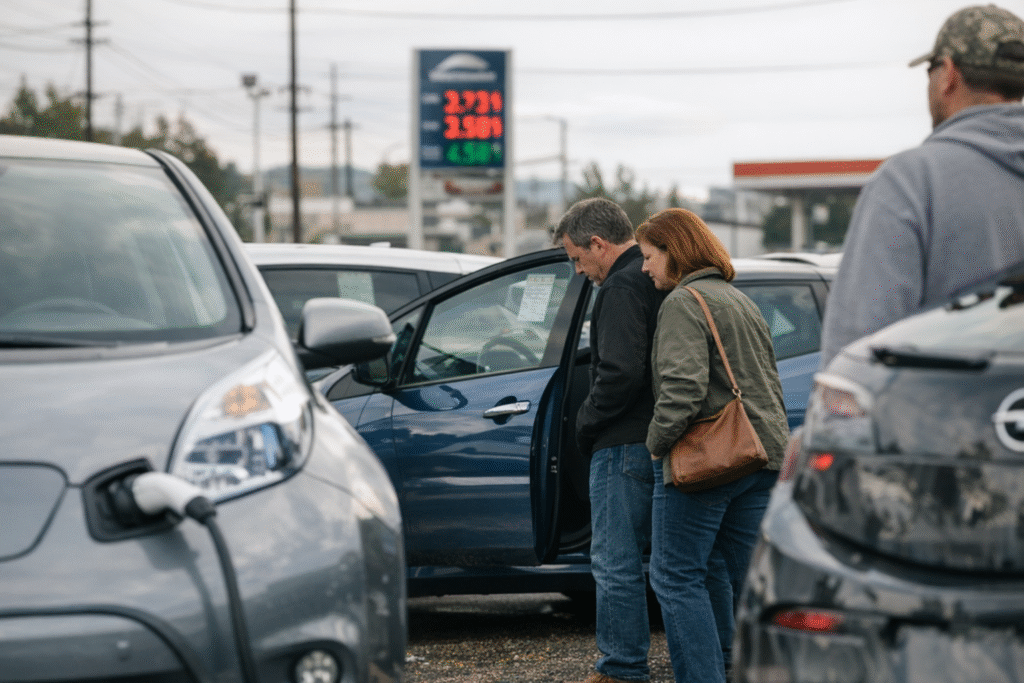
A recent Wall Street Journal article titled “EV Used-Car Prices and Gas Prices” highlights the increasingly complex relationship between the market for used electric vehicles and fluctuations in fuel costs, pointing to broader shifts in consumer behavior and automotive economics.
The report describes how falling gasoline prices in certain periods have eased some of the urgency that previously drove buyers toward electric vehicles, particularly in the used-car segment. When fuel costs spike, demand for EVs tends to rise quickly, pushing up resale values. Conversely, when gasoline becomes more affordable, the financial incentive to switch weakens, and used EV prices can soften. This dynamic has introduced a level of volatility that is less pronounced in the market for traditional internal combustion vehicles.
The Wall Street Journal notes that depreciation trends for used electric vehicles have also been influenced by rapid technological advancement and pricing strategies for new models. As automakers cut prices on new EVs or introduce improved battery ranges and features, older models can lose value more quickly. This has created a feedback loop in which consumers, aware of potential depreciation, become more cautious buyers, further pressuring resale values.
At the same time, federal and state incentives for new EV purchases have complicated the market for used models. Subsidies that significantly reduce the effective price of a new electric vehicle can make it harder for used EVs to compete on value, even when they are only a few years old. This disparity has been particularly notable in markets where incentives remain substantial and widely accessible.
The article also points to evolving consumer perceptions. While early adopters of electric vehicles were often motivated by environmental concerns or enthusiasm for new technology, more recent buyers are described as being more price-sensitive and pragmatic. For this group, the total cost of ownership, including fuel savings, maintenance, and depreciation, plays a decisive role. As a result, shifts in gasoline prices can quickly alter purchasing decisions.
Despite these headwinds, the long-term outlook for electric vehicles remains tied to broader structural changes, including tightening emissions regulations, expanding charging infrastructure, and continued investment by automakers. Analysts cited in the Wall Street Journal suggest that while short-term price swings may continue, the overall trajectory still points toward gradual electrification of the vehicle fleet.
In the near term, however, the used EV market appears likely to remain sensitive to external factors such as energy prices, policy incentives, and technological change. This sensitivity underscores the transitional nature of the current automotive landscape, where both electric and gasoline-powered vehicles coexist in a market still adjusting to rapidly shifting conditions.