Japan Joins NATO Ukraine Training Mission Effort
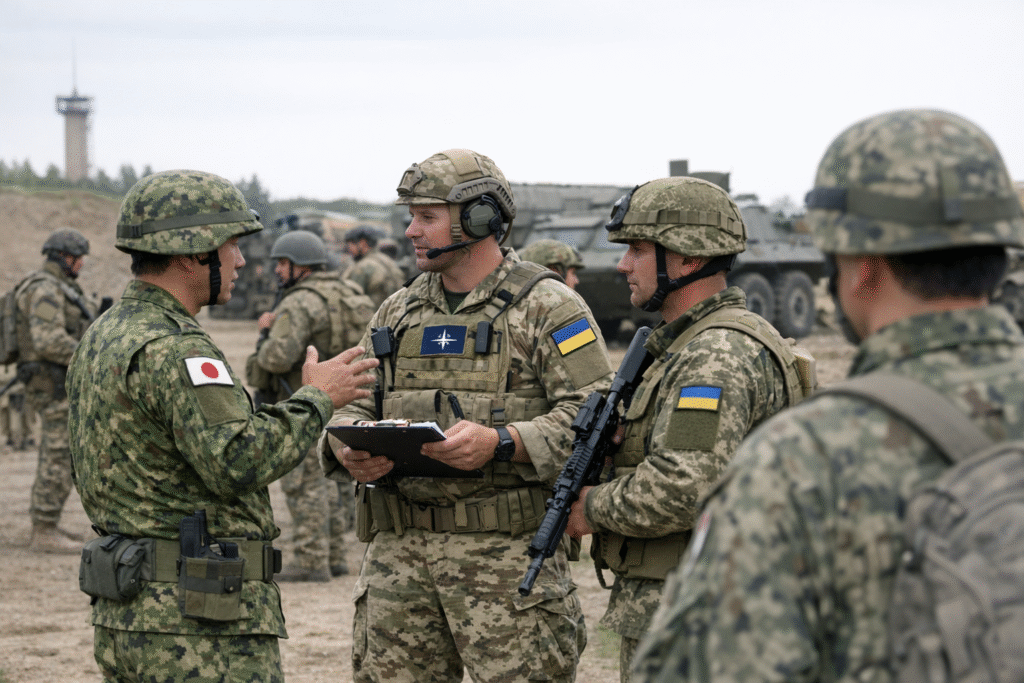
Japan has taken a further step in aligning its security posture with that of Euro-Atlantic partners, dispatching personnel to support NATO’s Security Assistance and Training for Ukraine (NSATU) initiative. The move, reported in the article “Japan deploys personnel to NATO Security Assistance and Training for Ukraine” published on NATO’s official website, underscores Tokyo’s growing engagement in European security affairs amid the ongoing war in Ukraine.
According to NATO, the Japanese personnel will be stationed at NSATU headquarters in Wiesbaden, Germany. Their role will center on contributing expertise and coordination support to the multinational effort designed to enhance Ukraine’s defense capabilities over the long term. NSATU, formally launched to streamline and expand assistance to Kyiv, focuses on training, force development, and the delivery of security aid from allied and partner nations.
Japan’s participation represents a notable evolution in its international security role. While the country has historically maintained a more restrained defense posture under its pacifist constitution, recent years have seen Tokyo deepen cooperation with NATO, driven by concerns over an increasingly volatile global security environment. Russia’s invasion of Ukraine and heightened tensions in the Indo-Pacific have reinforced Japan’s view that regional security challenges are interconnected.
NATO officials have welcomed Japan’s contribution as a sign of deepening partnerships beyond the alliance’s traditional geographic boundaries. The inclusion of Japanese personnel reflects a broader trend in which Indo-Pacific partners, including South Korea, Australia, and New Zealand, have expanded cooperation with NATO on shared security concerns, ranging from cyber defense to capacity building.
For Ukraine, the strengthening of NSATU is part of a strategic effort to ensure sustained support beyond immediate battlefield needs. By institutionalizing training and assistance, NATO aims to help Ukraine transition toward long-term defense resilience and interoperability with Western forces. The involvement of non-NATO partners such as Japan enhances the initiative’s scope and legitimacy, demonstrating a wider international commitment to Ukraine’s sovereignty.
Japanese officials have framed the deployment as consistent with their country’s policy of contributing proactively to peace and stability. While the personnel will not be involved in combat operations, their presence in Germany places Japan more directly within the infrastructure supporting Ukraine’s defense effort. This reflects Tokyo’s broader strategy of leveraging partnerships to address global security risks while remaining within the constraints of its domestic legal framework.
The decision also carries symbolic weight. It signals Japan’s willingness to operate alongside NATO not only in dialogue and political coordination but in practical, operational settings. As geopolitical tensions continue to reshape alliances, such steps suggest a gradual recalibration of Japan’s defense engagement, with implications extending beyond Europe.
NATO’s report highlights that cooperation with partners like Japan will remain an essential component of its approach to complex security challenges. As NSATU develops, Tokyo’s involvement may serve as a model for further collaboration between the alliance and like-minded countries outside its formal membership, reinforcing an increasingly interconnected global security architecture.