Arsenal Rise Reframes Kroenke Ownership Model
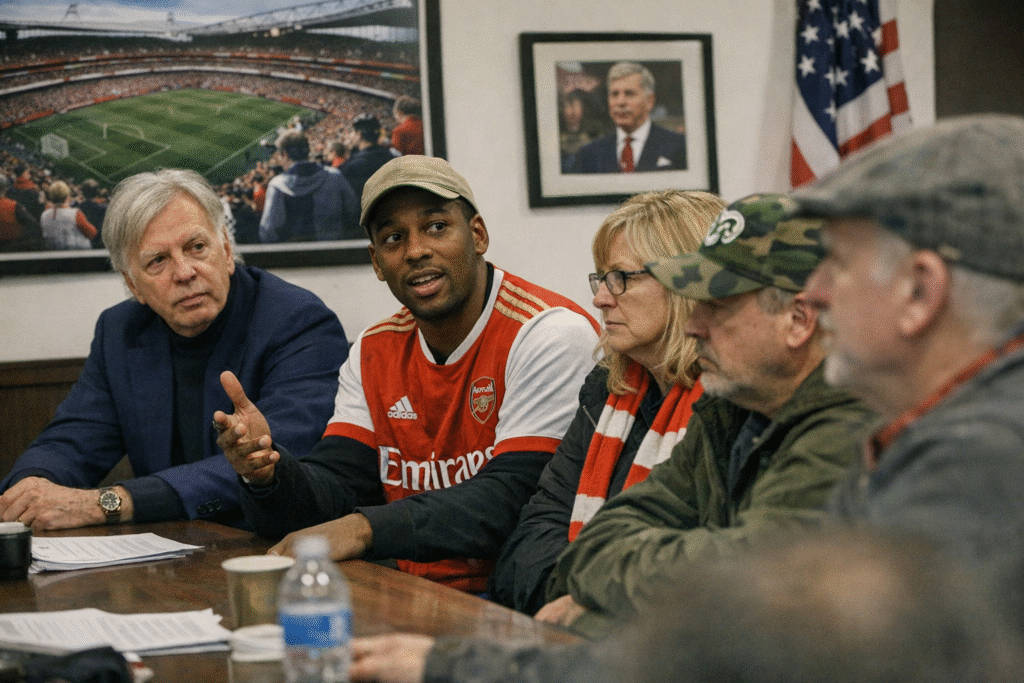
The ownership model that once drew skepticism in global football is now being reassessed as Arsenal’s resurgence brings renewed attention to Stan Kroenke’s cross-sport empire. As detailed in the Wall Street Journal article titled “Stan Kroenke, Arsenal, Rams and the Champions League,” the American billionaire’s long-term, portfolio-style approach to team ownership is beginning to yield results that were years in the making.
Kroenke, whose Kroenke Sports & Entertainment group controls a range of teams including Arsenal in the English Premier League and the Los Angeles Rams in the NFL, has often been viewed by critics as distant and financially driven. For much of his tenure at Arsenal, supporters accused him of prioritizing sustainability over silverware, particularly during periods when the club struggled to compete with Europe’s elite. However, Arsenal’s recent return to the UEFA Champions League and its emergence as a credible title contender signal a shift in both performance and perception.
According to the Wall Street Journal report, Kroenke’s strategy has been rooted in patience, infrastructure investment, and reliance on internal leadership rather than frequent, reactive spending changes. This mirrors his approach with the Rams, who transitioned from years of mediocrity to a Super Bowl victory under a similarly controlled, long-term plan. The parallel trajectories suggest a broader philosophy: building competitive organizations through stability rather than volatility.
At Arsenal, that philosophy has taken shape through a restructured football operation and sustained backing of manager Mikel Arteta. The club’s recruitment strategy has emphasized younger, high-potential players, aligning with a vision that prioritizes growth and cohesion over marquee signings alone. While this approach initially drew criticism for lacking ambition, recent performances indicate that it may offer a more durable path to success.
Financially, Kroenke’s model has also evolved. Previously accused of operating Arsenal as a self-sustaining asset with limited owner investment, he has in recent years authorized significant spending in the transfer market. This apparent shift has helped bridge the gap between Arsenal and wealthier rivals, reinforcing the idea that patient ownership does not necessarily preclude decisive financial support when required.
The Wall Street Journal article highlights how Kroenke’s dual success in American and European sports underscores a broader trend of U.S. ownership reshaping global football. While cultural tensions remain—particularly around expectations of transparency and engagement with supporters—the results on the pitch are increasingly difficult to dismiss.
Still, questions persist about whether this model can sustain long-term dominance in a sport defined by intense competition and rapidly escalating financial stakes. European football’s ecosystem differs markedly from American leagues, lacking salary caps and featuring relegation risks that demand constant performance. Kroenke’s Arsenal has made significant progress, but its ability to consistently compete at the highest level will determine whether this ownership philosophy is ultimately vindicated.
For now, the convergence of Arsenal’s Champions League return and the Rams’ recent success provides Kroenke with a measure of validation. What was once seen as detached stewardship is being reconsidered as calculated, disciplined ownership—one that may be better suited to modern sport than previously assumed.