Iran Conflict Disrupts Global Air Travel Routes
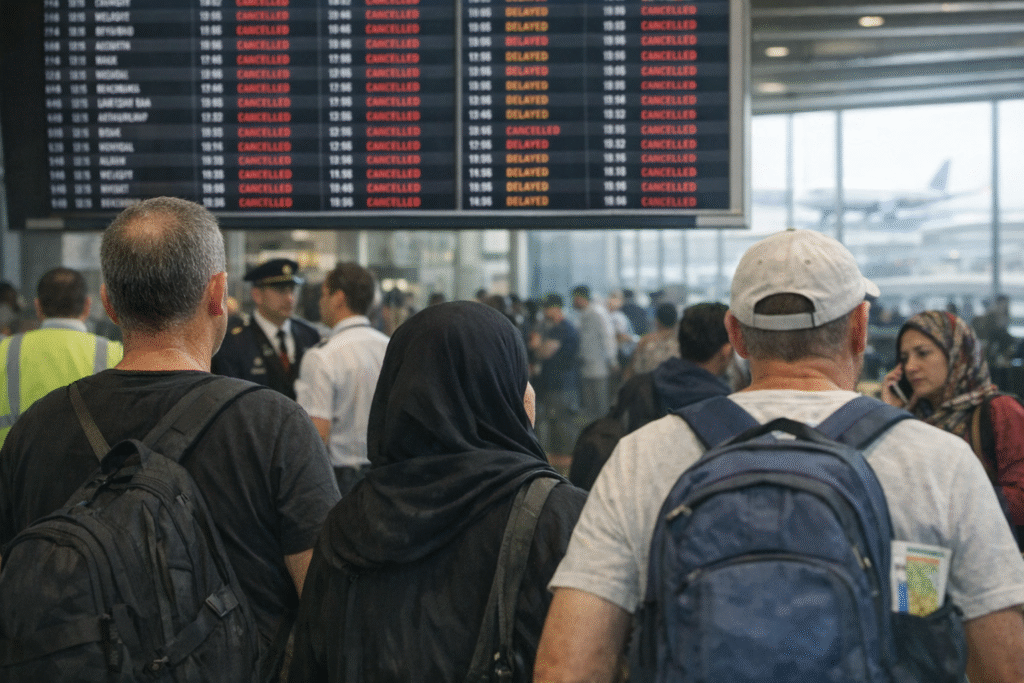
Global air travel is undergoing significant disruption as escalating conflict in Iran forces airlines, regulators, and passengers to rapidly adjust to a more volatile operating environment. The Wall Street Journal’s video report, “How the War in Iran Is Reshaping Air Travel,” highlights a growing pattern of rerouted flights, rising costs, and heightened safety concerns that are rippling across the aviation industry.
Airspace over Iran and neighboring regions has become increasingly restricted or altogether avoided by major carriers, reflecting both regulatory directives and airline risk assessments. Commercial flights that once took the most direct routes between Europe, Asia, and the Middle East are now being diverted across longer corridors, often adding hours to travel times. These detours, while necessary for safety, are placing new operational pressures on airlines already contending with tight margins and fluctuating fuel prices.
The longer routes translate directly into higher fuel consumption, one of the industry’s largest expenses. Airlines must also contend with increased crew scheduling complexity and the logistical challenges of repositioning aircraft. In some cases, carriers have opted to suspend certain routes altogether, particularly those that would otherwise pass close to conflict zones. This has reduced flight availability on key international corridors and contributed to rising ticket prices.
Passengers are experiencing the effects in both subtle and direct ways. Extended flight durations, more frequent layovers, and altered departure times have become more common. Travel planners are also facing uncertainty, as schedules may change with little notice in response to evolving security conditions or new government advisories. Insurance costs for airlines operating near high-risk areas have climbed, further feeding into fare increases.
The reshaping of flight paths is also creating new chokepoints in global aviation. Airspace over countries deemed safer is becoming more congested, increasing the complexity of air traffic management. This concentration raises concerns not only about delays but also about the strain on infrastructure and the potential for cascading disruptions if issues arise in these newly crowded corridors.
Regulators and international aviation bodies are closely monitoring the situation, issuing updated guidance and coordinating with airlines to ensure safety standards are maintained. However, the fragmented nature of global airspace governance means that responses can vary significantly from one jurisdiction to another, adding another layer of complexity for international carriers.
Beyond immediate operational impacts, the conflict is prompting a broader reassessment of risk in global aviation. Airlines are reevaluating contingency planning, route flexibility, and geopolitical exposure as part of long-term strategy. The situation underscores how regional conflicts can quickly have worldwide consequences in an interconnected aviation network.
As highlighted by The Wall Street Journal, the war’s effects on air travel illustrate the delicate balance between efficiency and security that underpins modern aviation. With no clear timeline for resolution, airlines and passengers alike are likely to face continued disruption, signaling that the reshaping of global flight patterns may persist well beyond the conflict itself.