Marines Phase Out Hornet Maintenance Roles
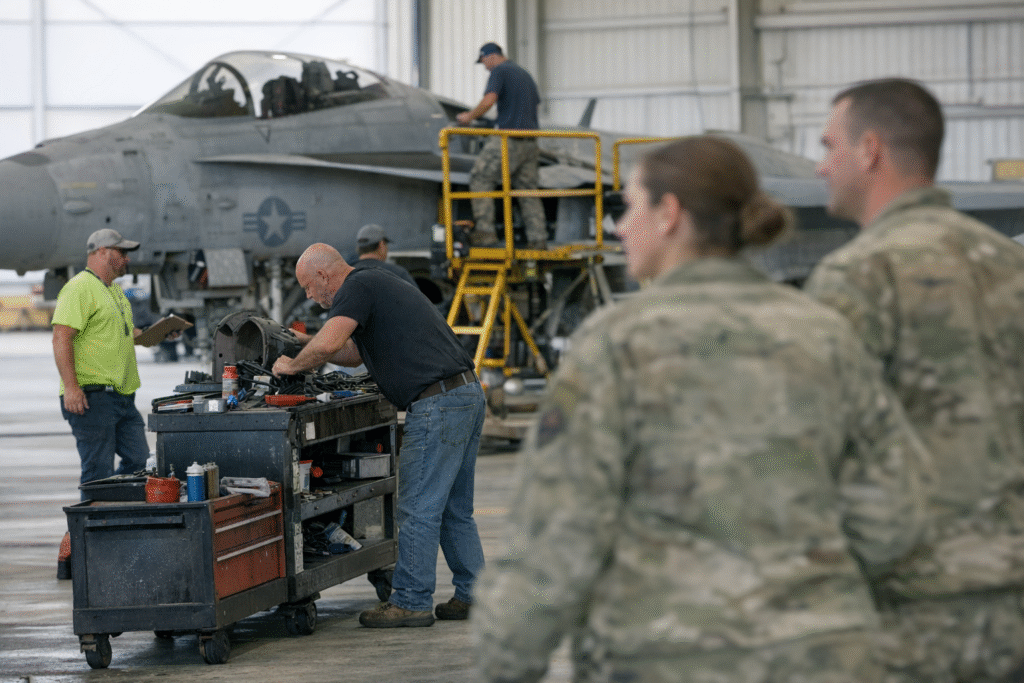
The U.S. Marine Corps is preparing to phase out maintenance roles tied to its legacy F/A-18 Hornet fleet, signaling a turning point in the service’s aviation strategy as it completes its transition to newer aircraft platforms, according to a recent Defense News report.
In the article titled “Marines to phase out FA-18 maintenance jobs as Hornet era ends,” Defense News outlines how the gradual retirement of the aging Hornet aircraft is prompting structural changes within the Corps’ aviation workforce. As squadrons shift to newer systems such as the F-35 Lightning II, the demand for specialized maintainers trained on the older jets is diminishing.
The decision reflects broader modernization efforts across the Marine Corps, which has prioritized advanced capabilities and interoperability in future conflicts. The F/A-18 Hornet, introduced in the late 20th century, has been a mainstay of Marine aviation for decades, supporting operations ranging from close air support to air superiority. However, maintaining the aircraft has become increasingly resource-intensive as the fleet ages, with parts obsolescence and rising sustainment costs posing persistent challenges.
Officials cited in the Defense News report emphasized that the move is part of a deliberate, phased approach designed to balance readiness with long-term transformation. Rather than an abrupt drawdown, the Corps is gradually reducing Hornet-related maintenance billets as aircraft are retired and squadrons convert to the F-35. This process allows the service to retrain or reassign personnel where possible, though it also means some roles will eventually disappear.
The transition carries implications for both active-duty Marines and civilian personnel who have built careers around maintaining the legacy aircraft. While the Marine Corps has invested in retraining programs to help maintainers adapt to newer platforms, the technical differences between the Hornet and the F-35 are significant. The latter relies more heavily on advanced diagnostics, software integration, and low-observable maintenance techniques, requiring a different skill set.
The shift also underscores a broader evolution in military aviation maintenance. Modern aircraft increasingly depend on predictive maintenance systems, digital tools, and contractor support, reducing the need for some traditional hands-on roles while creating demand for highly specialized technical expertise. For the Marine Corps, aligning its personnel structure with these trends is seen as essential to sustaining operational effectiveness.
At the same time, the retirement of the Hornet marks the end of an era for Marine aviation culture. The aircraft has been closely associated with Marine expeditionary operations for decades, and its departure carries both symbolic and practical significance. As the Corps moves forward, leaders are balancing respect for that legacy with the urgency of adapting to future threats.
The Defense News reporting highlights that the timeline for fully phasing out Hornet-related maintenance roles will depend on the pace of aircraft retirements and the continued rollout of replacement platforms. While the transition is well underway, it is expected to unfold over several years, reflecting the complexity of reshaping both equipment inventories and the workforce that supports them.
Ultimately, the move illustrates how shifts in technology and strategy are reshaping not only frontline capabilities but also the personnel structures behind them, as the Marine Corps positions itself for a new generation of air operations.