US Tightens Maritime Pressure on Iran Trade Routes
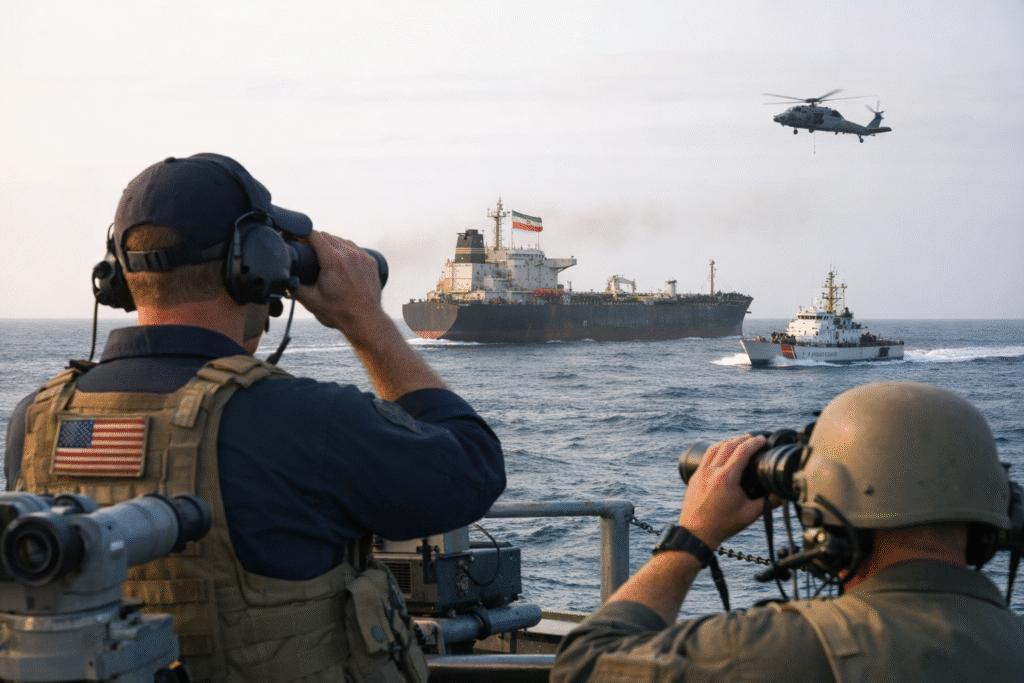
A recent report by The Wall Street Journal, titled “Iran Ships U.S. Blockade,” highlights rising tensions around maritime security and economic pressure in the Middle East, as Washington’s efforts to curb Tehran’s regional influence increasingly play out on the high seas.
According to the Journal, U.S. officials are intensifying measures aimed at limiting Iran’s ability to move goods and generate revenue through maritime routes, particularly in waters that have become strategically vital for global trade. These efforts are part of a broader campaign to constrain Tehran’s economic lifelines, including oil exports and logistics networks that Western governments argue help sustain its regional activities.
The situation underscores the evolving nature of economic confrontation between the two countries. Rather than relying solely on formal sanctions, U.S. policy has expanded into more direct disruption of shipping operations linked to Iran. This approach reflects growing concern in Washington that traditional financial restrictions have not been sufficient to fully limit Iran’s capacity to project influence or fund allied groups across the region.
Iran, for its part, has continued to adapt. Officials in Tehran have repeatedly emphasized their ability to circumvent restrictions through alternative shipping arrangements, reflagging of vessels, and cooperation with a network of intermediaries. The Journal’s reporting suggests that this cat-and-mouse dynamic has led to an increasingly opaque maritime environment, where the ownership, origin, and destination of cargo are often deliberately obscured.
The implications extend beyond bilateral tensions. Key waterways in the Middle East, including the Strait of Hormuz and nearby corridors, are vital for global energy supplies. Any disruption, whether through enforcement actions or retaliatory measures, carries the risk of market volatility and broader geopolitical escalation. Shipping companies and insurers have already demonstrated heightened caution, adjusting routes or increasing premiums in response to perceived risks.
At the same time, U.S. actions are being closely watched by other powers with economic or strategic interests in the region. Countries that continue to engage in trade with Iran may find themselves navigating a complex web of compliance risks, particularly as enforcement becomes more assertive and less predictable.
The Wall Street Journal’s account points to a longer-term shift in how economic statecraft is being implemented. Maritime enforcement, once a supplementary tool, is becoming central to efforts aimed at isolating adversaries without direct military confrontation. Yet the effectiveness of this approach remains uncertain, as Iran’s persistence in maintaining trade flows suggests limits to what such measures can achieve without broader international coordination.
With no clear resolution in sight, the situation continues to evolve in ways that could shape both regional stability and global commerce. The interplay between enforcement, evasion, and strategic signaling at sea is likely to remain a defining feature of U.S.-Iran relations in the near term.