NATO Puts Resilience at Core of Collective Security
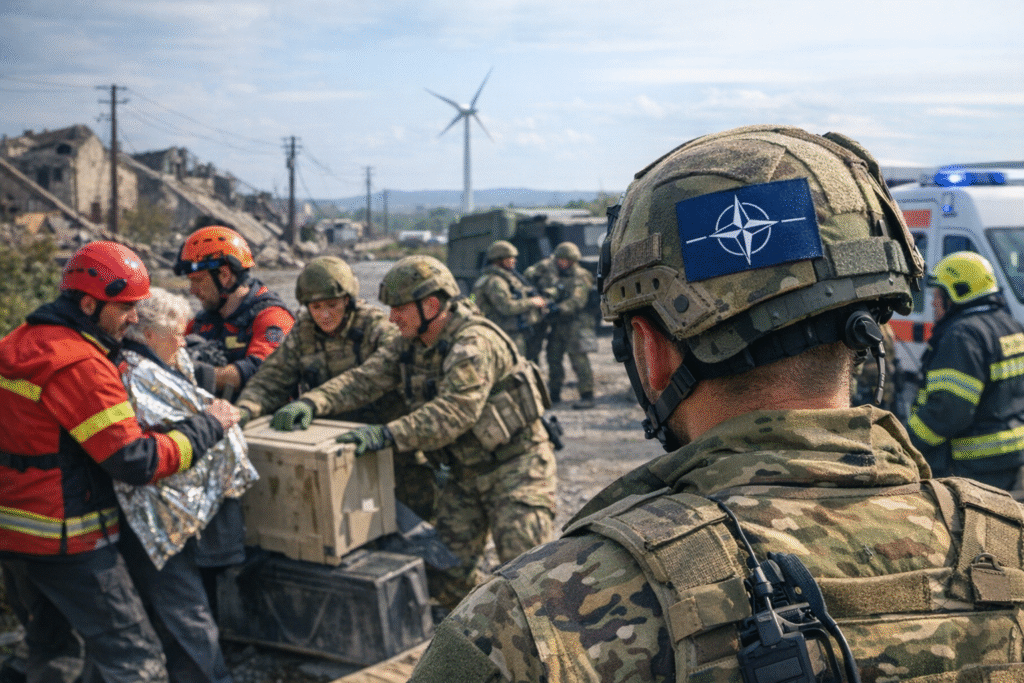
Senior officials from across NATO convened in Brussels this week to underscore a growing priority for the alliance: resilience as a core component of collective security. The meeting, reported in the article “Senior National Officials for Resilience meet at NATO to address the crucial role of resilience in Allied security,” published on NATO’s official website, highlighted how civil preparedness, infrastructure protection, and societal readiness are increasingly intertwined with traditional defense concerns.
According to NATO, the gathering of Senior National Officials for Resilience focused on preparing member states for a wide range of disruptions, from cyberattacks and hybrid threats to natural disasters and supply chain shocks. Officials discussed how adversaries are targeting civilian systems—such as energy grids, transportation networks, and communication infrastructure—to weaken societies without direct military confrontation. The shift reflects a broader understanding within the alliance that modern conflict often unfolds below the threshold of armed attack.
Participants emphasized that resilience is not solely a military issue but a whole-of-society responsibility. Governments were encouraged to deepen coordination with the private sector, which owns and operates much of the critical infrastructure across NATO countries. The discussions also addressed the need for more robust public-private partnerships, improved information sharing, and standardized preparedness benchmarks among allies.
The meeting built on NATO’s baseline requirements for national resilience, which include ensuring continuity of government, maintaining essential services, and securing critical supply chains. Officials reviewed progress made by member states and identified gaps that could be exploited during crises. Particular attention was given to energy security and the protection of undersea cables, both of which have emerged as strategic vulnerabilities in recent years.
Another key theme was the integration of resilience into NATO’s broader deterrence and defense posture. Officials stressed that a society capable of absorbing and recovering quickly from shocks is less likely to be destabilized by hostile actors. This, in turn, strengthens the alliance’s overall deterrence by denying adversaries easy leverage.
The meeting also reflected the lessons learned from recent global disruptions, including the COVID-19 pandemic and the war in Ukraine, both of which exposed weaknesses in logistics, coordination, and crisis response. NATO officials noted that these experiences have accelerated efforts to embed resilience planning at both national and alliance levels.
As described in the NATO website’s coverage, the officials agreed on the importance of sustaining political commitment to resilience initiatives and ensuring that they remain a standing priority rather than a reactive measure. The discussions are expected to inform future policy development and reinforce NATO’s evolving approach to security in an era defined by complex and interconnected risks.
The Brussels meeting signals a continued shift within NATO toward recognizing that safeguarding civilian systems and societal cohesion is now as critical to defense as conventional military capabilities.