UAE Weighs OPEC Exit as Output Tensions Rise
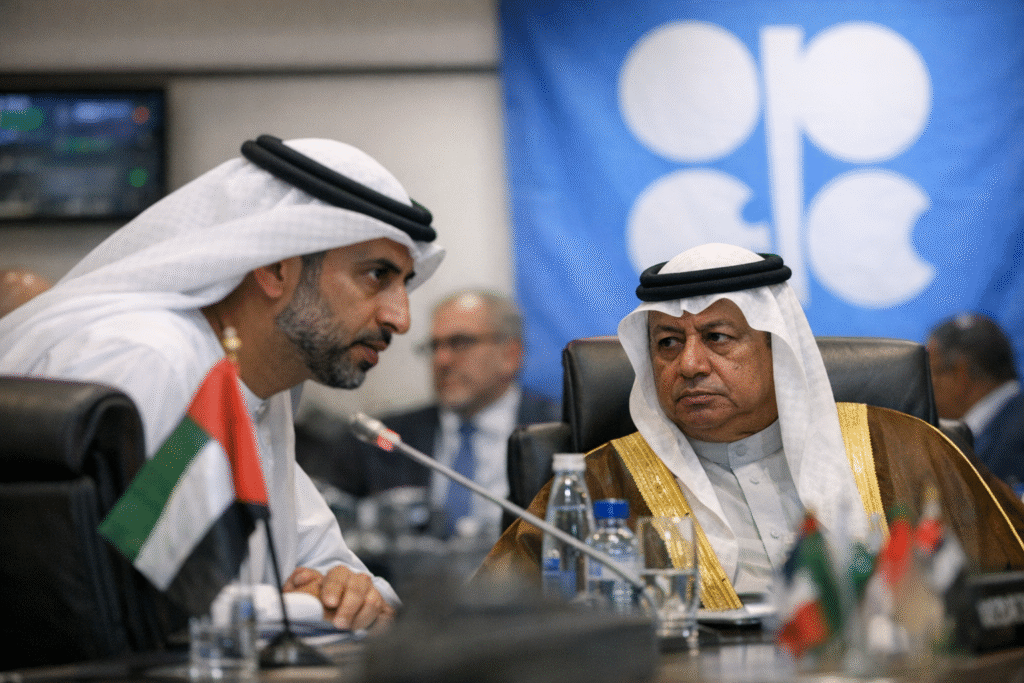
The United Arab Emirates is weighing a potential departure from the Organization of the Petroleum Exporting Countries, a move that could reshape alliances within one of the world’s most influential energy blocs and signal shifting priorities among major oil producers. The development was reported in an article titled “U.A.E. to Leave OPEC” published by The Wall Street Journal.
According to the report, officials in Abu Dhabi have explored the possibility of withdrawing from OPEC as part of a broader reassessment of the country’s long-term energy strategy. The deliberations come amid internal tensions within the group over production quotas and the UAE’s desire to expand its output capacity more aggressively than current agreements permit.
OPEC, long dominated by Saudi Arabia, relies on coordinated production targets to influence global oil prices. For member states, compliance with these quotas can constrain national ambitions, particularly for countries like the UAE that have invested heavily in boosting production capabilities. The UAE has, in recent years, pursued a strategy aimed at increasing its oil capacity while also diversifying its economy beyond hydrocarbons.
The Wall Street Journal article indicates that frustration has been building in Abu Dhabi over perceived limitations imposed by the cartel’s framework. While the UAE remains formally committed to OPEC, the discussions underscore a growing divergence in how member states view the balance between collective price management and individual economic priorities.
A potential exit would carry significant implications. For OPEC, the departure of a key producer could weaken cohesion within the group and complicate efforts to manage global supply. For the UAE, independence from quota constraints could allow for greater flexibility in production decisions, potentially enabling it to capitalize on investments in infrastructure and capacity expansion.
Market reactions to the possibility of a withdrawal are likely to hinge on whether such a move leads to increased output. Greater supply from a major producer could exert downward pressure on prices, depending on broader market conditions and the responses of other exporters. At the same time, geopolitical considerations—including relationships with Saudi Arabia and coordination within the broader OPEC+ alliance—would factor heavily into any final decision.
The report suggests that discussions remain at an early stage, and no definitive decision has been announced. Even so, the mere consideration of such a step reflects evolving dynamics within global energy markets, where traditional alliances are being tested by changing economic strategies, technological shifts, and the ongoing transition toward lower-carbon energy systems.
For now, the UAE continues to operate within OPEC’s structure, but the debate highlights a broader question confronting oil-producing nations: how to reconcile the benefits of collective action with the pressures of national growth ambitions in a rapidly changing energy landscape.