Debate Grows Over Nobel Peace Prize for US Military
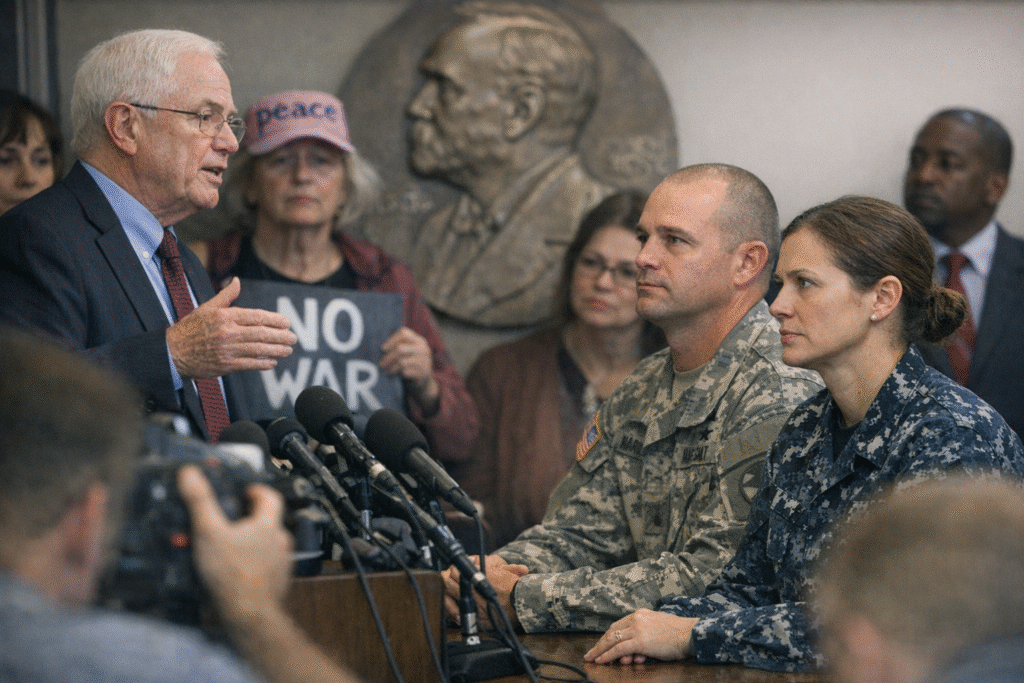
A recent article published by the Washington Free Beacon titled “U.S. Military Deserves Nobel Peace Prize ‘Every Single Year’ for ‘Guaranteeing Global Safety and Security,’ Hegseth Says” highlights remarks by Fox News host and commentator Pete Hegseth, who argued that the United States military’s global role merits ongoing recognition at the highest international level.
According to the Free Beacon’s reporting, Hegseth made the comments while discussing U.S. military engagement abroad and its broader strategic impact. He contended that the American armed forces function as a stabilizing force worldwide, asserting that their presence deters conflict and underwrites international security. In his view, these contributions warrant annual consideration for honors such as the Nobel Peace Prize, traditionally awarded to individuals or organizations seen as advancing peace efforts.
Hegseth’s remarks reflect a longstanding perspective among some policymakers and commentators who emphasize the deterrent value of military strength. Advocates of this view argue that forward-deployed forces, security alliances, and rapid response capabilities help prevent escalation and protect global trade and political stability. They often point to U.S. involvement in multinational operations, humanitarian missions, and defense commitments as evidence of this role.
At the same time, the suggestion that military institutions should receive a peace prize is likely to generate debate. Critics of such arguments typically counter that the Nobel Peace Prize has historically been reserved for diplomatic, humanitarian, or nonviolent efforts, and they may question whether military activity—regardless of intent—aligns with those criteria. Others note that U.S. military interventions have, in some cases, been controversial both domestically and internationally, complicating claims about their net effect on global peace.
The Free Beacon article situates Hegseth’s comments within a broader conversation about the perception of U.S. power and the framing of national security policy. While his remarks were presented as a forceful endorsement of the military’s global role, they also underscore ongoing disagreements over how best to define and measure contributions to peace and stability in an increasingly complex international environment.