Ultra-Orthodox Protests Set to Snarl Israel’s Roads Amid Rising Conscription Tensions
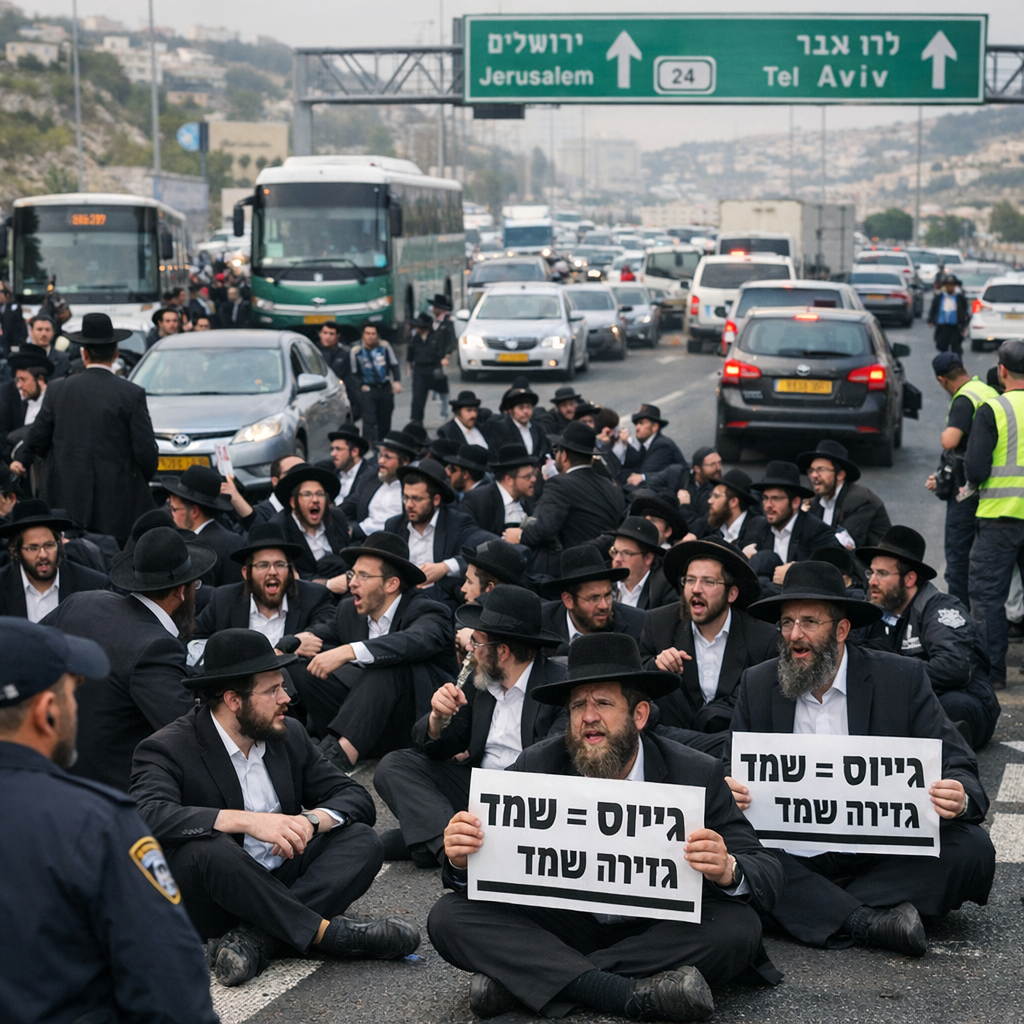
A new wave of disruption is expected across Israel’s transportation network as ultra-Orthodox groups prepare to stage coordinated protests aimed at paralyzing major roads and intersections, according to a report by i24NEWS titled “Slow travel and long hours: ultra-Orthodox to block Israel’s roads.” The planned demonstrations, which organizers describe as a form of civil resistance, are expected to significantly impact daily movement, particularly in and around major urban centers.
The protests are reportedly being organized in response to mounting tensions between ultra-Orthodox communities and state authorities, particularly over issues related to military conscription in Israel and the preservation of long-standing religious exemptions. Community leaders have voiced growing frustration over what they perceive as increasing pressure from the government to alter arrangements that have historically allowed many ultra-Orthodox men to pursue full-time religious study in lieu of military service.
According to the i24NEWS report, demonstrators plan to employ so-called “slow travel” tactics, deliberately moving at reduced speeds along key routes to create traffic congestion. In some cases, protesters are expected to physically block highways and central junctions for extended periods, causing widespread delays. These methods, organizers believe, will maximize visibility and force public and political attention onto their grievances.
Israeli authorities are preparing for the disruptions, with police expected to deploy additional forces to manage traffic and clear blocked roads where possible. Officials have warned that the actions could pose risks to public safety, particularly if emergency vehicles are delayed. In past instances of similar protests, law enforcement has intervened to disperse crowds and restore order, sometimes leading to confrontations.
The planned demonstrations come at a particularly sensitive moment in Israeli society, as debates over national service obligations continue to intensify. Efforts to reform the system have repeatedly triggered political crises, reflecting deep divisions between secular and religious communities. Critics of the exemptions argue that they place an unequal burden on other citizens, while supporters insist they are essential to preserving religious life and tradition.
For many Israelis, the prospect of widespread road blockages evokes frustration, especially given the country’s already congested transportation infrastructure. Business leaders and commuters have raised concerns about the economic and social impact of prolonged disruptions, particularly if they extend over multiple days.
At the same time, the protests highlight the enduring influence of ultra-Orthodox groups in Israel’s public sphere, where organized collective action can quickly translate into national attention. Whether the demonstrations will lead to renewed dialogue or further polarization remains uncertain, but they are likely to underscore the complexity of balancing religious autonomy with broader societal expectations.
As the situation develops, authorities face the challenge of maintaining public order while navigating the sensitive political context that underpins the protests, a dynamic that continues to shape Israel’s internal debates over identity, obligation, and governance.