NATO Expands Resilience Efforts in North Macedonia and Ukraine Through Crisis Preparedness Exercises
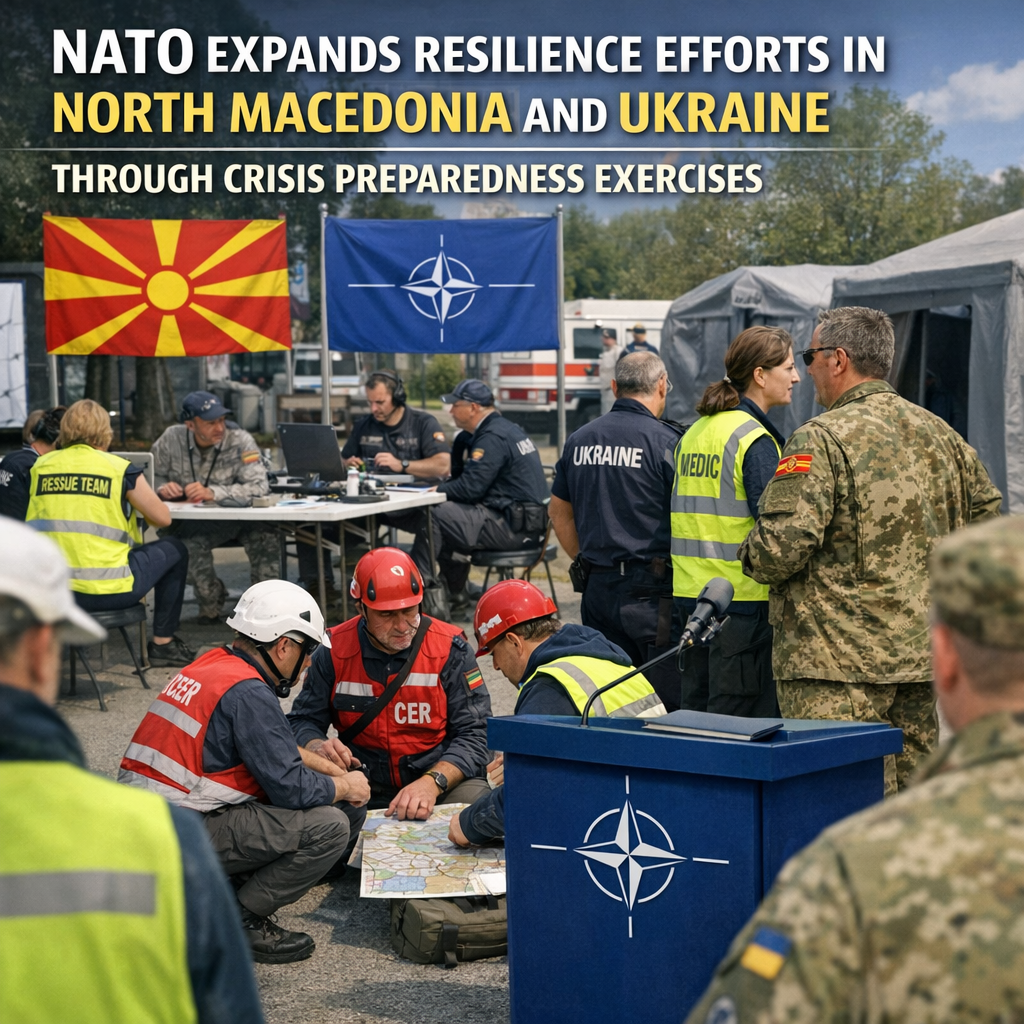
NATO has stepped up efforts to bolster civil preparedness and crisis response capacity in North Macedonia and Ukraine, according to a report published on the alliance’s official website, NATO.int, titled “NATO helps North Macedonia and Ukraine strengthen their resilience during large-scale emergencies.” The initiative underscores the alliance’s expanding focus on non-military security challenges, particularly as hybrid threats and natural disasters increasingly strain national response systems.
The program brought together emergency management authorities, civil protection agencies, and international experts in a series of large-scale exercises designed to simulate complex crisis scenarios. These included natural disasters and coordinated emergency situations requiring rapid interagency cooperation, logistical coordination, and cross-border support. The exercises aimed not only to test existing capabilities but also to identify structural gaps in national preparedness frameworks, aligning with broader efforts such as the UN Office for Disaster Risk Reduction.
In North Macedonia, NATO’s involvement reflects a broader commitment to enhancing resilience among member states, particularly in regions vulnerable to environmental hazards and infrastructure stress. Officials participating in the exercises emphasized the importance of integrated response systems capable of handling cascading emergencies—situations in which an initial disaster triggers secondary crises such as power outages, communication breakdowns, or population displacement. Strengthening civil preparedness in such contexts is seen as a core component of collective defence and resilience.
Ukraine’s participation carries additional significance given the country’s ongoing exposure to both military and civilian emergencies. NATO’s support focuses on reinforcing emergency response institutions that must operate under sustained pressure, including the ability to maintain continuity of services during large-scale disruptions. The exercises provided an opportunity for Ukrainian authorities to refine coordination between civil and military structures, an increasingly critical requirement in modern crisis environments, complementing NATO’s partnership with Ukraine.
According to NATO, these initiatives are part of a wider resilience agenda that recognizes the interconnected nature of contemporary threats. Climate-related disasters, cyber incidents, and infrastructure vulnerabilities are treated as strategic risks that demand coordinated international responses, echoing priorities outlined by organizations like the World Economic Forum’s Global Risks initiative. By facilitating joint training and knowledge sharing, the alliance aims to improve interoperability between national systems while promoting common standards in crisis management.
The report highlights that resilience is no longer viewed as a purely domestic concern but as a collective responsibility within the alliance. As emergencies grow more complex and unpredictable, NATO’s role is evolving to include not only deterrence and defense but also the strengthening of civilian preparedness. The work in North Macedonia and Ukraine illustrates how this approach is being operationalized, with practical exercises translating policy priorities into actionable capacity-building.
Officials involved in the program indicated that lessons learned from these exercises will inform future planning and cooperation efforts. The emphasis on adaptability, coordination, and rapid response reflects a broader shift in NATO’s strategic thinking, in which resilience is increasingly treated as a foundational element of security in an era defined by overlapping risks and persistent uncertainty.