Army speeds development of autonomous vehicles to recover damaged gear in high-risk combat zones
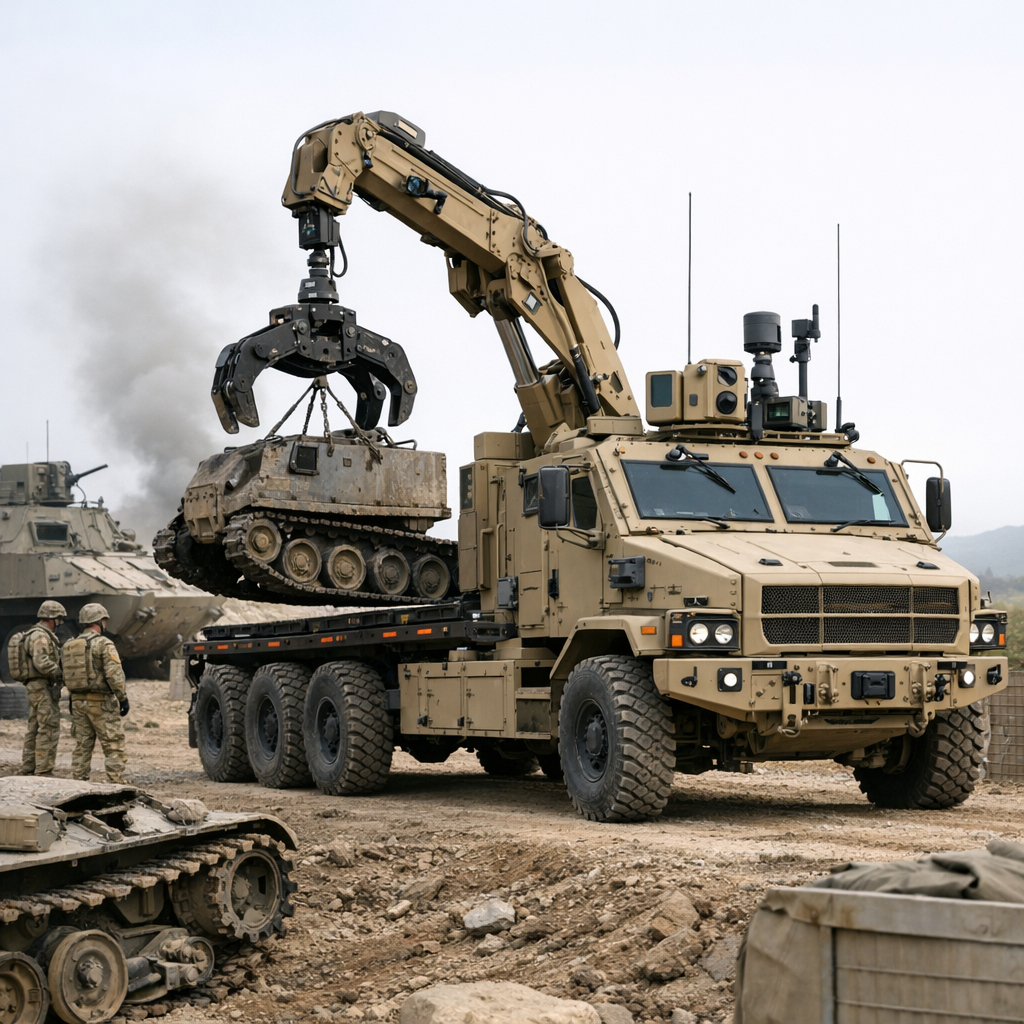
The U.S. Army is accelerating efforts to field autonomous ground vehicles capable of retrieving damaged or abandoned equipment from contested environments, a push that underscores both the logistical strain of modern warfare and the growing role of robotics on the battlefield.
According to the article “Army autonomous vehicle could recover equipment from combat zones”, published by DefenseScoop, military officials are developing self-driving platforms designed to operate in high-risk areas where human recovery teams would face significant danger. The concept targets scenarios in which disabled vehicles or critical gear are left exposed under hostile fire, creating both operational losses and potential intelligence risks if adversaries seize the equipment.
Army planners have long grappled with the challenge of equipment recovery in contested zones, where even routine retrieval missions can require substantial manpower, armored protection, and coordination. Autonomous systems offer a way to reduce that burden. By deploying robotic vehicles capable of navigating complex terrain and potentially operating under fire, commanders aim to limit the exposure of soldiers while maintaining the ability to sustain and restore combat power. Related efforts in ground robotics, such as the Army’s Robotic Combat Vehicle program, highlight the broader push toward unmanned systems.
The DefenseScoop report highlights that these efforts are part of a broader modernization strategy focused on integrating autonomy and artificial intelligence into logistics and sustainment operations. While much public attention has centered on autonomous weapons systems, Army officials increasingly view support functions—such as resupply, maintenance, and recovery—as areas where automation can deliver near-term, practical benefits. Research programs like DARPA’s RACER initiative are helping advance autonomous mobility in complex environments.
Key technical hurdles remain. Autonomous recovery vehicles must be able to identify, approach, and maneuver around disabled equipment in unpredictable environments, often without reliable GPS or communications. They must also physically interact with heavy machinery, which requires precise control and robust mechanical systems. Ensuring these platforms can operate securely without being spoofed or disrupted by adversaries is another persistent concern, particularly given documented risks around GPS spoofing and jamming.
Despite these challenges, the Army appears to be moving forward with prototyping and experimentation. The service has been testing various autonomous and semi-autonomous ground systems, often pairing them with human operators in supervisory roles. This human-machine teaming approach reflects a cautious strategy, allowing the Army to field useful capabilities while retaining oversight and flexibility.
The potential advantages extend beyond immediate battlefield safety. Autonomous recovery systems could improve the speed at which damaged vehicles are returned to service, reduce the need for large recovery units, and help preserve sensitive technology that might otherwise fall into enemy hands. In prolonged or distributed operations, where supply lines are stretched thin, such efficiencies—highlighted in analyses like a RAND report on military logistics modernization—could have meaningful strategic impact.
At the same time, the integration of autonomous systems into combat support roles raises broader questions about reliability, accountability, and doctrine. Military leaders will need to determine how much autonomy to grant these systems, how to train personnel to work alongside them, and how to adapt operational concepts to incorporate robotic capabilities without creating new vulnerabilities.
As outlined in DefenseScoop’s coverage, the Army’s pursuit of autonomous recovery vehicles reflects a pragmatic recognition that the future battlefield will demand not only advanced weaponry but also resilient, adaptable logistics. By focusing on reducing risk to personnel while maintaining operational effectiveness, the initiative signals a shift toward embedding autonomy across the full spectrum of military activity, not just at the point of contact.