Kongsberg Advances Modular Counter-Drone Upgrades for Existing Military Systems
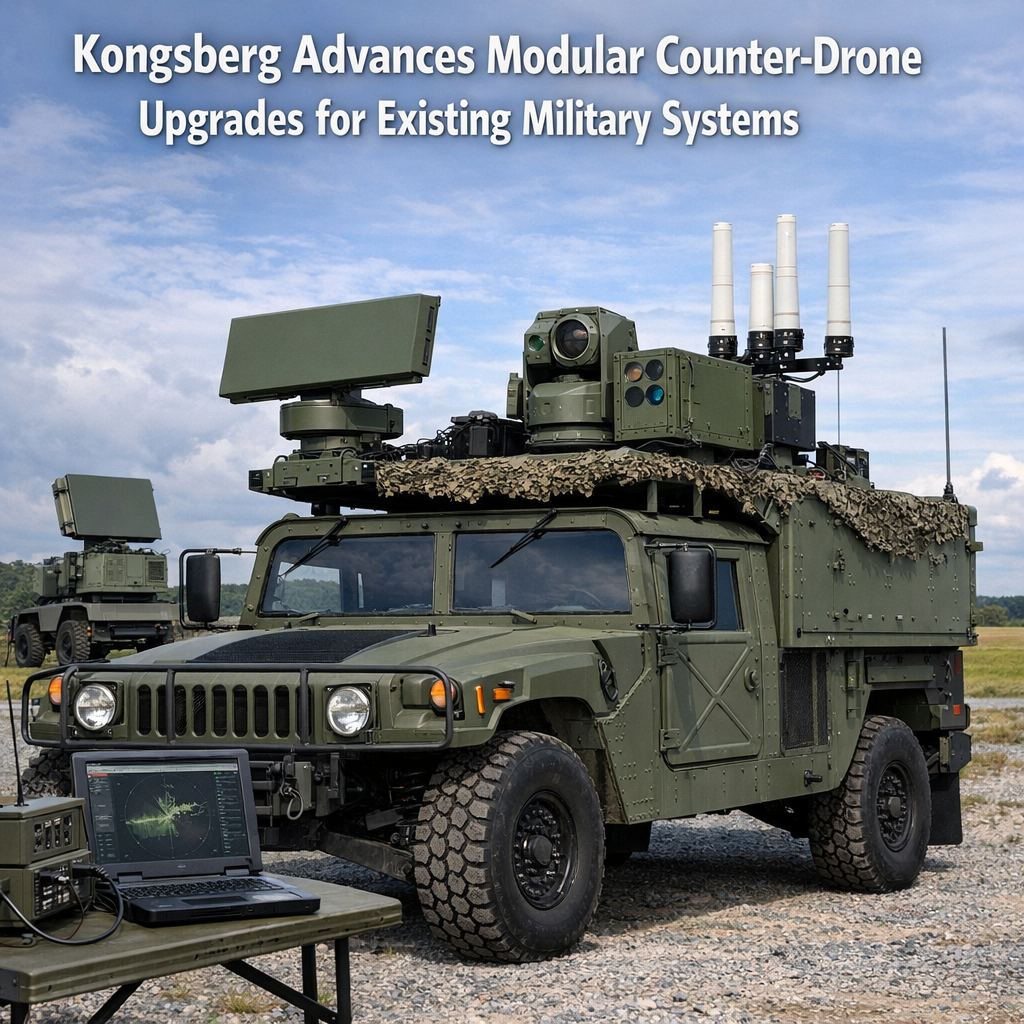
Kongsberg Defence & Aerospace is positioning its latest counter-drone technology as a flexible upgrade to existing weapon systems, reflecting a broader shift in how militaries are adapting to the rapid proliferation of small, inexpensive unmanned aerial systems.
In a report titled “New counter-UAS tech: Kongsberg brings new capabilities to existing weapon systems,” published by Defense News, the company outlined efforts to integrate counter-uncrewed aerial system (C-UAS) capabilities into platforms already in service. Rather than requiring entirely new hardware, the approach focuses on modular enhancements that can be layered onto established air defense and remote weapon systems.
The development comes as armed forces worldwide face an evolving threat environment in which commercially derived drones and loitering munitions have demonstrated outsized battlefield impact. Conflicts in Ukraine and the Middle East have underscored how low-cost aerial platforms can challenge traditional air defenses, forcing militaries to seek scalable and economically sustainable countermeasures.
Kongsberg’s solution emphasizes software-driven upgrades combined with sensor integration, enabling existing systems to detect, track, and engage smaller aerial targets more effectively. By leveraging radar, electro-optical sensors, and fire control systems already deployed on various platforms, the company aims to reduce both the cost and the logistical burden of introducing new counter-drone capabilities. More on Kongsberg’s defense technologies can be found on its official site.
The concept reflects a growing industry trend toward adaptability. Instead of fielding single-purpose systems, defense manufacturers are increasingly designing technologies that can be retrofitted across multiple platforms. For operators, this approach can shorten deployment timelines and preserve prior investments, particularly for militaries with large inventories of legacy equipment.
Company representatives indicated that the technology is intended to work across a range of weapon systems, including remote weapon stations and air defense platforms, allowing them to engage smaller and more agile threats. The integration also supports layered defense strategies, where multiple systems coordinate to detect and neutralize drones at varying ranges and altitudes, a concept aligned with NATO integrated air and missile defense doctrine.
This strategy aligns with NATO and allied force priorities, which emphasize interoperability and rapid modernization. As drone threats continue to evolve, the ability to update existing platforms through software and modular components is increasingly seen as critical to maintaining operational readiness, as highlighted in broader defense modernization research.
At the same time, the push to adapt legacy systems raises questions about the limits of retrofitting. While software and sensor upgrades can extend capabilities, some analysts note that older platforms may still face constraints in tracking speed, targeting precision, or engagement range compared to purpose-built counter-UAS systems.
Nevertheless, Kongsberg’s approach highlights an industry effort to strike a balance between innovation and practicality. As highlighted by Defense News, the company is betting that the most immediate and scalable response to the drone threat lies not in replacing entire arsenals, but in enhancing what militaries already have.