Netanyahu Rejects Iran and Hezbollah Deterrence Shift as Regional Tensions Intensify
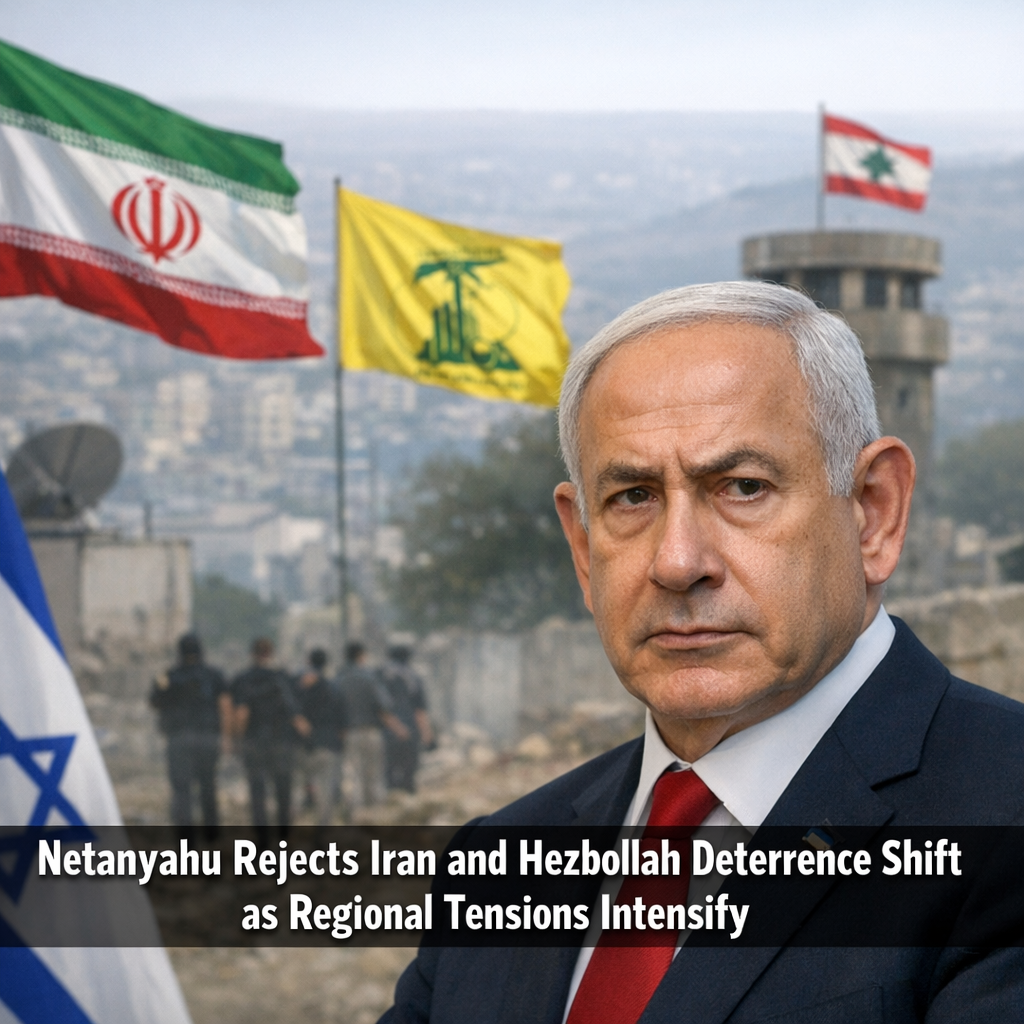
Israeli Prime Minister Benjamin Netanyahu has rejected what he described as an emerging “security equation” being imposed by Iran and Hezbollah, signaling a hardening stance amid rising regional tensions. The remarks, reported by i24NEWS in its article “Netanyahu rejects new security equation imposed by Iran and Hezbollah”, come as cross-border hostilities and strategic signaling between Israel and Iranian-backed groups continue to intensify.
According to the Reuters Middle East coverage in line with the i24NEWS report, Netanyahu dismissed any suggestion that Israel would accept new deterrence rules dictated by its adversaries, particularly in relation to Hezbollah’s growing assertiveness along Israel’s northern frontier and Iran’s broader regional posture. He emphasized that Israel would continue to act against perceived threats and would not be constrained by what he views as attempts by Tehran and its allies to redefine the balance of power.
The concept of a “security equation” has increasingly appeared in statements by Hezbollah officials, as noted by analyses from the Washington Institute for Near East Policy, who have sought to frame recent confrontations as establishing new rules of engagement. These include responses to Israeli military actions in Lebanon or Syria, as well as signaling intended to deter further Israeli operations. Israeli officials, however, have consistently rejected such framing, arguing that it is designed to limit Israel’s operational freedom and embolden hostile actors.
Netanyahu’s comments also reflect broader Israeli concerns about Iran’s regional influence, particularly its support for armed proxy groups such as Hezbollah, a topic frequently examined by the BBC’s profile on Hezbollah. Israeli security officials have long warned that Iran is attempting to encircle Israel with advanced weaponry and coordinated militant networks, a strategy they say poses a direct and evolving threat.
The i24NEWS article noted that Netanyahu reiterated Israel’s commitment to defending its sovereignty and citizens, consistent with positions outlined by Israel’s Ministry of Defense, suggesting that any attempt to impose new constraints on Israeli military activity would be met with resistance. His position underscores a continuation of Israel’s longstanding policy of preemptive and retaliatory action to counter perceived threats from Iran and its allies.
The exchange of rhetoric comes at a sensitive time, with ongoing instability along Israel’s northern border and heightened vigilance among Israeli defense forces, a situation tracked by the International Crisis Group. While no immediate large-scale escalation has been confirmed, analysts warn that entrenched positions on both sides could increase the risk of miscalculation.
As tensions persist, Netanyahu’s rejection of a new security framework proposed by adversarial actors signals that Israel is unlikely to accept informal limits on its military strategy, setting the stage for continued friction in an already volatile regional landscape.