NATO Boosts Arctic Strategy as High North Gains Strategic Importance
:::writing
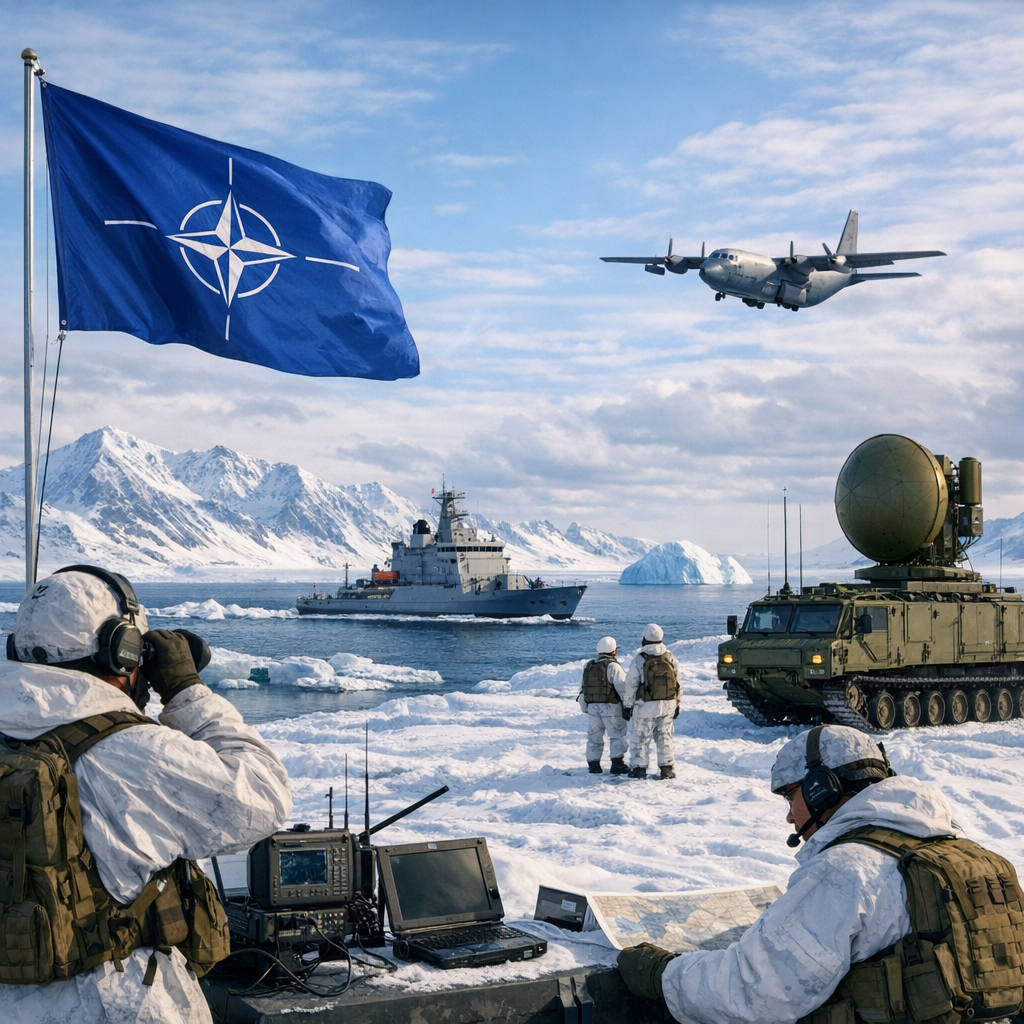
NATO has outlined a renewed focus on its northern flank, emphasizing deterrence, surveillance, and cooperation in the Arctic and High North, as geopolitical competition intensifies in the region. In an article titled “NATO enhances security in the Arctic and High North,” published on NATO’s official website, the alliance detailed recent measures aimed at strengthening its strategic posture in an area increasingly shaped by climate change and shifting security dynamics (NATO enhances security in the Arctic and High North).
The High North has gained prominence in NATO’s strategic calculations as melting ice opens new maritime routes and access to natural resources, while simultaneously raising the stakes for military mobility and presence. NATO officials stress that the region remains one of low tension but acknowledge that it is not immune to broader global rivalries, particularly given Russia’s enduring military footprint and modernization efforts in the Arctic (see analysis from CSIS Russia Arctic Program).
According to NATO, allied forces have stepped up joint exercises and patrols designed to improve readiness and interoperability under extreme conditions. These activities are intended not only to demonstrate collective defense commitments but also to ensure that allied forces can operate effectively across harsh and remote environments. The alliance points to its increased situational awareness capabilities, including surveillance and intelligence-sharing, as central to maintaining stability.
The accession of Finland and Sweden to NATO has significantly altered the strategic landscape in the High North. Their membership expands the alliance’s geographic reach and operational depth in the region, enabling closer coordination across the Nordic and Baltic areas (NATO enlargement). NATO highlights that this enlargement strengthens collective defense while facilitating a more coherent approach to regional security challenges.
Infrastructure and logistics have emerged as key concerns. The alliance underscores ongoing efforts to enhance mobility corridors, adapt ports and airfields, and ensure that forces can be deployed rapidly if required. These improvements are seen as essential for both deterrence and crisis response, particularly in an environment where distances are vast and conditions unpredictable.
NATO also emphasizes cooperation with partners and adherence to international law as guiding principles in the Arctic. The alliance reiterates its support for the rules-based international order, including freedom of navigation and respect for sovereignty (United Nations Convention on the Law of the Sea). Officials note that maintaining the Arctic as a region of peace and stability remains a shared interest among allies, even as competition grows, alongside institutions such as the Arctic Council.
At the same time, the alliance frames its activities as defensive and proportionate. NATO has sought to reassure that its increased presence is meant to deter potential aggression rather than escalate tensions. Nonetheless, the developments reflect a broader recognition that the Arctic is no longer insulated from global security concerns, particularly as climate change accelerates transformations in the region (see NOAA Arctic climate impacts).
The measures described in NATO’s report suggest a long-term commitment to safeguarding allied interests in the High North. As environmental and geopolitical changes continue to reshape the region, NATO appears intent on ensuring that its capabilities keep pace with emerging challenges while reinforcing its collective defense posture.
:::