France Expands Nuclear Security Role in Scandinavia as Europe Reassesses Defense Autonomy
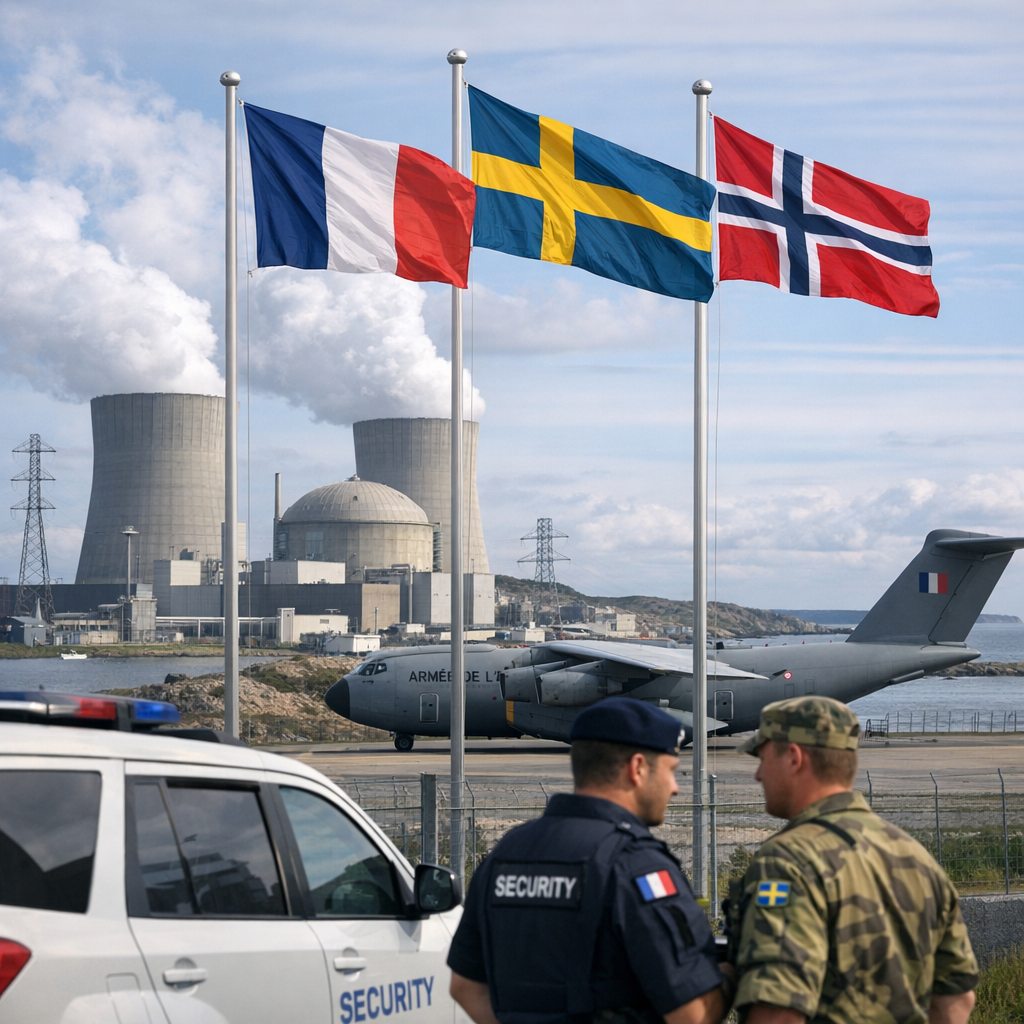
France is moving to deepen its role as a nuclear security guarantor in northern Europe, extending strategic cooperation with Scandinavian countries as geopolitical tensions and concerns about long-term U.S. commitments reshape the continent’s defense posture.
According to a report published by Breaking Defense titled “Macron’s nuclear pact expands across Scandinavia as global forces surges,” President Emmanuel Macron’s government has intensified efforts to position France’s nuclear deterrent as a central pillar of European security. The initiative reflects both growing anxiety over Russia’s military posture and a broader push within Europe to develop more autonomous defense capabilities. The original report can be found at Breaking Defense.
French officials have for years advocated for a stronger European dimension to nuclear deterrence, anchored in France’s independent arsenal. That position appears to be gaining traction in the Nordic region, where countries are increasingly balancing their commitments to NATO with interest in additional, region-specific security arrangements. The Breaking Defense report indicates that recent discussions and agreements have expanded defense consultations, joint planning, and political signaling around France’s nuclear capabilities.
While Denmark and Norway remain firmly embedded in NATO structures, and Sweden and Finland have recently deepened their integration with the alliance, the evolving dialogue with Paris suggests a complementary layer of deterrence rather than a replacement. Analysts say the shift underscores a growing recognition that Europe may need to shoulder a greater share of its own strategic defense amid uncertainty about future U.S. policy directions.
France’s approach has emphasized consultation rather than formal nuclear sharing in the NATO sense. Unlike the U.S. system, which involves forward-deployed weapons in allied countries (see Nuclear Non-Proliferation Treaty overview), Paris has historically guarded the independence of its deterrent. However, officials have increasingly signaled openness to structured dialogue with European partners, including briefings on doctrine and potential coordination in crisis scenarios. More on France’s doctrine can be found via the French Ministry of Armed Forces.
The expansion into Scandinavia comes as military activity in the High North intensifies. Russia has continued to invest in its Arctic capabilities, as documented by the Center for Strategic and International Studies, while NATO has reinforced its presence in the region. The Nordic countries’ accession to the alliance has already reshaped the strategic map, closing gaps in collective defense coverage around the Baltic Sea. France’s engagement adds another dimension, linking northern European security more closely with continental strategic planning.
Critics caution that the lack of clarity surrounding the exact scope of France’s commitments could create ambiguity at a sensitive time. Without formal guarantees, some analysts argue, the deterrent effect may be limited. Others warn that parallel frameworks could complicate NATO’s command structure if not carefully coordinated.
Supporters counter that the initiative strengthens overall deterrence by increasing the number of pathways through which a potential adversary must calculate risk. They also argue that deeper political integration around nuclear issues could serve as a stepping stone toward a more cohesive European defense identity, a concept explored by the European External Action Service.
The Breaking Defense report situates these developments within a broader global context marked by intensifying great-power competition and shifting alliances. As China expands its military reach and the United States recalibrates its global commitments, European leaders are under pressure to demonstrate both unity and strategic self-reliance.
Macron has repeatedly framed France’s nuclear arsenal as a resource not just for national defense but for the security of the continent. The growing engagement with Scandinavian partners suggests that message is beginning to resonate beyond traditional Franco-German defense cooperation.
Whether the initiative evolves into a more formalized structure or remains a flexible, politically driven arrangement will depend on future negotiations and the trajectory of transatlantic relations. For now, it signals a notable shift in how European countries are thinking about nuclear deterrence: not as a static inheritance of the Cold War, but as an adaptable tool in a rapidly changing security environment.