Israel Updates Civil Defense Guidelines as Security Risks Shift Across Regions
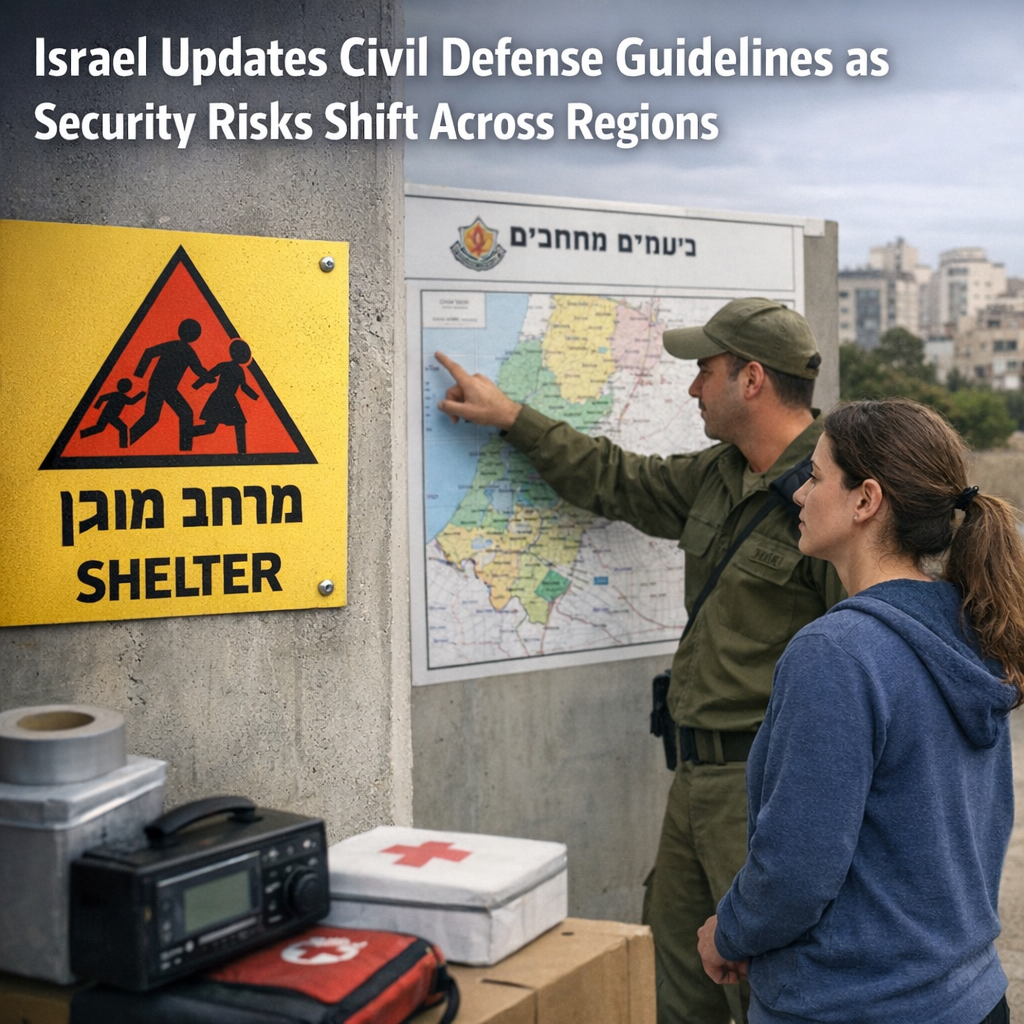
Israel’s military has revised its domestic protection measures amid evolving security concerns, according to a report titled “IDF updates Home Front Command defensive guidelines” published by i24NEWS. The updated directives, issued by the Israel Defense Forces’ Home Front Command, reflect a reassessment of risks facing civilian areas and aim to ensure that preparedness measures remain aligned with current threat conditions.
The changes to the guidelines come as part of a broader effort by Israeli authorities to maintain readiness on the home front during periods of heightened regional tension. The Home Front Command, which is responsible for civil defense and emergency preparedness, periodically adjusts its instructions based on intelligence assessments and operational developments. These measures can affect public gatherings, educational activities, workplace operations, and proximity restrictions in areas considered vulnerable.
According to the i24NEWS report, the revised guidelines are not uniform across the country but instead vary by region, reflecting different threat levels. Communities closer to potential flashpoints face stricter limitations, while others are subject to more routine safety precautions. This tiered approach is intended to balance daily life with the need for vigilance, allowing much of the country to function normally while maintaining heightened readiness in sensitive zones.
Officials stress that such updates are preventive rather than reactive, underscoring the importance of public compliance with safety instructions. The Home Front Command uses a combination of digital alert systems, mobile applications, and traditional media to disseminate guidance quickly to residents. Authorities have also emphasized the importance of ensuring access to protected shelter spaces and adhering to sheltering protocols in the event of sirens or other warnings.
The update comes against the backdrop of ongoing regional instability, where periodic escalations have made civilian preparedness a central component of national security strategy. Israeli policymakers have long emphasized that resilience on the home front is as critical as military readiness in confronting threats ranging from rocket fire to more complex scenarios.
While the i24NEWS article does not indicate an immediate escalation prompting the changes, the adjustments highlight the fluid nature of Israel’s security environment. By refining its defensive posture for civilians, the military aims to mitigate risks and enhance the population’s ability to respond effectively to emergencies, reinforcing a system that has become a defining feature of life in the country.
Observers note that such updates are a routine, if consequential, aspect of Israel’s security management, reflecting both caution and adaptability. As authorities continue to monitor developments, further changes to public safety guidance remain possible, depending on how the situation evolves.