U.S. Interdiction in Indian Ocean Signals Pressure on Iran’s Shadow Oil Trade Amid Export Decline
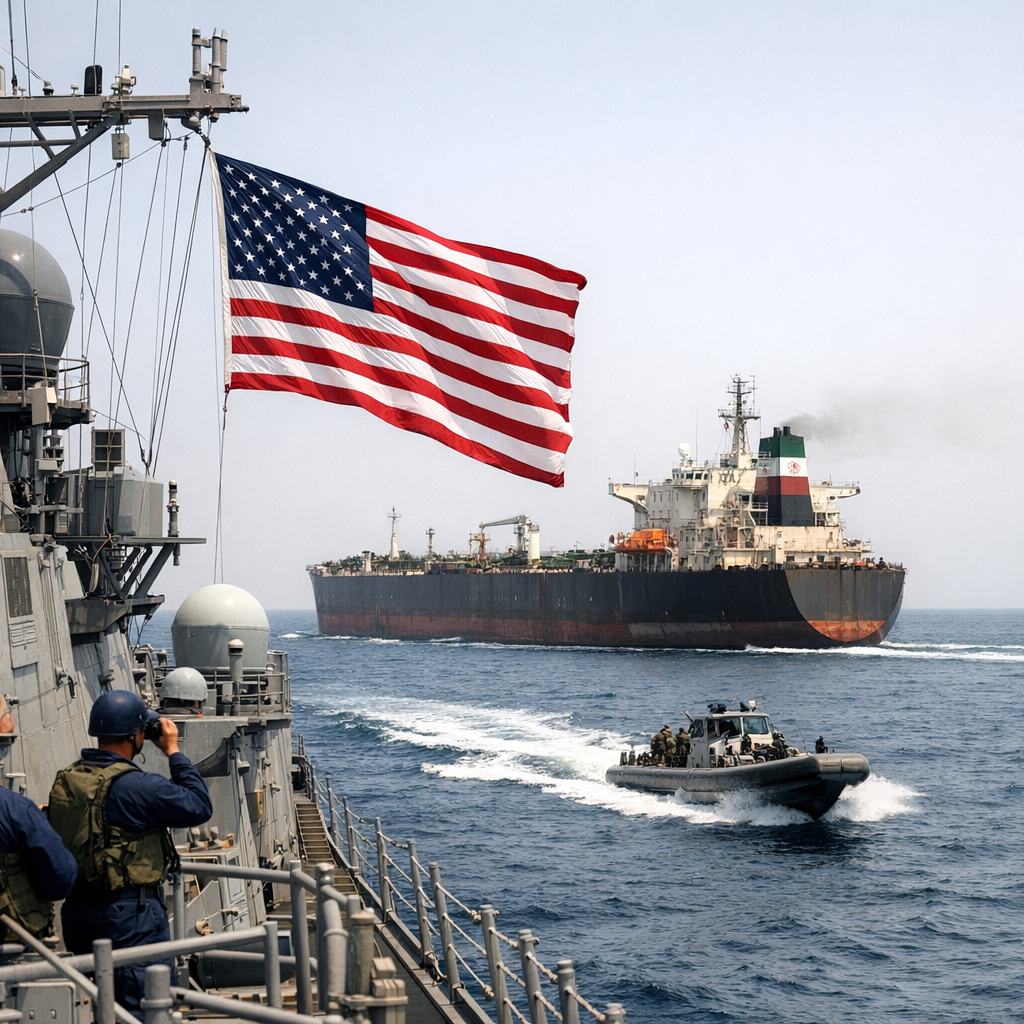
A recent report by USNI News, titled “U.S. Forces Interdict Ship Connected to Iran in Indian Ocean; Iranian Oil Exports See Decrease,” outlines a development that underscores both the persistence of maritime enforcement operations and shifting dynamics in Iran’s oil export activity.
According to USNI News, U.S. forces conducted an interdiction in the Indian Ocean targeting a vessel linked to Iran, part of ongoing efforts to enforce sanctions and disrupt networks involved in illicit oil transport. While operational details remain limited, the action reflects a broader U.S. strategy aimed at constraining Tehran’s ability to circumvent international restrictions through complex shipping arrangements, including the use of obscured vessel ownership, flag-switching, and transshipment at sea. These practices have been widely documented by authorities such as the U.S. Treasury’s Office of Foreign Assets Control.
The reported interdiction comes amid indications that Iranian oil exports have declined in recent months. Analysts cited by USNI News point to a combination of factors behind the downturn, including tighter enforcement measures, increased scrutiny of maritime traffic, and evolving geopolitical pressures that affect both buyers and intermediaries. China, historically a major customer of Iranian crude despite sanctions, appears to have moderated import levels, contributing to the observed decrease, as reflected in broader global oil market tracking by organizations such as the U.S. Energy Information Administration.
The maritime dimension of sanctions enforcement has grown increasingly significant as Iran and other sanctioned states rely on so-called “shadow fleets” to move oil. These often involve aging tankers operating with limited transparency, sometimes disabling tracking systems or engaging in ship-to-ship transfers to mask cargo origins—activities that have drawn attention from regulators and maritime bodies including the International Maritime Organization. U.S. naval and partner forces have responded with a mix of surveillance, interdictions, and intelligence-sharing designed to expose and disrupt these networks.
The incident highlighted by USNI News also illustrates the strategic importance of the Indian Ocean as a transit corridor. While much international attention has focused on chokepoints such as the Strait of Hormuz and the Bab el-Mandeb, enforcement activities further afield demonstrate the geographic breadth of efforts to monitor and police energy flows tied to sanctioned entities.
The reported decline in exports may carry economic implications for Iran, where oil revenue remains a critical component of state income. At the same time, the durability of Iran’s workaround methods suggests that fluctuations are likely to remain uneven rather than linear, with enforcement actions periodically constraining but not eliminating export capacity.
For Washington, such interdictions serve both practical and signaling functions. They disrupt specific shipments while reinforcing the credibility of sanctions enforcement at a time of heightened regional tensions. However, they also carry risks, including potential escalation or retaliation in maritime zones already characterized by strategic competition and frequent military presence.
As USNI News notes, the convergence of enforcement actions and market shifts offers a snapshot of a fluid situation. Whether the decline in Iranian oil exports represents a sustained trend or a temporary dip will depend on a range of factors, including enforcement intensity, global demand, and the adaptability of the networks that continue to facilitate sanctioned trade.