Autonomy and Extended-Range Strike Capabilities Signal Shift in Modern Warfare Strategy
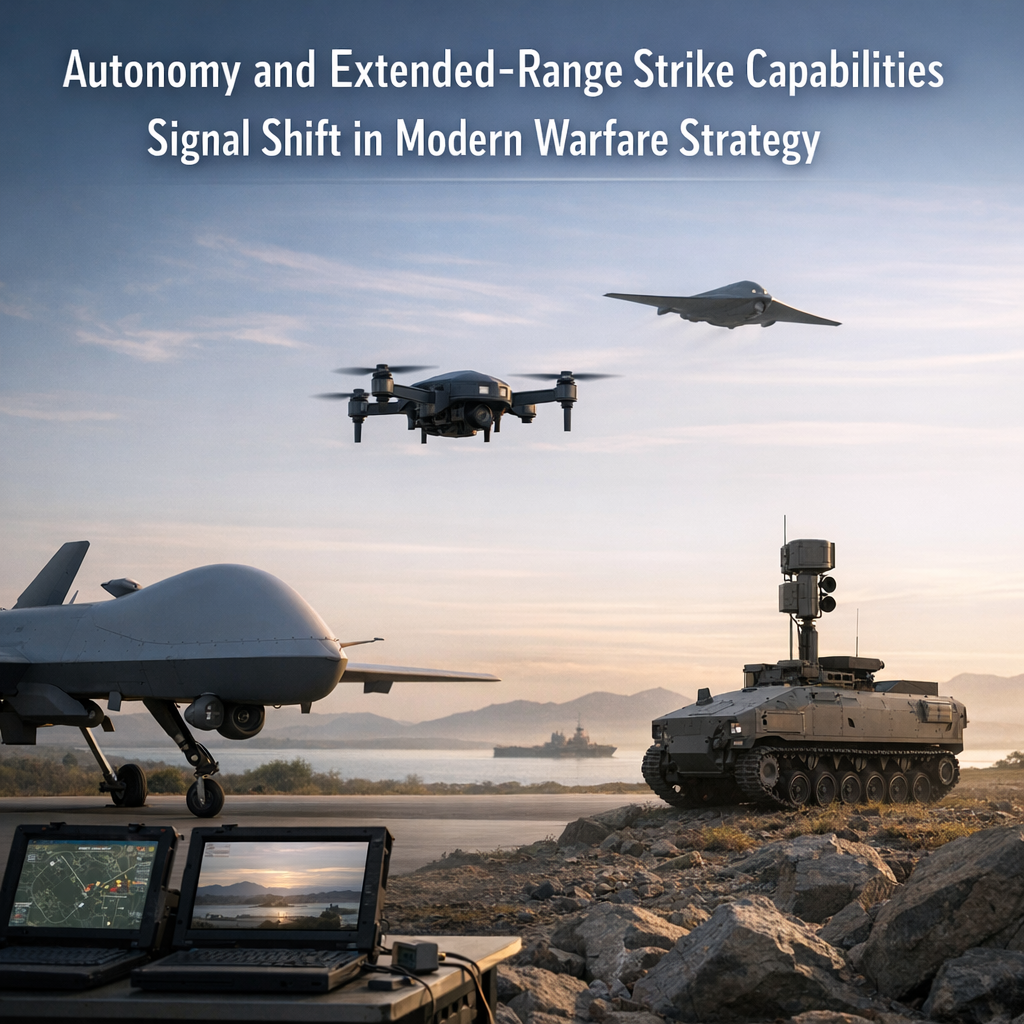
Defense developments highlighted in a recent Defense News video report underscore how rapidly autonomous systems and extended-range munitions are reshaping the tactical landscape.
In the video titled “Shield AI shows off the X-Bat and Boeing tests a long-range JDAM,” published by Defense News, two separate demonstrations point to a common trend: increasing stand-off capability combined with reduced risk to personnel. Shield AI’s X-Bat, a small vertical takeoff and landing unmanned aircraft, is positioned as a flexible platform for reconnaissance and potentially other mission sets in contested environments where GPS and communications may be degraded. Boeing, meanwhile, is working to expand the reach of the Joint Direct Attack Munition, a long-serving guided bomb kit, by enabling it to strike from significantly greater distances.
The X-Bat reflects a broader push across the defense industry toward autonomy that does not rely heavily on continuous human input. Systems like it are designed to operate within denied or degraded environments, where jamming and electronic warfare are expected. That emphasis aligns with shifting Pentagon priorities toward resilience and survivability against peer adversaries. Smaller, harder-to-detect platforms also complicate enemy targeting and can be deployed in greater numbers, providing operational redundancy.
Boeing’s work on a longer-range JDAM signals a parallel focus on stand-off strike capability. By extending the distance from which aircraft can release munitions, the system reduces exposure to advanced air defenses. This approach builds on the existing JDAM’s reputation for reliability and relatively low cost, suggesting an evolutionary rather than revolutionary upgrade path. In practical terms, such enhancements could allow legacy aircraft to remain viable in higher-threat environments without requiring entirely new weapon systems.
Taken together, the demonstrations highlighted by Defense News suggest that future combat scenarios will increasingly hinge on range, autonomy and adaptability rather than sheer platform size or speed. The ability to operate at distance while maintaining precision and situational awareness is emerging as a defining factor in both air and unmanned systems.
While both technologies are still evolving, the direction is clear. Defense planners are investing in systems that reduce vulnerability, extend operational reach and function effectively in contested electromagnetic environments. The X-Bat and the long-range JDAM represent different ends of that spectrum, but both reflect the same underlying shift in how modern militaries are preparing for future conflict.