Stealth and Stand-Off Power Drive Next Wave of Military Innovation
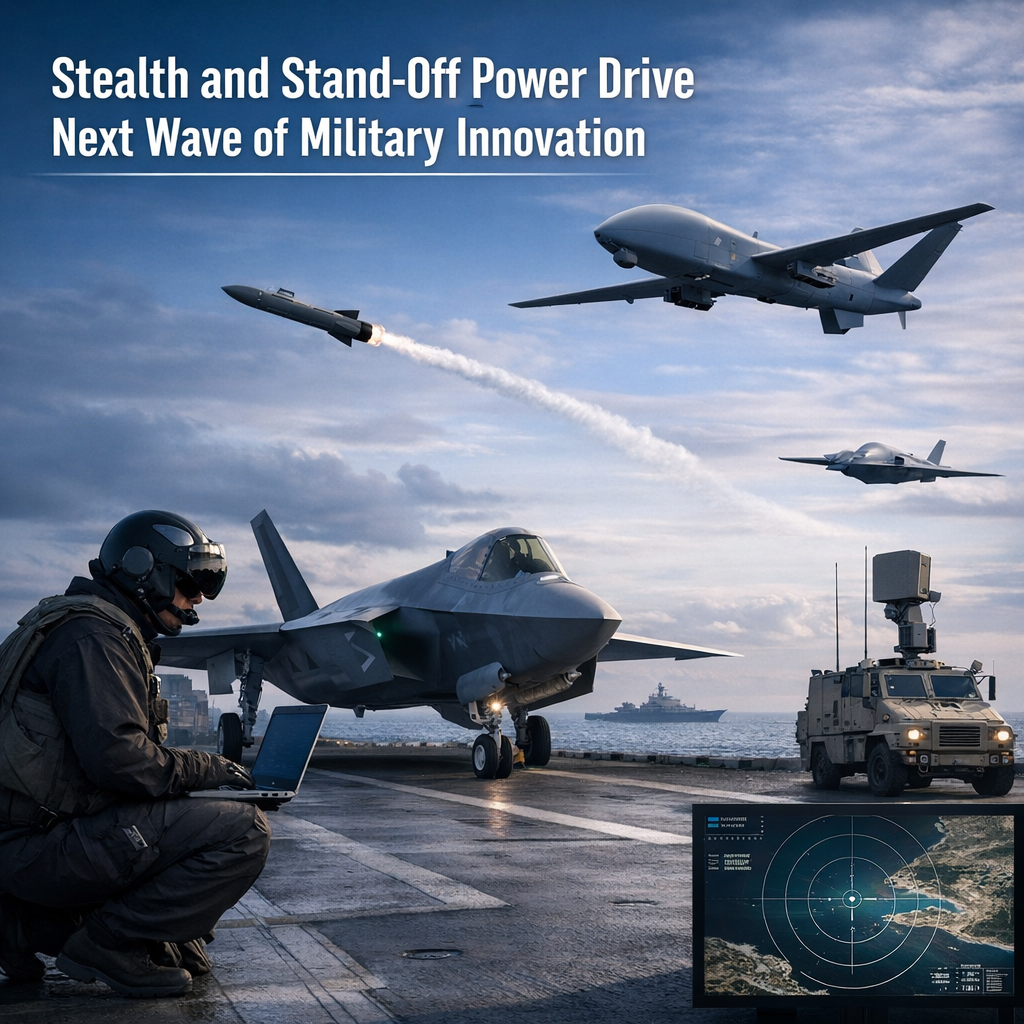
A recent episode of Defense News Weekly highlights two areas of rapid evolution in modern military capability: specialized underwater equipment for elite forces and extended-range upgrades to Joint Direct Attack Munitions (JDAMs). The segment, titled “Underwater Special Forces gear and long-range JDAMs | Defense News Weekly Full Episode 6.16.26” and published by Military Times, underscores how both stealth and stand-off strike capacity are being refined in parallel as militaries adapt to increasingly contested environments.
One focus of the episode is the growing sophistication of underwater systems used by special operations forces. These units, often tasked with covert reconnaissance, sabotage, and infiltration, rely on equipment that balances stealth, endurance, and precision. Advances highlighted include improved diver propulsion devices, next-generation rebreathers that minimize detectable exhaust, and modular payload systems that allow operators to carry surveillance tools or explosives discreetly. Organizations like U.S. Naval Special Warfare have long emphasized these types of capabilities.
Such developments reflect a broader strategic emphasis on the maritime domain, particularly in regions where access is contested and traditional naval deployments may be vulnerable. The ability to operate undetected beneath the surface offers a critical advantage, enabling forces to approach targets, gather intelligence, or pre-position assets without triggering conventional defenses. As near-peer competitors expand their anti-access and area denial (A2/AD) capabilities, underwater special operations are increasingly seen as a way to retain operational flexibility.
At the same time, the program examines enhancements to long-range JDAMs, a widely used precision-guided munition. Traditionally reliant on GPS guidance, JDAM kits convert unguided bombs into precision weapons, but their range has historically been limited by release altitude and speed. According to Boeing’s JDAM program overview, these systems have been continually upgraded to improve accuracy and adaptability. Recent adaptations are extending that reach significantly, allowing aircraft to strike targets from greater distances and remain outside the envelope of advanced air defense systems.
This extended range is achieved through add-on wing kits and improved navigation systems, enabling glide capabilities that were previously unavailable in standard JDAM configurations. Systems such as the U.S. Air Force’s JDAM variants demonstrate how these kits transform conventional bombs into stand-off weapons. The result is a cost-effective means of achieving stand-off strike potential without the expense associated with more complex missile systems. For military planners, this offers a scalable solution: existing stockpiles can be upgraded rather than replaced, easing logistical and budgetary pressures while enhancing capability.
The combination of longer-range strike munitions and increasingly stealthy insertion tools points to a common theme: the growing premium on operating undetected and at distance. As adversaries invest heavily in radar networks, electronic warfare, and integrated air defenses, survivability depends not only on stealth aircraft but also on munitions and tactics that reduce exposure to risk. Reports from institutions like the Center for Strategic and International Studies highlight how evolving air defense systems are shaping these requirements.
The Military Times report situates these developments within the broader context of contemporary defense planning, where adaptability and cost-efficiency are central concerns. Rather than relying solely on entirely new platforms, militaries are modifying existing systems to meet emerging threats. Analyses from the Defense News community frequently note this trend toward incremental modernization. Whether through retrofitted bombs or upgraded diver equipment, incremental innovation is playing a significant role in shaping the future battlefield.
Taken together, the technologies highlighted in the Defense News Weekly episode illustrate a shift toward more distributed, flexible, and less detectable forms of military power. As these tools mature, they are likely to influence how operations are planned and executed across multiple domains, reflecting a strategic environment in which both proximity and visibility increasingly carry higher risks.