Sweden Weighs State Control of Saab as Security Concerns Reshape Defense Policy Debate
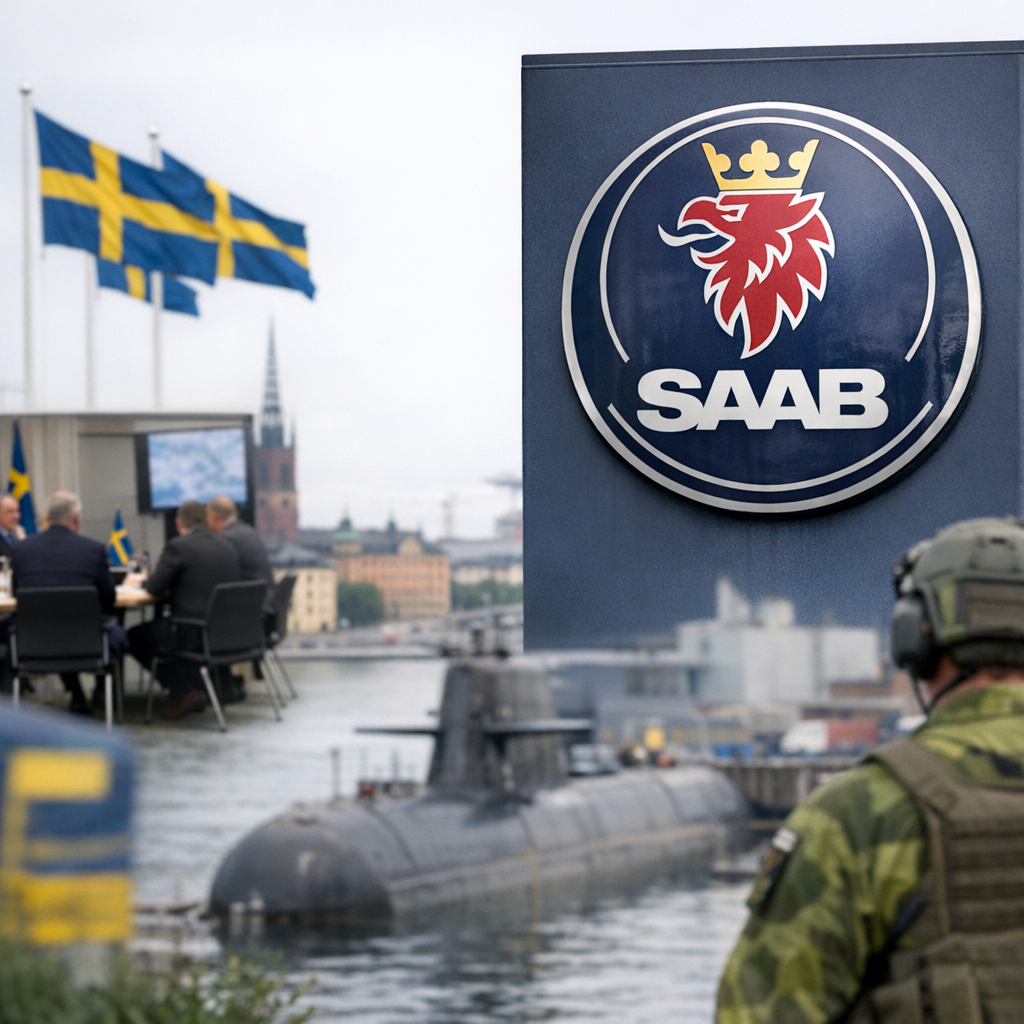
A recent report by Breaking Defense, titled “Swedish opposition party ahead in polls could push for state ownership in Saab,” highlights a potentially significant shift in Sweden’s defense industrial policy as political momentum builds ahead of the next election.
According to the report, the opposition Social Democratic Party, currently leading in national polling, is considering a policy that would increase state control or ownership in Saab, Sweden’s flagship defense company. While no formal proposal has yet been finalized, the discussion reflects broader concerns within Swedish political circles about national security, supply chain resilience, and the strategic importance of domestic defense manufacturing.
Saab, a cornerstone of Sweden’s defense sector, produces advanced military systems including Gripen fighter jets, submarines, and surveillance technologies. It has long operated as a publicly traded company with a mix of institutional and private shareholders, though the Swedish government maintains influence through regulatory frameworks and defense procurement policy. Any move toward direct state ownership would mark a notable departure from the current model.
Proponents within the opposition argue that heightened geopolitical tensions, particularly following Russia’s invasion of Ukraine and Sweden’s subsequent accession to NATO, have underscored the need for greater national control over critical defense capabilities. They contend that state ownership could ensure long-term investment stability, protect sensitive technologies, and align production more closely with national defense priorities.
However, such a shift raises complex economic and political questions. Analysts cited by Breaking Defense note that increasing government ownership could affect Saab’s access to international capital markets and potentially complicate its partnerships with foreign defense firms. Saab operates in a highly globalized industry, with exports forming a substantial portion of its revenue. Any perception of politicization or reduced corporate independence could influence its competitiveness abroad.
Critics within Sweden’s center-right political bloc have cautioned against state intervention, arguing that Saab’s current structure has enabled it to innovate and expand internationally while maintaining strong ties to Swedish defense needs. They warn that greater state control could introduce inefficiencies or deter private investment.
The discussion also reflects a broader European trend toward reexamining the balance between market-driven defense industries and state oversight. Several countries have increased defense spending and sought to bolster domestic production in response to shifting security dynamics, but approaches to ownership and control vary widely.
While it remains uncertain whether the Social Democrats would formally pursue state ownership if they return to power, the issue is likely to become a focal point in Sweden’s political debate. As Breaking Defense reports, the intersection of national security concerns, economic strategy, and industrial policy is placing Saab at the center of a broader reconsideration of how Sweden manages its defense sector in an increasingly uncertain global environment.