US Navy Launches First Combat Sea Drone Strike on Iranian Port, Marking New Era in Naval Warfare
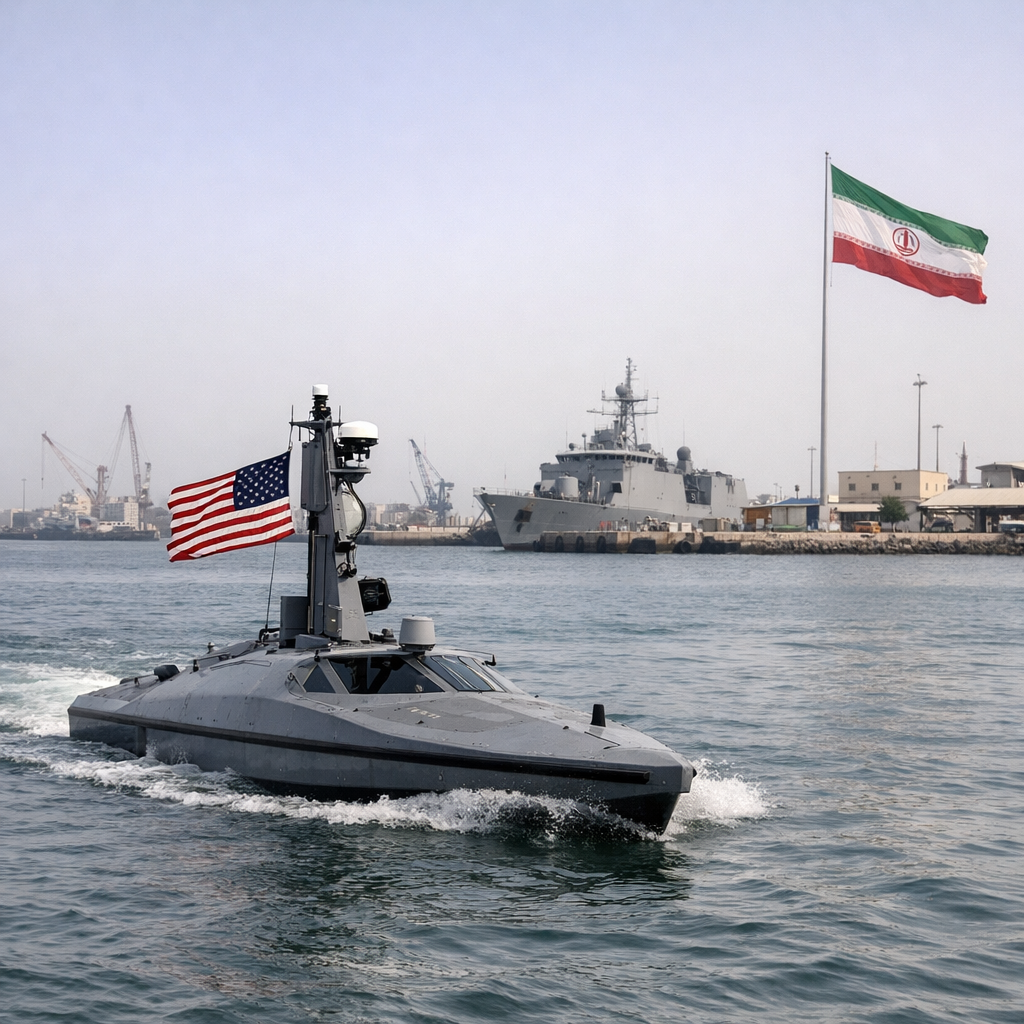
The United States Navy has carried out what officials describe as the first combat use of sea-based drones to strike an Iranian port, marking a significant shift in naval warfare and signaling a new phase in tensions across the region. The development was first reported by Military Times in its article “Sea drones strike Iranian port in combat first for US Navy.”
According to defense officials cited in that report, unmanned surface vessels were deployed to target infrastructure at a port linked to Iranian military logistics. The operation represents a departure from traditional naval engagements, relying instead on remotely operated systems capable of navigating contested waters without direct human presence on board, similar to technologies described by the U.S. Navy’s unmanned surface vehicle program.
U.S. officials have framed the strike as both a tactical success and a demonstration of emerging capabilities intended to deter further escalation. The drones, which can be equipped with explosives or precision-guided payloads, were reportedly able to evade detection and defenses long enough to complete their mission. Details about the extent of the damage or casualties were not fully disclosed, though early assessments indicated that key port facilities were disrupted.
The use of sea drones in a direct combat role underscores the Pentagon’s growing investment in autonomous and semi-autonomous systems, an effort outlined in broader strategy documents from the U.S. Department of Defense on artificial intelligence and autonomy. Over the past several years, the Navy has accelerated development of unmanned platforms designed to operate in swarms or alongside traditional ships, with the aim of extending reach while reducing risk to personnel.
Military analysts note that this strike could alter strategic calculations in the Persian Gulf and surrounding waterways, a region frequently examined in security analyses by organizations like the Center for Strategic and International Studies (CSIS). Iran has long relied on asymmetric tactics, including small fast-attack craft and proxy forces, to challenge U.S. naval superiority. The introduction of unmanned surface attacks adds another layer to an already complex operational environment, potentially complicating Iran’s defensive planning, as discussed in coverage of regional tensions by Reuters Middle East news.
At the same time, the deployment raises questions about escalation dynamics and the rules governing autonomous or remotely operated weapons. While U.S. officials emphasize that human operators remain involved in targeting decisions, the increased reliance on unmanned systems may blur lines of accountability and response in future confrontations, an issue often explored in discussions of unmanned surface vehicles and their legal implications.
Regional reactions have been cautious but attentive. Some allies have quietly welcomed the demonstration of advanced capabilities, viewing it as a deterrent against further aggression. Others have expressed concern that novel forms of warfare could accelerate instability if adopted more broadly.
The Military Times report suggests that the operation was the culmination of years of testing and incremental deployment, now brought into active conflict conditions. Defense officials indicated that additional uses of similar systems could follow, depending on operational needs and evolving threats.
As tensions persist and technological innovation reshapes the battlefield, the Navy’s use of sea drones in a combat strike may come to be seen as a pivotal moment, both for U.S. military doctrine and for the broader trajectory of warfare at sea.