Emerging Battlefield Tech Pairs Pocket-Sized Recon Drones With Expanding Long-Range Strike Capabilities
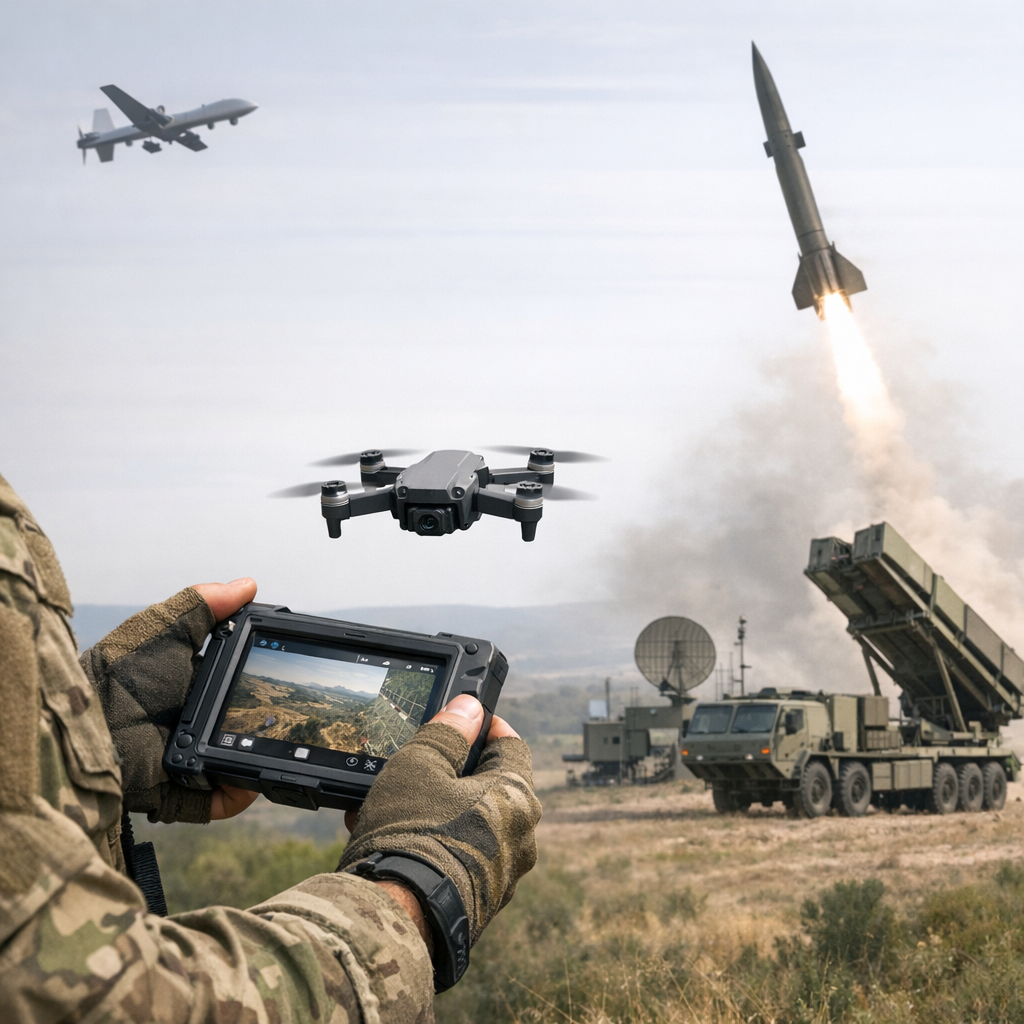
In its latest installment, “Throwable ground drones and new long-range munitions | Defense News Weekly full episode 6/22/26,” published by Military Times, the program highlights a wave of emerging technologies that defense officials say could reshape tactical operations at both the squad and theater levels. The full episode can be viewed at Military Times.
Among the most immediate developments discussed are compact, throwable ground drones designed for close-quarters reconnaissance. Unlike larger unmanned systems that require dedicated launch procedures, these devices can be deployed in seconds by individual soldiers, offering rapid situational awareness inside buildings, tunnels, or dense urban terrain. Similar concepts have been explored in programs such as the U.S. Army’s Small Unmanned Ground Vehicle initiatives, outlined by Army.mil. Military analysts featured in the segment note that such systems aim to reduce exposure to ambushes and improvised explosive devices, particularly in environments where line-of-sight visibility is limited.
The report suggests that these small platforms are part of a broader push toward decentralizing intelligence collection, placing more real-time data directly in the hands of frontline personnel. This shift aligns with trends discussed by the Center for Strategic and International Studies, which emphasize distributed sensing and decision-making. While questions remain about durability, signal reliability, and cybersecurity vulnerabilities, defense planners appear increasingly confident that iterative improvements will make these tools standard equipment in future infantry units.
Alongside these short-range systems, the episode examines advances in long-range precision munitions, an area receiving sustained investment as global powers prioritize deterrence and extended reach. Officials point to the growing importance of striking targets from greater distances while minimizing risk to personnel, a trend influenced by lessons drawn from recent conflicts where contested airspace and advanced air defenses have limited traditional strike options. Programs like DARPA’s long-range strike research, detailed at DARPA, reflect this priority.
The Military Times coverage underscores that next-generation munitions are being designed not only for range, but also for adaptability. Modular payloads, enhanced guidance systems, and improved survivability against jamming are all central to ongoing development efforts. According to analysis from RAND Corporation, these features are increasingly critical in electronically contested environments. Analysts argue that these capabilities could provide commanders with more flexible response options in rapidly evolving operational environments.
The episode also situates these technological shifts within a broader strategic context, noting increased competition among major powers and the acceleration of defense innovation cycles. Reports from NATO highlight similar concerns about maintaining technological edge and interoperability among allies. As procurement timelines shorten and battlefield requirements change more quickly, military organizations are under pressure to integrate new systems without sacrificing reliability or interoperability with existing platforms.
While the technologies featured in the Military Times report remain at varying stages of maturity, the overall trajectory is clear: a convergence of miniaturization at the tactical edge and expanded reach at the strategic level. Taken together, these developments reflect a defense landscape in which speed, precision, and information dominance are becoming as decisive as traditional measures of force.