Pentagon Announces Major General Officer Shakeup Reflecting Strategic Military Realignment
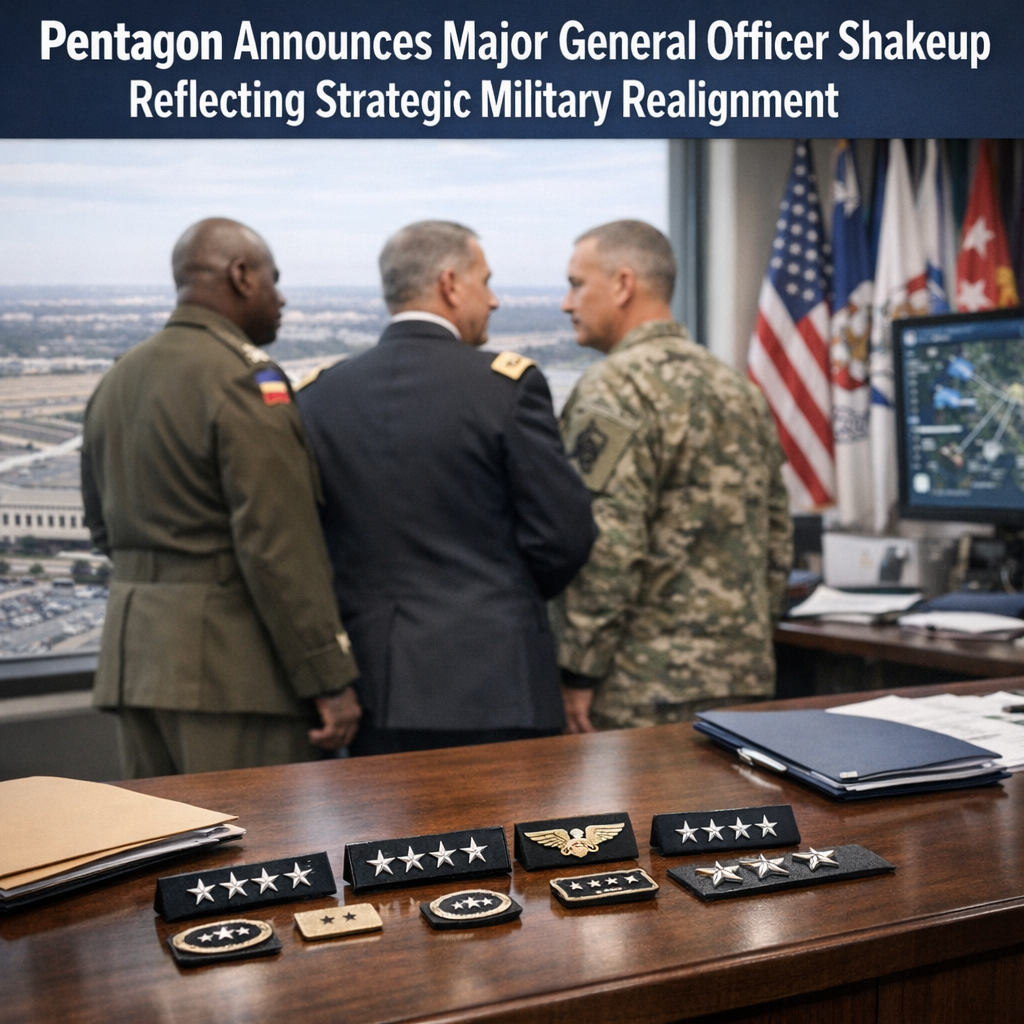
According to a June 22, 2026 release published on war.gov, titled “Secretary of War General Officer Announcements for June 22, 2026,” senior leadership changes are underway across multiple branches, reflecting ongoing personnel rotations at the highest levels of the U.S. military.
The announcement outlines a series of nominations and assignments requiring confirmation and formal approval, a routine but consequential process that helps shape the strategic direction and operational readiness of the armed forces, often involving review by the U.S. Senate. Such general officer movements often signal shifts in command priorities, the continuation of long-term modernization efforts, and the need to align leadership expertise with emerging global challenges frequently analyzed by institutions like RAND Corporation.
While the release primarily functions as an official record, its broader significance lies in the institutional continuity it represents. Senior officers selected for advancement or reassignment are typically chosen based on a combination of operational experience, leadership performance, and specialized expertise, consistent with frameworks outlined by the Department of Defense. These appointments can influence everything from regional command strategies to procurement priorities and joint-force coordination, often carried out through bodies such as the Joint Chiefs of Staff.
The June 22 announcement reflects an ongoing effort by the Department of War to maintain a balance between continuity and renewal within its leadership ranks. Regular rotation at the general officer level ensures that new perspectives are integrated while preserving institutional knowledge. It also supports career progression pipelines that are critical for maintaining morale and professionalism among senior officers, a concept emphasized in professional military education institutions like the U.S. Army War College.
Such announcements, while procedural in tone, carry implications for both domestic military organization and international security posture. Leadership changes in key commands can affect alliance coordination, deployment patterns, and responses to evolving geopolitical tensions.
The war.gov release offers only limited context for each individual appointment, consistent with its role as a formal notification. However, taken collectively, the changes underscore the scale and complexity of managing leadership across a global military structure.