India Commissions Three Advanced Naval Vessels to Strengthen Indo-Pacific Maritime Power
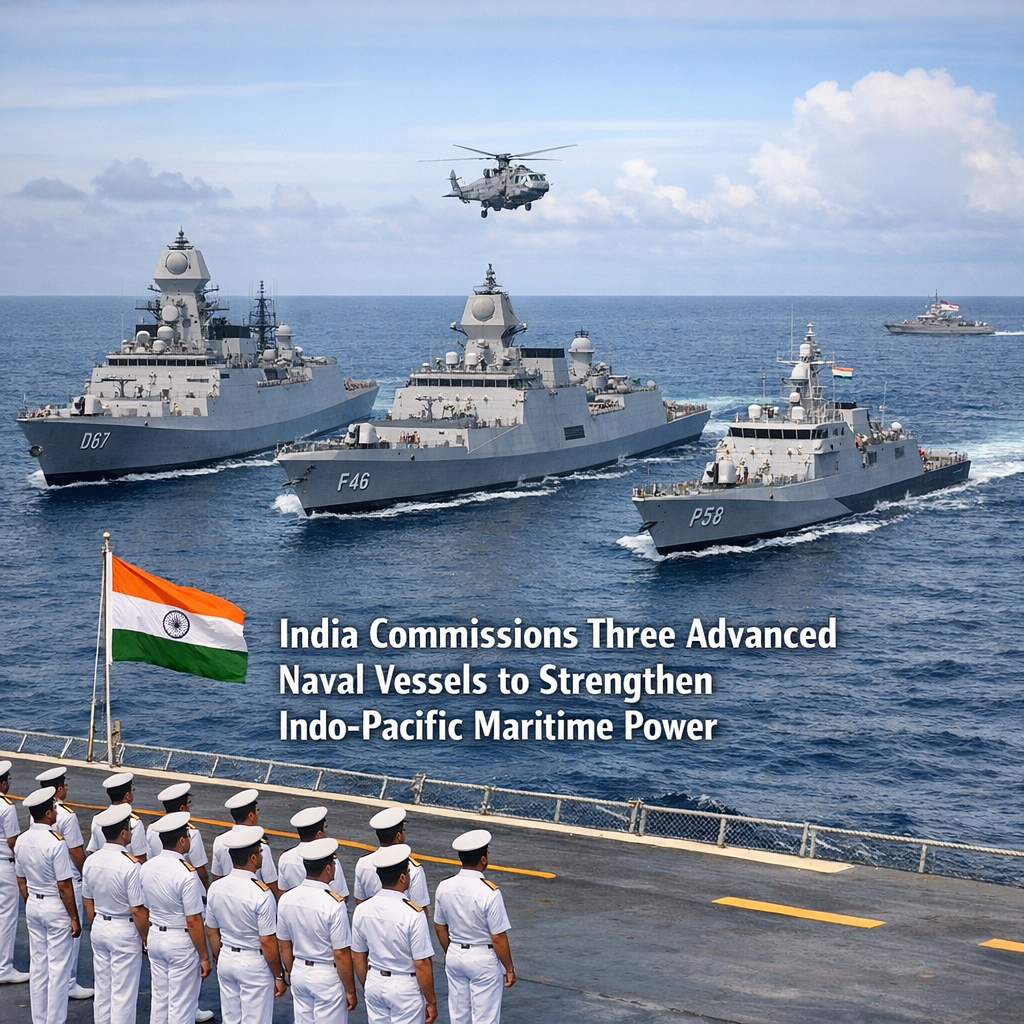
India has inducted three new naval vessels into active service, a move that underscores its efforts to strengthen maritime capabilities amid an increasingly complex security environment in the Indo-Pacific. The development was detailed in the Defense News article titled “India’s three new naval ships boost maritime firepower,” which highlights how the additions expand both offensive reach and operational flexibility, as reported in Defense News.
The newly commissioned platforms include a mix of surface combatants and support vessels designed to enhance surveillance, strike capability, and logistical endurance. According to Defense News, each ship reflects India’s broader push toward indigenous defense production, with a significant proportion of their systems and components developed domestically. This aligns with New Delhi’s long-standing objective of reducing reliance on foreign suppliers while building a self-sufficient defense industrial base, a priority outlined by India’s Ministry of Defence.
The warships are equipped with modern weapon systems and sensors intended to address a range of maritime threats, from conventional naval engagements to asymmetric challenges. Their deployment comes at a time when regional waters are witnessing increased naval activity, particularly in the Indian Ocean region and adjoining areas where strategic competition has intensified.
Indian officials have framed the commissioning as a milestone in naval modernization, emphasizing improvements in firepower, endurance, and multi-mission capability. The vessels are expected to play key roles in safeguarding sea lines of communication, conducting deterrence patrols, and supporting humanitarian assistance operations when required, consistent with the broader mission profile of the Indian Navy.
Defense News reports that the ships also demonstrate advances in design and integration, incorporating lessons learned from previous classes and ongoing projects. These improvements include more advanced radar and electronic warfare systems, as well as enhanced survivability features.
The timing of the induction reflects India’s broader maritime strategy, which increasingly prioritizes a forward presence and rapid response capability across its areas of interest. Analysts note that such enhancements are particularly relevant given evolving security dynamics involving major powers in the Indo-Pacific, as well as persistent concerns over piracy, smuggling, and other transnational threats, issues tracked by organizations such as the UN Office on Drugs and Crime.
By adding these vessels to its fleet, India signals both its intent and capacity to play a larger role in regional maritime security. As outlined in Defense News, the expansion not only boosts immediate operational readiness but also reinforces long-term ambitions to develop a blue-water navy capable of sustained operations far from its shores.