Taiwan Coast Guard on Front Lines of Blockade Threat
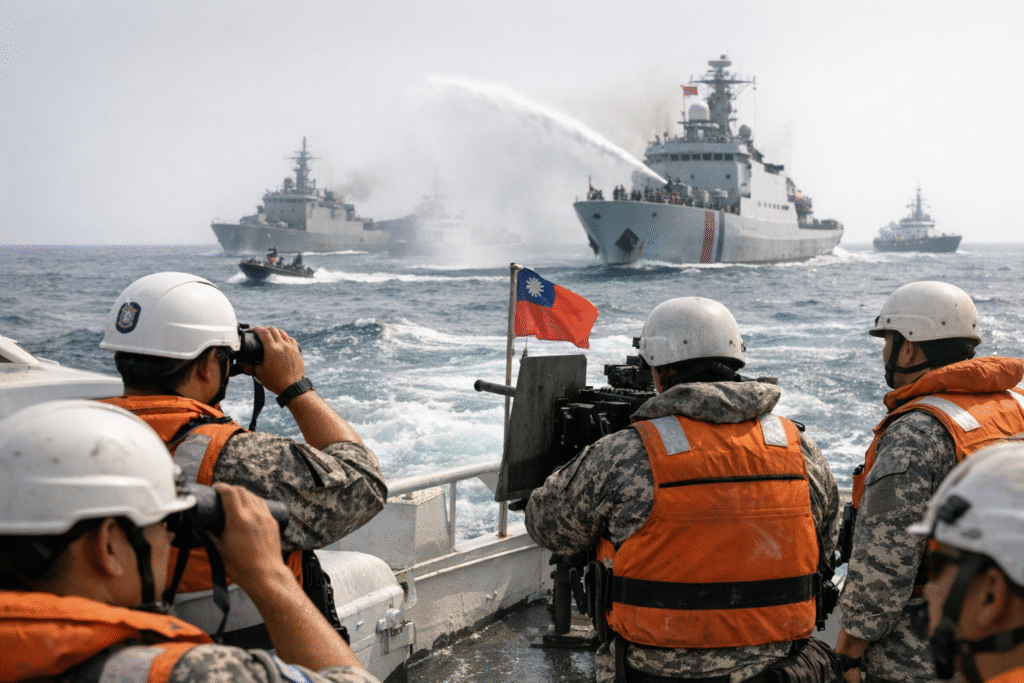
A recent Wall Street Journal video feature, “Inside Taiwan’s Coast Guard Mission to Thwart a Chinese Blockade,” offers a close look at the front-line maritime operations shaping one of Asia’s most consequential security flashpoints. The report underscores how Taiwan’s coast guard, long viewed primarily as a law enforcement body, has evolved into a critical component of the island’s broader defense posture amid intensifying pressure from Beijing.
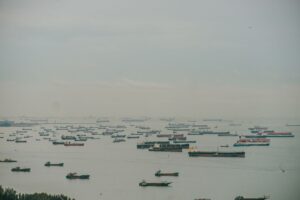
The video depicts a force operating under increasingly complex conditions. Taiwan’s coast guard regularly patrols waters near the median line of the Taiwan Strait and around outlying islands, where Chinese vessels—ranging from fishing boats and sand dredgers to maritime militia ships—have expanded their presence. These activities often blur the line between civilian and military operations, creating persistent gray-zone pressure that falls short of open conflict but steadily tests Taiwan’s capacity to respond.
Officials featured in the Wall Street Journal report describe the coast guard as a first responder in scenarios that may precede or accompany a blockade. In such a contingency, China could seek to choke off Taiwan’s trade routes without immediately triggering a full-scale military confrontation. Coast guard units would be tasked with monitoring, intercepting, and managing incursions while coordinating closely with the navy and other defense agencies.
The footage highlights new investments in larger patrol vessels, improved surveillance systems, and joint training exercises designed to increase readiness. These upgrades reflect a strategic recalibration: Taiwan is preparing not only for overt military action but also for sustained coercion at sea. By maintaining a visible and active presence, the coast guard aims to assert jurisdiction and prevent incremental encroachments that could shift the status quo.
At the operational level, crews face frequent standoffs with Chinese counterparts. Encounters can involve maneuvering in close quarters, issuing warnings, and documenting activities for potential diplomatic or legal responses. The emphasis is often on restraint and professionalism, even in situations that carry the risk of escalation.
The Wall Street Journal’s account also points to the psychological dimension of these missions. Personnel operate under constant awareness that routine patrols could abruptly become flashpoints in a broader crisis. Training therefore focuses not only on technical proficiency but also on rules of engagement and crisis management, reflecting the delicate balance Taiwan must strike between deterrence and de-escalation.
Analysts cited in the report suggest that coast guard forces are likely to play a pivotal role in the early stages of any blockade scenario. Their ability to maintain maritime access, gather intelligence, and signal resolve could influence how such a confrontation unfolds. At the same time, their quasi-civilian status introduces both advantages and vulnerabilities, particularly in situations where legal and military frameworks overlap.
The feature ultimately presents Taiwan’s coast guard as an adaptable and increasingly strategic institution. While not a substitute for conventional military power, it serves as a crucial layer in the island’s defense architecture, shaping day-to-day realities in contested waters and helping to manage a tense equilibrium in the Taiwan Strait.