US Sends Retired Marine Amphibious Vehicles to Black Sea Allies to Boost Regional Defense
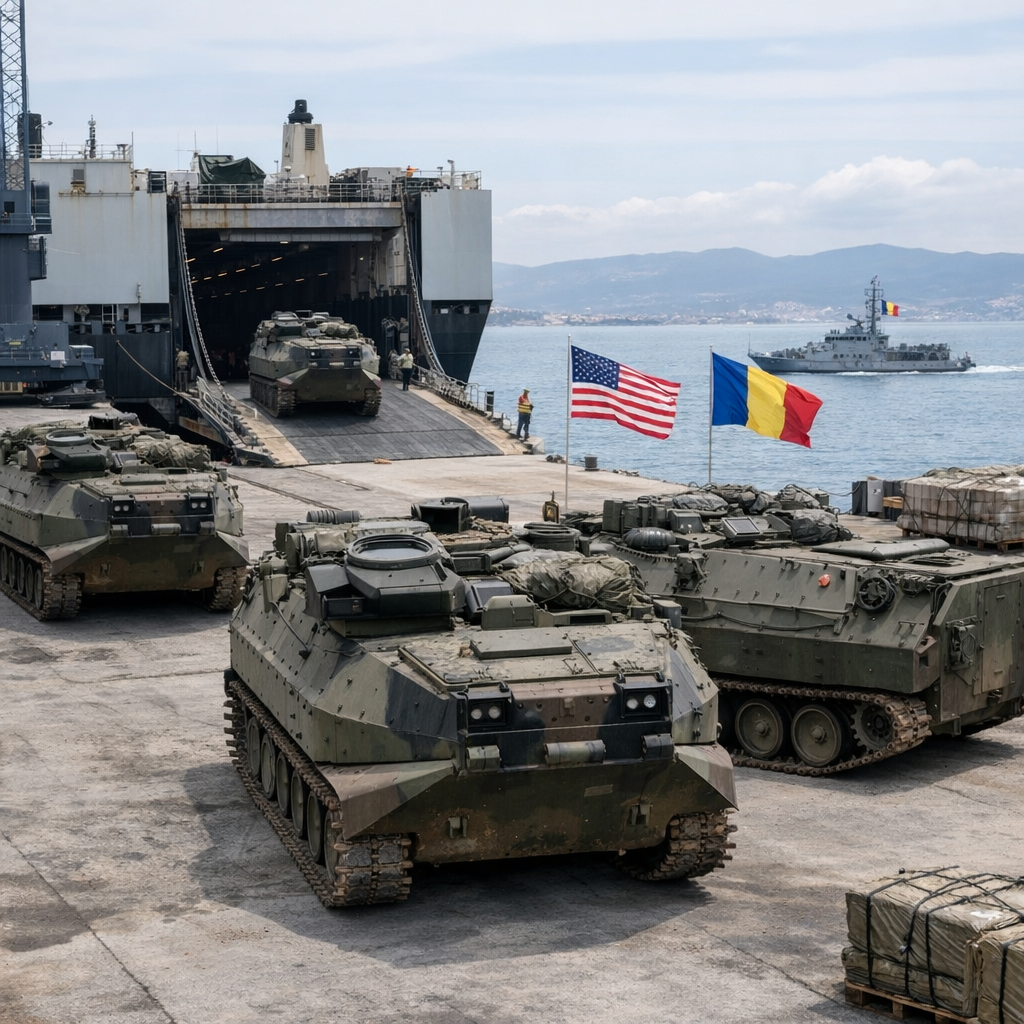
The United States has begun transferring retired Marine Corps amphibious assault vehicles to allied nations along the Black Sea, a move aimed at bolstering regional deterrence and reinforcing partners facing ongoing security pressures from Russia. The decision reflects a broader U.S. strategy of redistributing legacy equipment to strengthen allied capabilities while the Marine Corps continues its modernization efforts.
According to the Military Times report titled “US transfers retired Marine Corps AAVs to allies defending Black Sea region”, the vehicles being provided were formerly used by the U.S. Marine Corps and have been phased out as part of a transition toward more advanced platforms. Rather than decommission the fleet entirely, U.S. officials are repurposing the Amphibious Assault Vehicle (AAV) to support allies operating in a region that has become increasingly central to European security concerns since Russia’s full-scale invasion of Ukraine.
The AAV, a tracked armored vehicle capable of transporting troops from ship to shore, has long served as a backbone of U.S. amphibious operations. Though aging and gradually being replaced by newer systems, it still offers practical utility for nations seeking to improve mobility across coastal and riverine environments. In the context of the Black Sea, where waterways and littoral geography present both tactical challenges and opportunities, such vehicles can play a meaningful role in defensive planning.
Officials cited in the Military Times report emphasized that the transfers are part of ongoing security assistance and cooperation initiatives rather than an isolated shipment. The recipient countries have not all been publicly detailed, but the effort is understood to focus on NATO allies and partner states most exposed to regional instability. These may include countries such as Romania and Bulgaria, as well as Ukraine, which has received a wide array of Western military equipment since 2022.
The move also underscores a pragmatic dimension of U.S. defense policy: balancing modernization with alliance commitments. As the Marine Corps divests older platforms to invest in lighter, more expeditionary forces designed for future conflicts, particularly in the Indo-Pacific, it creates an opportunity to extend the service life of replaced systems through foreign military transfers, a concept aligned with its broader Force Design 2030 modernization strategy.
At the same time, the decision carries operational and political significance. For recipient countries, the addition of armored amphibious vehicles can enhance rapid troop deployment, improve coastal defense, and support joint exercises with NATO forces. For Washington, the transfers signal continued engagement in European security while leveraging existing resources rather than committing entirely new production lines, particularly in a region NATO identifies as strategically important in its Black Sea security posture.
The Black Sea region has grown increasingly volatile, with recurring naval incidents, airspace violations, and infrastructure threats tied to the ongoing war in Ukraine. By strengthening the capabilities of countries along its perimeter, U.S. policymakers aim to complicate potential aggression and reinforce collective defense arrangements.
Still, the use of older systems is not without limitations. AAVs have faced criticism over safety concerns and vulnerability in high-threat environments, issues highlighted in coverage of previous incidents by outlets such as USNI News, and which contributed to the Marine Corps’ decision to retire them. Their effectiveness will depend in part on how they are integrated into the receiving countries’ broader military structures and whether upgrades or modifications are undertaken.
Even so, analysts note that in many cases, incremental improvements in mobility and armor can have a substantial impact for militaries operating with more limited resources. The transfer of AAVs therefore represents a measured but tangible enhancement of allied capabilities at a time when the strategic importance of the Black Sea continues to rise.
As the Military Times article suggests, the initiative reflects an approach that combines short-term reinforcement with long-term transformation—providing partners with usable equipment today while the U.S. military prepares for the conflicts of tomorrow.