NATO Expands Gender Strategy in Maritime Security
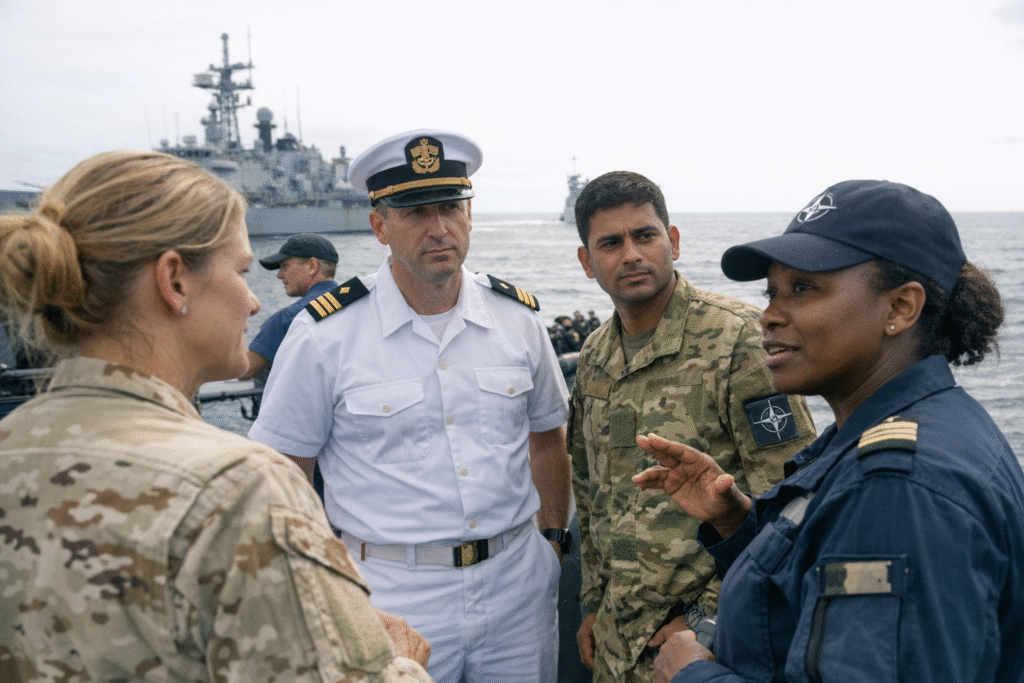
A recent feature published on NATO’s official website, titled “Deep Dive Recap: Gender Perspectives in the Maritime Domain,” highlights a growing emphasis within the alliance on integrating gender considerations into naval operations and maritime security policy. The article outlines how NATO is working to incorporate a broader understanding of how gender dynamics affect operational effectiveness, strategic planning, and security outcomes at sea.
According to NATO, the maritime domain presents unique challenges and opportunities for applying gender perspectives, from counter-piracy missions to humanitarian operations and freedom of navigation patrols. The organization argues that considering gender is not a peripheral issue but a strategic tool that can improve situational awareness, enhance decision-making, and strengthen mission success. This approach aligns with NATO’s broader commitments under the Women, Peace and Security agenda, which seeks to ensure that security efforts are inclusive and responsive to the needs of all populations.
The original article emphasizes that gender perspectives extend beyond increasing the participation of women in naval forces. While representation remains a priority, NATO stresses the importance of embedding gender analysis into planning and execution. This includes understanding how maritime threats such as trafficking, illegal fishing, and piracy can have different impacts on men, women, and vulnerable communities, and adapting responses accordingly.
Examples highlighted in the recap point to practical applications already underway. Training initiatives and exercises increasingly include gender advisors and scenario planning that accounts for civilian interactions and local populations. These efforts are designed to prepare personnel for complex, real-world environments where social dynamics can shape operational outcomes as much as traditional military considerations.
NATO also underscores the role of partnerships. Cooperation with partner nations, international organizations, and civil society groups is seen as crucial for advancing gender integration in maritime contexts. Such collaboration helps share best practices and ensures that policies are informed by diverse perspectives and expertise.
The article suggests that progress is ongoing but uneven, noting persistent challenges such as institutional resistance, limited resources, and the need for more consistent training. Nevertheless, NATO presents its efforts as part of a long-term shift toward more adaptive and inclusive security strategies.
“Deep Dive Recap: Gender Perspectives in the Maritime Domain,” published by NATO, ultimately frames gender integration not as an add-on but as a necessary evolution in how maritime security is understood and practiced in an increasingly complex global environment.