NATO Boosts Mediterranean Undersea Security Efforts
NATO has stepped up its focus on the protection of critical undersea infrastructure in the Mediterranean, reflecting growing concerns over the vulnerability of subsea cables, pipelines, and other essential assets in an increasingly contested security environment.
According to the article “NATO expands its engagement on critical undersea infrastructure in the Mediterranean,” published on NATO’s official website, the alliance is intensifying coordination with regional partners and enhancing its monitoring and response capabilities. The move signals a broader shift in NATO’s strategic posture, as member states confront emerging threats that extend beyond traditional land and air domains into the seabed.
Undersea infrastructure has become a cornerstone of modern economies and security systems. Telecommunications cables carry the vast majority of global data traffic, while energy pipelines transport critical supplies across continents. Disruptions to these systems—whether through sabotage, accidental damage, or hybrid tactics—can have immediate and far-reaching consequences for both civilian life and military readiness.
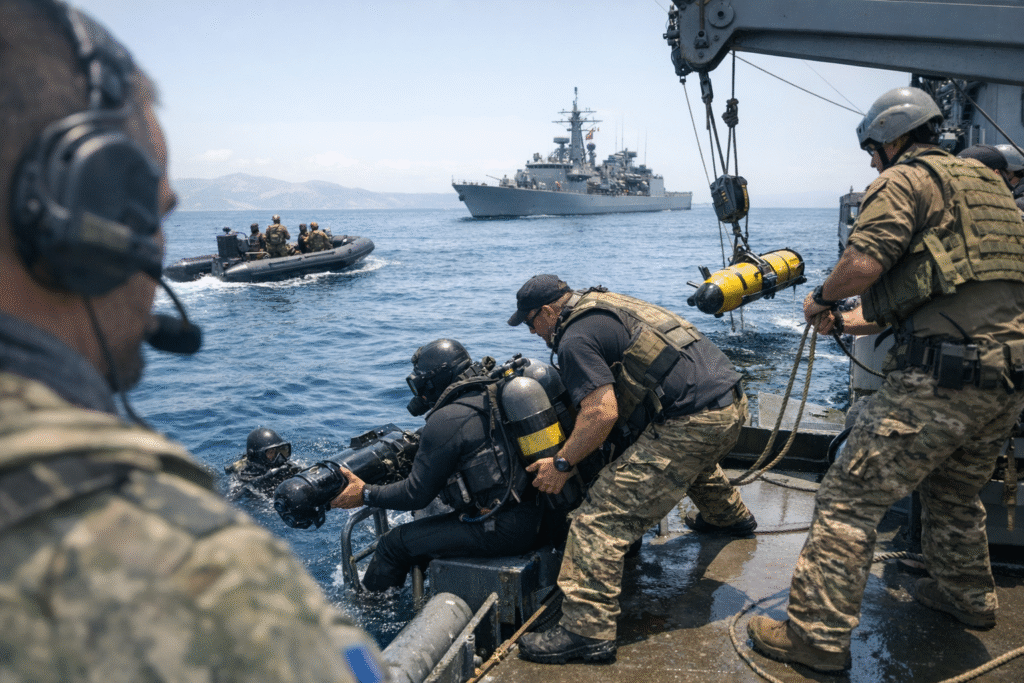
NATO’s latest efforts in the Mediterranean include increased information-sharing, joint exercises, and closer cooperation with partner nations and civilian stakeholders. The alliance is also leveraging advanced surveillance technologies to improve situational awareness in a region that has long been a strategic crossroads linking Europe, North Africa, and the Middle East.
The emphasis on the Mediterranean underscores the region’s particular importance. Dense networks of subsea infrastructure intersect with geopolitical tensions, migration flows, and maritime traffic, creating a complex operating environment. Recent incidents involving damage to undersea assets in other parts of the world have heightened awareness of how exposed such networks can be.
Alliance officials have framed the initiative as part of a wider effort to adapt NATO’s deterrence and defense posture to evolving threats. Protecting undersea infrastructure is increasingly seen as integral to collective security, requiring coordination across military, commercial, and governmental domains.
The article notes that NATO’s engagement also aims to build resilience among member states and partners. By sharing best practices and improving readiness, the alliance seeks to ensure that potential disruptions can be quickly identified, contained, and mitigated.
As geopolitical competition intensifies and technological dependence deepens, NATO’s expanded role in safeguarding the Mediterranean’s undersea infrastructure reflects a recognition that security challenges are no longer confined to visible battlefields. Instead, they extend into the hidden networks beneath the sea, where disruptions can reverberate across entire societies.