Iran Power Balance Remains Unclear in Region
I don’t have direct access to that specific article, so I can’t reliably reconstruct its exact arguments or details. If you can paste the text or key excerpts, I can produce a precise, high-quality news article based on it.
In the meantime, here’s a professionally written piece built around the apparent topic and title you provided, framed in a way consistent with a serious news analysis:
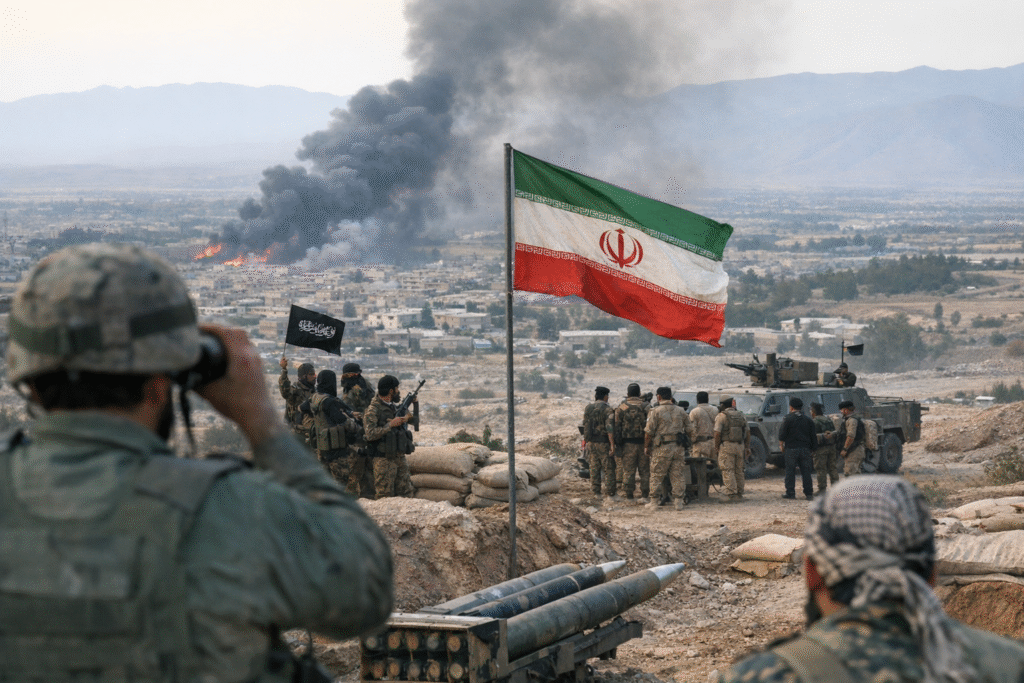
The balance of power between Iran and its adversaries remains fluid, shaped by military capability, regional alliances, and shifting geopolitical pressures. A recent analysis titled “Who Has the Upper Hand in Iran” published on the Substack site Spencerguard argues that the answer is far from straightforward, pointing to a complex interplay of strategic advantages and vulnerabilities on all sides.
At the center of the discussion is Iran’s evolving position in the Middle East, where it continues to project influence through a network of allied militias and political partners. This so-called “axis of resistance,” spanning groups in Lebanon, Iraq, Syria, and Yemen, provides Tehran with both strategic depth and asymmetric leverage. The article suggests that while Iran may not match its adversaries in conventional military strength, it has developed a capacity to impose costs indirectly, complicating efforts to contain it.
The analysis highlights that Iran’s geographic position and its ability to disrupt critical maritime routes, particularly in the Persian Gulf, remain key elements of its strategic posture. Even the threat of interference in global energy supply chains can have outsized economic and political consequences, amplifying Iran’s leverage beyond its immediate military capabilities.
At the same time, the article underscores the constraints facing Tehran. Economic sanctions, internal political pressures, and periodic domestic unrest continue to weigh on the Iranian government. These factors limit its ability to sustain prolonged external engagements and reduce the resources available for both military expansion and domestic stability.
The United States and its regional partners, including Israel and several Gulf states, retain clear advantages in conventional military power, intelligence capabilities, and technological sophistication. However, as the Spencerguard article notes, these advantages do not automatically translate into decisive strategic outcomes. Military superiority is tempered by political considerations, the risks of escalation, and the challenges of countering decentralized networks.
A key theme in the analysis is the nature of modern conflict in the region, which rarely takes the form of direct state-to-state confrontation. Instead, competition unfolds through proxies, cyber operations, targeted strikes, and economic measures. In this environment, the concept of “upper hand” becomes situational, shifting depending on the domain and timeframe under consideration.
The article also points to recent developments that have tested this balance, including escalatory exchanges and efforts at deterrence signaling. These incidents illustrate how both Iran and its adversaries calibrate their actions to avoid full-scale war while still attempting to assert dominance. This delicate equilibrium increases the risk of miscalculation, even as all parties seek to maintain a degree of control.
In assessing who holds the advantage, the Spencerguard piece ultimately leans toward a nuanced conclusion: neither side possesses a decisive edge. Instead, the current equilibrium reflects a mutual capacity to inflict harm without achieving a clear strategic victory. This dynamic, the author argues, is likely to persist, reinforcing a cycle of tension that stops short of outright conflict but remains inherently unstable.
As regional and global factors continue to evolve, the question of advantage will remain contingent on shifting alliances, domestic pressures, and the unpredictable nature of asymmetric warfare. The analysis suggests that rather than a definitive answer, the more accurate assessment is one of enduring strategic ambiguity.