Coast Guard to Require Fitness Tests for Admirals
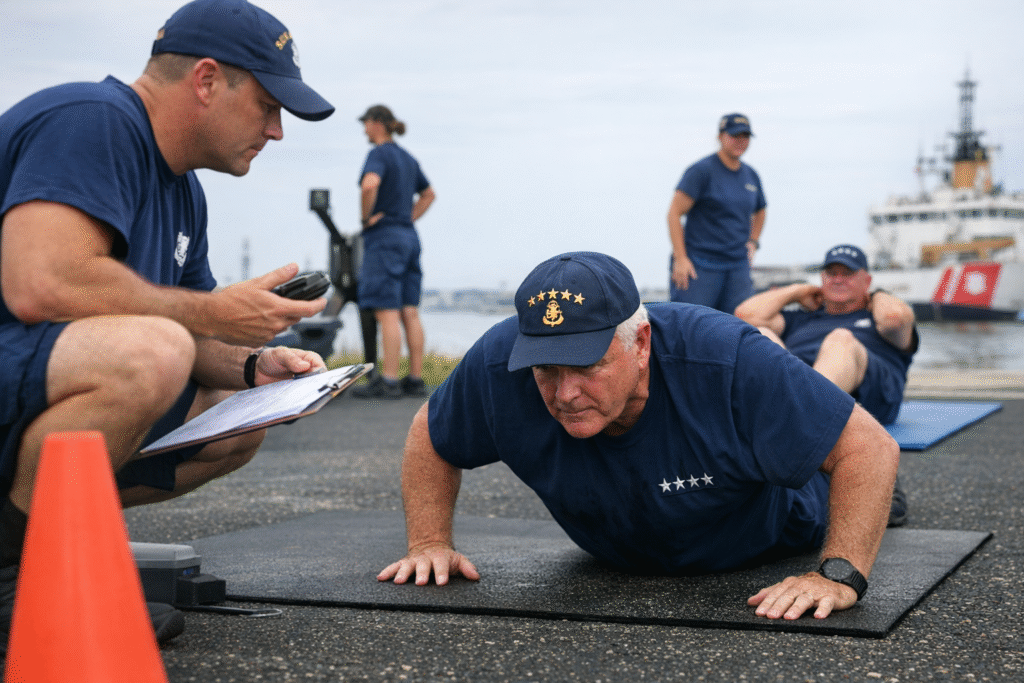
The U.S. Coast Guard is set to introduce a formal physical fitness assessment for flag officers, marking a significant cultural and institutional shift within the service’s senior ranks. As reported in “Admirals to be scored first on Coast Guard’s first ever PT test,” published by Military Times, the initiative will, for the first time, require admirals to undergo standardized physical testing as part of a broader effort to reinforce readiness and accountability.
Historically, physical fitness testing has been a routine feature of enlisted and junior officer life across the armed services, but requirements have often been relaxed or inconsistently applied at the highest levels of leadership. The Coast Guard’s move signals an effort to close that gap. Under the new policy, admirals will be evaluated on measurable physical standards, aligning them more closely with the expectations long placed on the broader force.
Coast Guard officials describe the program as part of a wider push to modernize personnel policies and emphasize operational readiness across all ranks. While the service has not typically been associated with the same level of physical rigor in leadership assessments as some other military branches, leaders increasingly argue that visible, shared standards are essential to maintaining credibility and cohesion.
The introduction of the test has also prompted discussion about the role of senior leaders in modeling the behaviors they expect from their subordinates. By subjecting admirals to the same types of evaluations faced by junior personnel, the Coast Guard appears to be reinforcing a message about accountability and shared responsibility. Advocates within the service suggest that such measures can strengthen trust and signal a commitment to fairness, particularly at a time when recruitment and retention remain pressing concerns.
At the same time, the policy may face practical and cultural challenges. Flag officers often carry demanding administrative and strategic responsibilities that limit time for structured fitness regimens. There may also be questions about how standards will be calibrated for age and medical considerations without undermining the credibility of the program.
Even so, the move reflects a broader trend across the U.S. military toward reassessing leadership expectations in light of evolving operational demands. As highlighted by Military Times, the Coast Guard’s decision positions it among the services seeking to ensure that fitness and readiness are not just rhetorical priorities but institutional requirements extending to the highest levels of command.
Whether the new assessment becomes a lasting fixture or undergoes revision will likely depend on its early implementation and reception within the ranks. For now, it represents a notable step toward redefining how leadership is measured within one of the nation’s maritime services.