Army Accelerates $1B Push for Counter-Drone Tech
The U.S. Army is preparing to commit nearly $1 billion to expand its arsenal of small counter-drone technologies, underscoring the growing urgency of defending against increasingly accessible unmanned aerial threats on modern battlefields. According to the article “Here’s how the Army plans to spend nearly $1 billion in procuring small counter-drone tech,” published by Breaking Defense, the service is accelerating procurement efforts to field a layered mix of detection, tracking, and defeat systems designed to counter small, commercially derived drones.
The planned investment reflects lessons drawn from recent conflicts, particularly in Ukraine and the Middle East, where inexpensive drones have demonstrated outsized battlefield impact. These systems have been used for reconnaissance, targeting, and direct attacks, often overwhelming traditional defenses through scale and low cost. Army officials cited in the Breaking Defense report emphasize that countering such threats now requires not only technological innovation but also rapid acquisition and deployment at unit level.
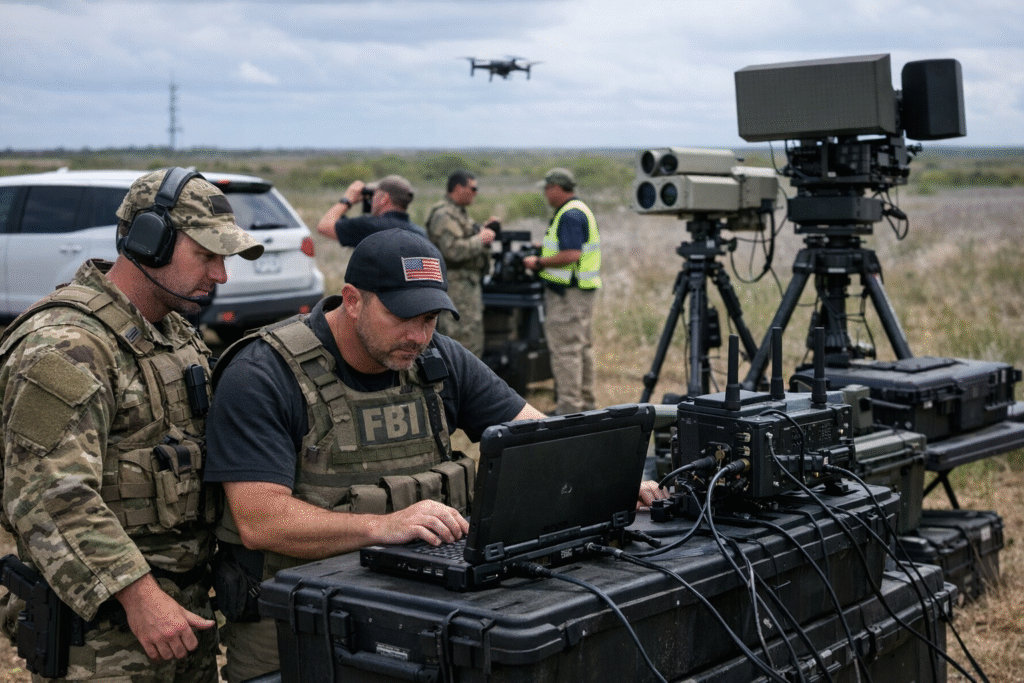
Rather than relying on a single solution, the Army is pursuing a diversified approach. Funding is being distributed across multiple capabilities, including handheld and vehicle-mounted electronic warfare systems, kinetic interceptors, directed energy weapons, and advanced sensing technologies. The goal is to build a layered defense architecture capable of identifying and neutralizing drones at varying ranges and altitudes, while remaining adaptable as adversaries evolve their tactics.
A significant portion of the investment is directed toward systems that can be integrated with existing platforms and units without extensive retraining or logistical burden. This includes portable and modular technologies that can be deployed quickly by frontline forces. Army planners are also focusing on improving interoperability, ensuring that counter-drone tools can share data across units and command networks to improve situational awareness and response times.
The procurement strategy reflects a shift in acquisition philosophy. Rather than waiting for long development cycles to produce a single, comprehensive system, the Army is prioritizing speed and incremental improvement. By fielding capabilities sooner and upgrading them over time, officials aim to stay ahead of rapidly evolving drone threats. This approach also opens the door for a broader range of vendors, including smaller and nontraditional defense companies, to contribute solutions.
The Breaking Defense article notes that the Army’s effort is not solely about hardware. Training, doctrine, and operational integration are also critical components of the initiative. Soldiers must be equipped not only with technology but with the skills and tactical frameworks needed to employ it effectively in complex environments where drones may appear in large numbers and from multiple directions.
At the same time, questions remain about how the Army will balance cost, scalability, and effectiveness. While directed energy systems such as lasers offer the promise of low-cost engagements against drones, they are still maturing and face challenges related to power, mobility, and environmental conditions. Similarly, electronic warfare solutions can be highly effective but may be limited by spectrum management issues and adversary countermeasures.
The nearly $1 billion investment signals that counter-drone capabilities are no longer a niche requirement but a central element of military readiness. As adversaries continue to exploit commercially available technologies, the Army’s procurement strategy suggests a recognition that future conflicts will be shaped not only by advanced weapon systems but also by the widespread use of small, inexpensive, and highly adaptable unmanned platforms.