Air Force Tests AI for Promotion Decisions
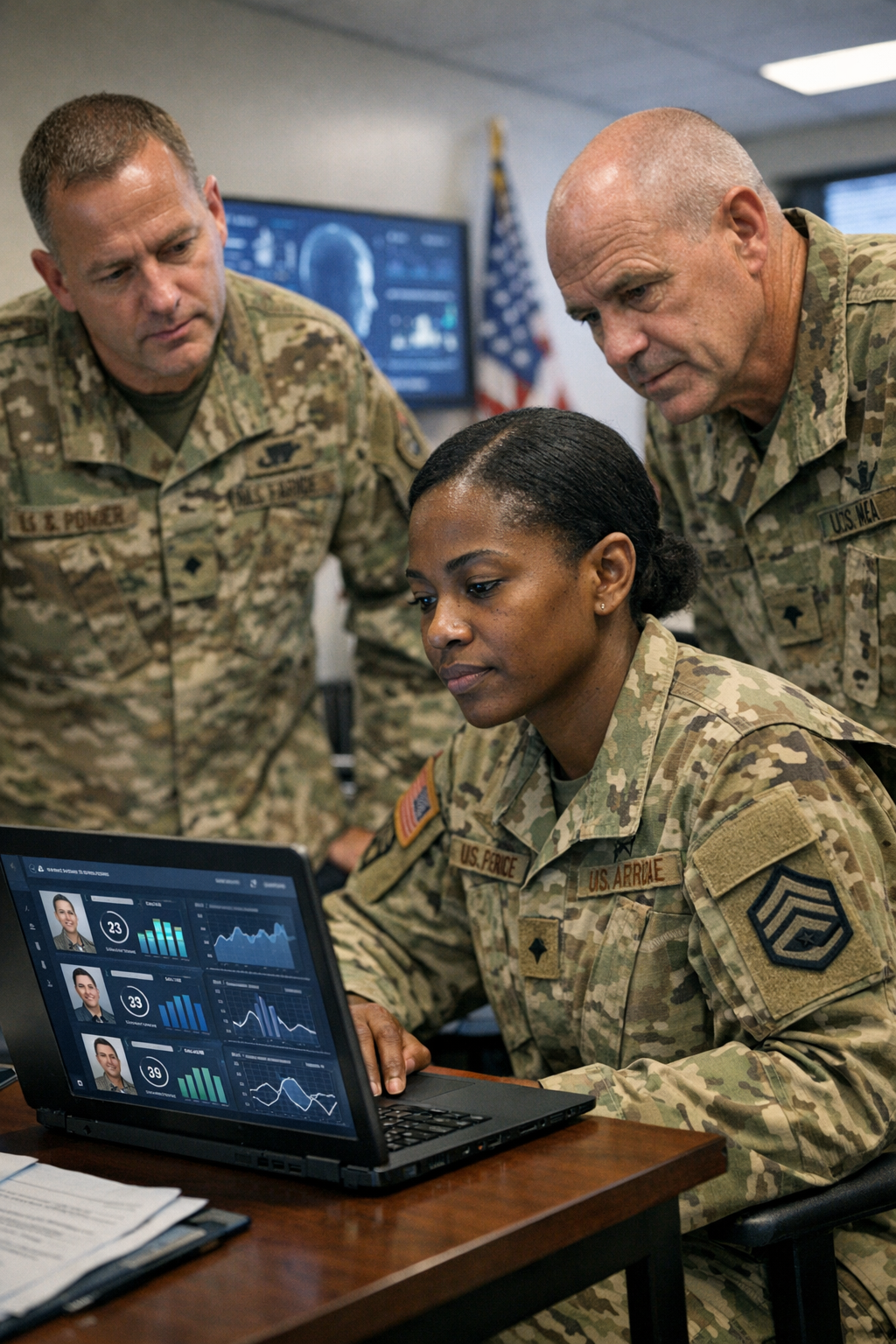
The U.S. Air Force is exploring the use of artificial intelligence to assist in evaluating service members for promotion, an initiative that reflects the military’s broader effort to modernize personnel systems while raising new questions about fairness, transparency, and oversight.
According to the report “Air Force experimenting with using AI for promotion boards,” published by Military Times, the service has begun testing AI tools that could help analyze records traditionally reviewed by human promotion boards. These records include performance reports, awards, and career histories, all of which play a central role in determining advancement.
Air Force officials describe the effort as experimental, emphasizing that AI is not replacing human decision-makers. Instead, the technology is being assessed as a potential aid to streamline the review process, identify patterns, and reduce the administrative burden associated with evaluating large numbers of candidates. Promotion boards can involve extensive paperwork and time-consuming deliberations, particularly at higher ranks, where selection rates are competitive and scrutiny is intense.
The initiative comes at a time when the Department of Defense is investing heavily in artificial intelligence across a range of functions, from battlefield decision-making to logistics and personnel management. Within this broader push, personnel systems are seen as an area where AI could increase efficiency and consistency, though not without controversy.
One of the primary concerns surrounding the use of AI in promotion decisions is the risk of bias. Algorithms trained on historical data may inadvertently replicate or even amplify existing disparities in career advancement. If past promotion patterns reflect systemic biases—whether related to race, gender, or career field—those biases could be embedded in the AI’s recommendations. Air Force officials have acknowledged this risk and indicated that part of the experimentation involves assessing how to mitigate such outcomes.
Transparency is another key issue. Traditional promotion boards, while not fully transparent, operate within a framework that allows for some level of human judgment and accountability. Introducing AI into the process raises questions about how decisions are made and whether service members can understand or challenge outcomes influenced by algorithmic analysis. Ensuring that any AI tool remains explainable and subject to oversight will likely be critical to its acceptance within the force.
Proponents of the effort argue that AI could help standardize evaluations by applying consistent criteria across candidates, potentially reducing the influence of subjective factors. In theory, this could improve fairness if the system is carefully designed and monitored. Additionally, AI could help identify high-performing individuals whose records might otherwise be overlooked in a manual review process.
However, skeptics caution that promotion decisions are inherently complex and involve qualitative judgments that may not translate easily into algorithmic models. Leadership potential, character, and other intangible attributes are difficult to quantify, raising doubts about how effectively AI can capture the full scope of a service member’s qualifications.
The Air Force has stressed that any future implementation would keep humans firmly in the decision loop, with AI serving as a supplementary tool rather than a final arbiter. The current experimentation phase is intended to evaluate both the capabilities and the limitations of the technology before any broader adoption is considered.
As the military continues to integrate artificial intelligence into its operations, the outcome of this effort could have implications beyond the Air Force. If successful, similar approaches could be adopted by other branches or applied to additional personnel processes. If not, the initiative may serve as a cautionary example of the challenges involved in applying AI to high-stakes human decisions.
For now, the experiment underscores a familiar tension in military modernization: balancing the promise of new technology with the need to preserve trust, equity, and accountability in the systems that shape careers and leadership within the armed forces.