AI Regulation Clash Shapes 2026 Political Battle
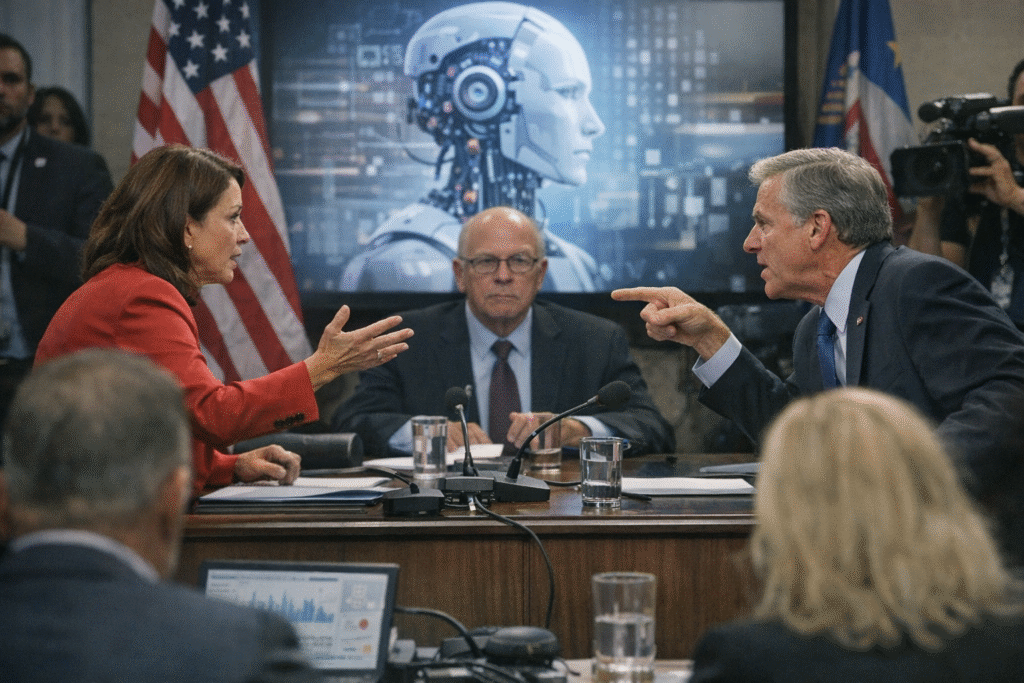
The Wall Street Journal article titled “Trump, AI and Anthropic: The Mythos of Regulation” examines a growing debate within U.S. technology and political circles over how artificial intelligence should be governed, highlighting tensions between industry leaders and policymakers as the 2026 election cycle begins to shape regulatory priorities.
At the center of the discussion is a shifting narrative around former President Donald Trump’s approach to artificial intelligence, which has been framed by some allies as pro-innovation and resistant to what they characterize as excessive regulatory burdens. According to the Wall Street Journal’s reporting, this positioning has gained traction among segments of the tech industry wary of sweeping federal oversight, particularly as companies race to develop increasingly powerful AI systems.
Executives at leading AI firms, including Anthropic, have emerged as influential voices in the policy debate. Anthropic, known for its focus on AI safety, has advocated for guardrails that would mitigate risks associated with advanced models while preserving room for innovation. However, the Journal notes a growing divide within the industry itself, with some leaders arguing that regulatory caution could hinder U.S. competitiveness, especially against China.
The article describes how the “mythos of regulation” has taken shape as a political and rhetorical construct, with competing camps offering starkly different visions of the risks and benefits posed by artificial intelligence. Supporters of lighter regulation contend that market forces and voluntary standards can address safety concerns, while critics warn that insufficient oversight could lead to systemic harms, including misinformation, labor disruption, and national security vulnerabilities.
Trump’s allies, as reported by the Wall Street Journal, have increasingly embraced the argument that federal intervention should be minimal, positioning AI development as a domain where American companies must be unencumbered to maintain global leadership. This stance contrasts with the Biden administration’s earlier emphasis on executive orders and frameworks aimed at establishing baseline safety standards and transparency requirements.
The Journal’s reporting also highlights the role of public perception in shaping policy. As generative AI tools become more widespread, public anxiety about their impact has grown, creating pressure for political leaders to articulate clear positions. At the same time, the complexity of the technology has allowed simplified narratives—such as the idea that regulation is inherently detrimental—to gain traction in political discourse.
Anthropic’s involvement underscores a broader trend in which AI companies are not only developers of technology but also active participants in shaping its governance. The firm has advocated for targeted regulation, including requirements for safety testing and risk disclosure, while cautioning against overly rigid rules that could stifle research. This nuanced stance reflects the difficulty of crafting policy in a rapidly evolving field, where both underregulation and overregulation carry significant risks.
The Wall Street Journal article suggests that the coming months will be critical in defining the contours of U.S. AI policy. As political campaigns intensify, positions on artificial intelligence are likely to become more pronounced, potentially influencing legislation and regulatory action. The outcome of this debate will have far-reaching implications, not only for the technology sector but also for economic competitiveness and national security.
Ultimately, the discussion captured in “Trump, AI and Anthropic: The Mythos of Regulation” points to a fundamental challenge: balancing innovation with accountability in a domain where the stakes are high and the path forward remains uncertain.