Baltics Weigh 14B Defense Spending Priorities
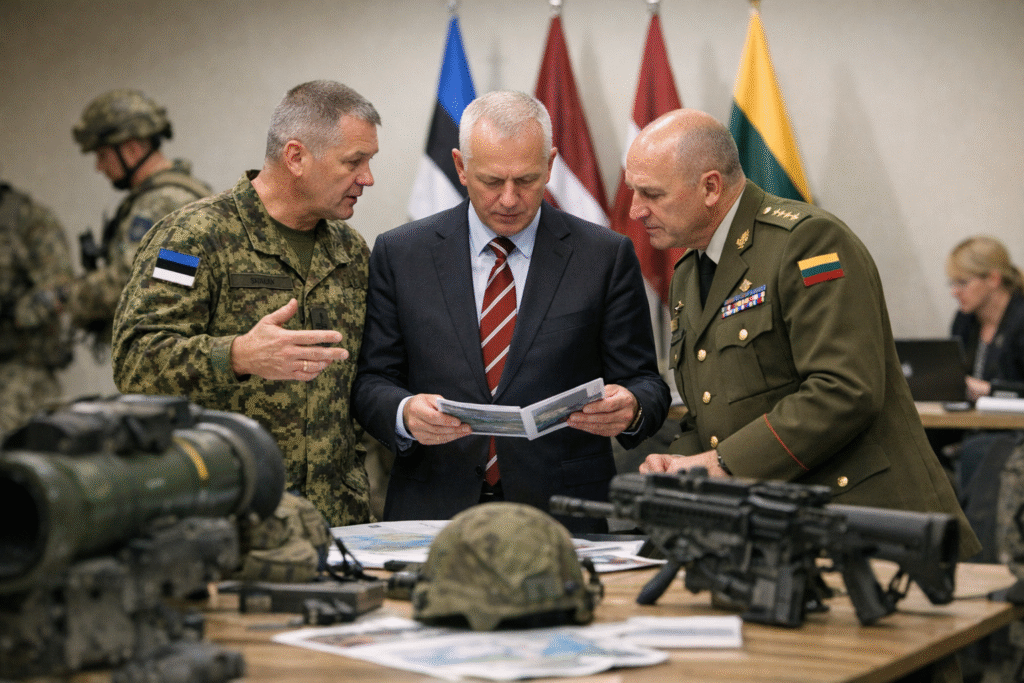
European defense planners are closely watching the Baltic states as they weigh how to allocate a combined €14 billion in new military spending, a process that reflects both the urgency of regional security concerns and the constraints of limited resources. A recent report by Defense News, titled “Baltic nations ponder biggest bang for their bucks in €14 billion arms spending spree,” highlights the complex choices facing Estonia, Latvia, and Lithuania as they seek to strengthen deterrence along NATO’s eastern flank.
The three countries, all bordering Russia or its close ally Belarus, have accelerated defense spending in response to the war in Ukraine and heightened fears of potential aggression. While their budgets are rising quickly relative to their economic size, each government must still balance immediate readiness needs with long-term capability development. Officials and analysts cited in the Defense News article emphasize that the key challenge is not simply how much to spend, but how to spend it effectively.
Air defense has emerged as a top priority across the region. The Baltic states have long been considered vulnerable in this domain, lacking robust systems to counter aircraft, drones, and missile threats. Efforts are now underway to procure layered air defense capabilities, including medium- and short-range systems, often in coordination with NATO allies. The goal is to close a critical gap that could otherwise be exploited in the early stages of a conflict.
At the same time, land forces remain central to national strategies. Investments in armored vehicles, artillery, and ammunition stockpiles are being accelerated, reflecting lessons drawn from the war in Ukraine about the importance of sustained firepower and logistics. Defense planners are particularly focused on ensuring that their forces can operate effectively alongside allied units, with interoperability shaping procurement decisions.
Another major area of debate involves the balance between national acquisitions and joint regional projects. The Baltic states have increasingly explored cooperative procurement as a way to stretch limited budgets and enhance integration. However, aligning timelines, technical requirements, and political priorities across three governments has proven difficult. The Defense News report notes that while there is strong political will for cooperation, practical obstacles remain.
Infrastructure is also receiving renewed attention. Upgrading bases, improving transportation networks, and expanding host-nation support capabilities are seen as essential for enabling rapid reinforcement by NATO forces. These investments, though less visible than major weapons systems, are considered vital to deterrence by ensuring that allied troops can move quickly and operate effectively in the region.
Underlying all these decisions is a broader question about sustainability. Rapid increases in defense spending raise concerns about long-term fiscal pressures, particularly for small economies. Policymakers must consider not only procurement costs but also maintenance, training, and lifecycle expenses. The emphasis on “bang for the buck,” as described in the Defense News article, reflects a recognition that poorly aligned investments could undermine readiness rather than enhance it.
The Baltic states’ approach is being closely monitored elsewhere in Europe, where many governments face similar dilemmas. Their experience underscores the trade-offs inherent in defense planning under conditions of urgency and uncertainty. As NATO adapts to a more contested security environment, the choices made in Tallinn, Riga, and Vilnius may offer important lessons for allies seeking to balance ambition with realism.