Why Iranian Oil Still Flows Despite US Sanctions
Reporting by The Wall Street Journal in its article “The Oil Mystery at the Heart of America’s Pressure Campaign on Iran” describes a complex and opaque dynamic underlying Washington’s efforts to restrict Tehran’s oil revenues, raising questions about how Iranian crude continues to reach global markets despite extensive sanctions.
According to the Journal’s account, U.S. policy has formally sought to curb Iran’s energy exports as part of a broader strategy to limit the country’s financial capacity and regional influence. Sanctions have targeted shipping networks, intermediaries, and financial channels tied to the oil trade. Yet enforcement appears uneven, and significant volumes of Iranian oil are still believed to be circulating, often through indirect or concealed routes.
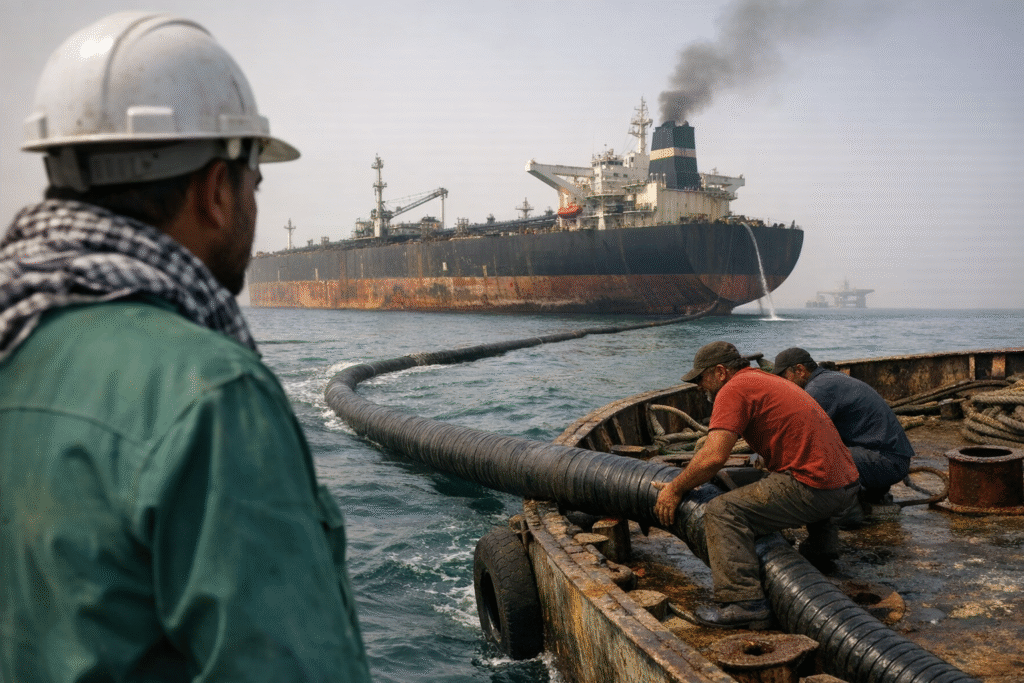
At the center of the issue is a persistent discrepancy between official restrictions and market realities. Analysts cited by the Journal point to evidence that Iranian crude is being blended, rebranded, or transferred between vessels at sea to obscure its origin. These practices complicate monitoring efforts and make it difficult for regulators and buyers to definitively identify sanctioned cargo.
The article highlights how geopolitical and economic considerations may be shaping enforcement decisions. With global energy markets sensitive to supply disruptions, especially in periods of volatility, there is ongoing tension between strict sanctions enforcement and the risk of driving up oil prices. Some observers suggest that this tension contributes to a degree of ambiguity in how aggressively restrictions are implemented.
In addition, the Journal notes the role of key importing countries, particularly in Asia, where demand for discounted crude has created incentives to continue purchasing Iranian oil through intermediaries. This demand, combined with sophisticated evasion tactics, has allowed Tehran to maintain a stream of revenue even under significant international pressure.
The broader implication, as outlined in the reporting, is that sanctions alone may not be sufficient to fully constrain Iran’s oil sector without more coordinated international enforcement and transparency in global shipping and trading systems. At the same time, any escalation in enforcement carries potential consequences for energy markets and diplomatic relations.
The Journal’s examination underscores the difficulty of translating formal policy into measurable outcomes in a globalized commodity market, where state actors, private companies, and loosely regulated networks intersect. As the United States continues its pressure campaign, the unresolved “oil mystery” reflects both the limits of economic sanctions and the adaptability of the global energy trade.