Army’s Low-Cost Interceptor Push Shows Promise but Faces Hurdles in Countering Modern Aerial Threats
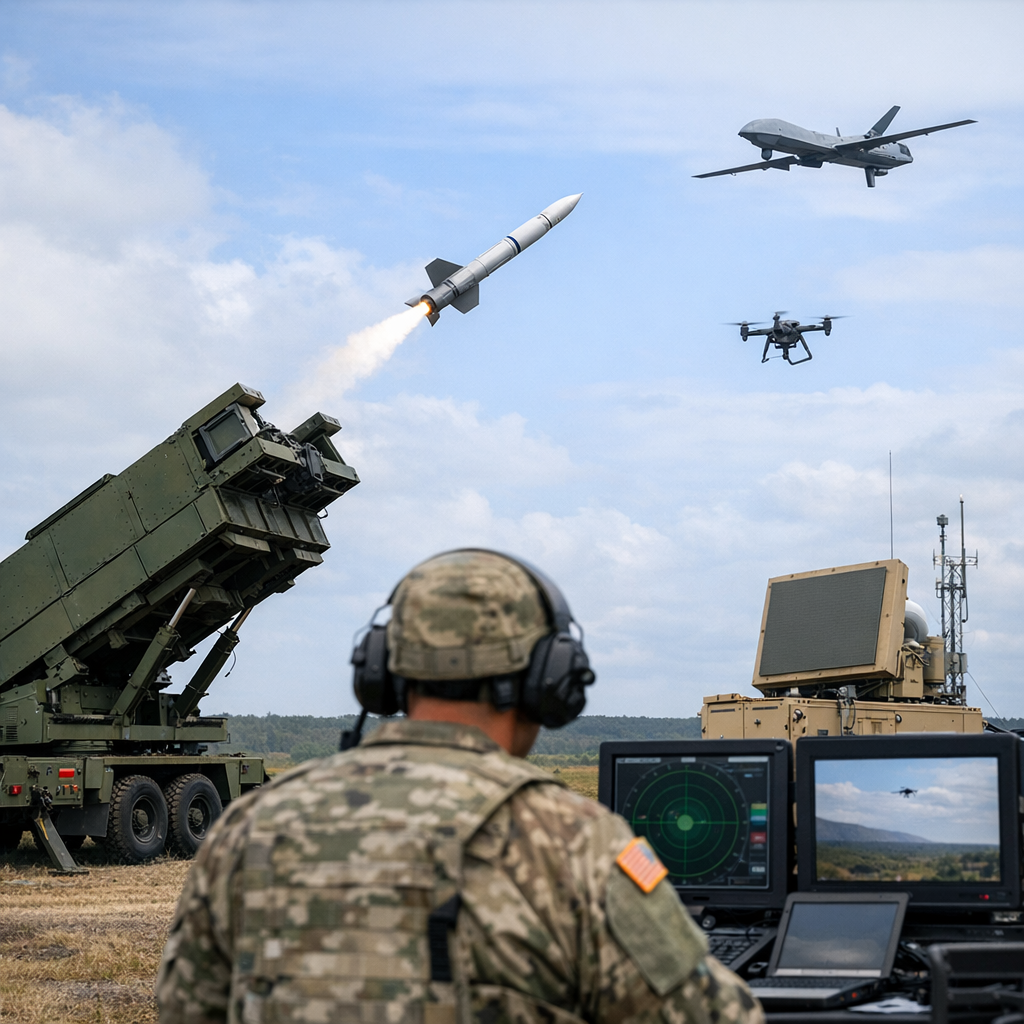
The U.S. Army’s effort to field a low-cost interceptor for countering increasingly sophisticated aerial threats is drawing cautious support from analysts, who say the concept could fill a critical gap but faces significant technical and strategic hurdles.
In a recent report by Breaking Defense titled “There’s promise and pitfalls in the Army’s low-cost interceptor plan, experts say,” defense specialists describe the initiative as an attempt to rebalance the economics of air and missile defense (source). The Army is seeking a cheaper alternative to high-end interceptors, which can cost millions of dollars per shot, at a time when adversaries are proliferating relatively inexpensive drones, rockets, and cruise missiles.
The underlying logic is straightforward: using costly interceptors against low-priced threats creates an unfavorable cost exchange ratio, a challenge widely discussed in studies of air and missile defense economics. Officials and analysts argue that a more affordable interceptor could help the Army sustain defenses during prolonged conflicts, particularly in environments where adversaries rely on massed, low-cost attacks to overwhelm defenses.
However, experts caution that developing such a system is more complicated than simply reducing unit cost. Performance trade-offs are inevitable, and ensuring the interceptor can reliably defeat a range of threats without eroding effectiveness remains a central concern. Some analysts warn that prioritizing affordability too heavily could result in a system that struggles against more advanced or maneuverable targets, potentially limiting its operational value. Broader discussions within the missile defense community have highlighted similar concerns.
Another challenge lies in integration. The Army’s air and missile defense architecture is already complex, incorporating multiple interceptor types and sensors across layered systems. Introducing a new, lower-cost interceptor will require seamless interoperability with existing command-and-control networks, as well as clear doctrine governing when and how it should be used. Without careful planning, experts say, the addition could complicate decision-making for operators rather than simplify it.
There are also industrial and logistical considerations. Producing a low-cost interceptor at scale will demand a manufacturing approach that balances affordability with reliability, a difficult equation in the defense sector. Analysts note that while commercial techniques and advanced manufacturing approaches could help reduce costs, maintaining consistent quality and performance standards will be critical, particularly in high-stakes operational environments.
Despite these concerns, the concept has gained traction as global conflicts underscore the vulnerability of traditional air defense systems to saturation tactics. The war in Ukraine and tensions in the Indo-Pacific have highlighted the growing use of drones and inexpensive munitions, reinforcing trends documented in ongoing coverage of the war in Ukraine and analysis of Indo-Pacific security tensions.
Proponents argue that even a partially successful low-cost interceptor could provide meaningful benefits by preserving high-end systems for more complex threats. In this view, the new interceptor would not replace existing capabilities but complement them, enabling a more flexible and economically sustainable defense posture.
Still, experts interviewed in the Breaking Defense report emphasize that expectations should be tempered. Achieving the right balance among cost, capability, and scalability will be a demanding process, and early iterations of the system may fall short of ambitious goals.
As the Army continues to refine its approach, the success of the low-cost interceptor program will likely depend on disciplined requirements, realistic performance targets, and close coordination with industry. The stakes are significant: if successful, the initiative could reshape how the military approaches air defense in an era defined by increasingly cheap and abundant aerial threats.