Israel Builds Reinforced Concrete Barrier Along Lebanon Border Amid Rising Hezbollah Tensions
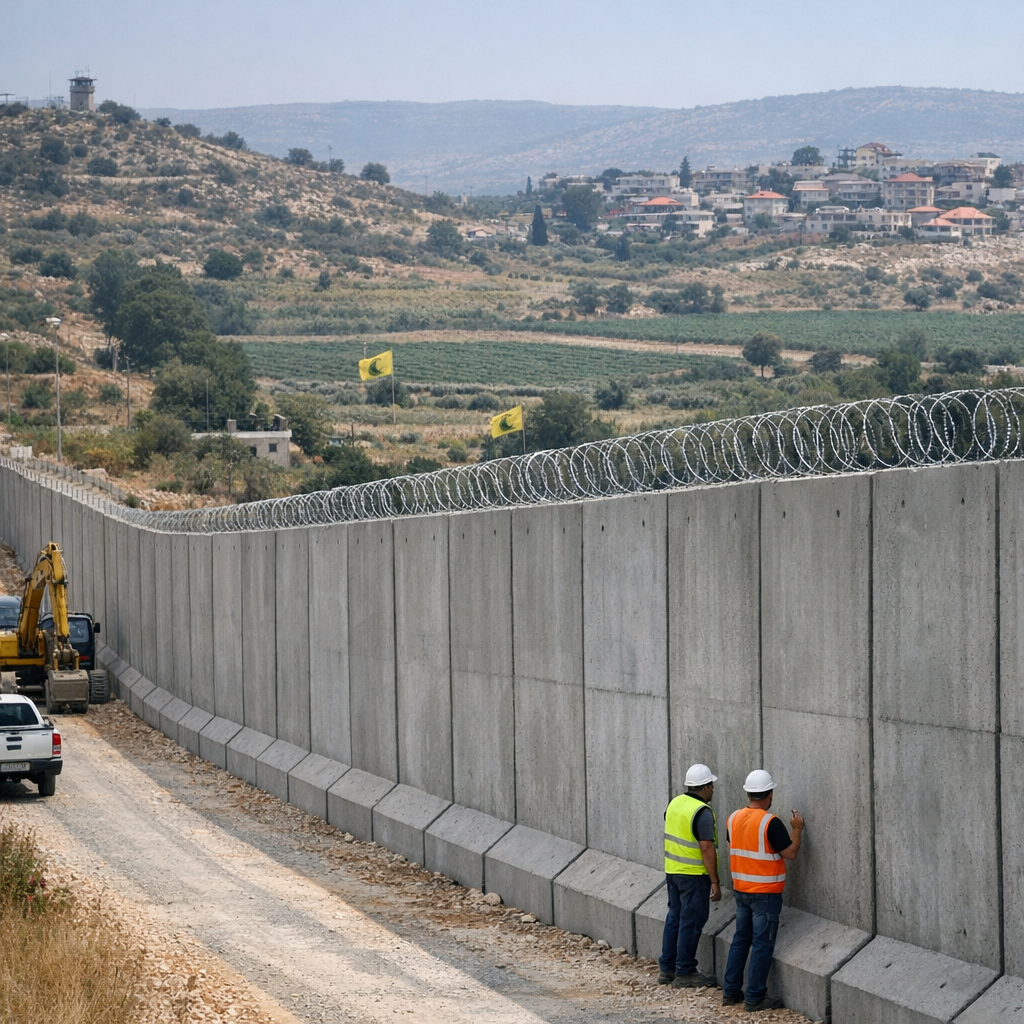
Israel has begun constructing a reinforced concrete barrier along sections of its northern frontier with Lebanon, signaling a new phase in its defensive posture amid persistent tensions with Hezbollah. The development was first reported in an i24NEWS article titled “The IDF is building a concrete wall on the Lebanese border”, which outlined the scope and intent of the project.
According to the report, the Israel Defense Forces (IDF) are replacing or strengthening existing infrastructure along vulnerable stretches of the border with a more robust physical barrier designed to withstand both direct attacks and infiltration attempts. The construction effort appears to focus on areas considered strategically sensitive, where terrain or past incidents have exposed potential weaknesses in Israel’s border defenses.
Military officials cited in the i24NEWS coverage indicate that the initiative is part of a broader effort to enhance readiness in light of continued hostilities and the evolving tactics of Hezbollah. The Iran-backed group has maintained a significant military presence in southern Lebanon, and cross-border incidents have intensified since the outbreak of the war in Gaza in October 2023. These incidents have included anti-tank missile fire, drone incursions, and sporadic exchanges of artillery fire, raising concerns about the potential for a wider conflict.
The concrete wall project builds on earlier Israeli efforts to fortify its northern border, including the installation of surveillance systems, fencing, and underground barriers aimed at countering tunnel threats. Unlike previous measures, however, the current construction emphasizes above-ground fortification capable of withstanding high-impact attacks and limiting line-of-sight vulnerabilities for Israeli positions near the border.
Analysts say the move reflects lessons learned from both recent clashes and longer-term confrontations with Hezbollah, particularly the 2006 Lebanon War and subsequent skirmishes. The group’s arsenal, which includes precision-guided munitions and advanced anti-tank weapons, has prompted Israel to adapt its defensive strategies to include more substantial physical barriers.
At the same time, the construction carries political and diplomatic sensitivities. The Israel-Lebanon border, known as the Blue Line, remains disputed in several areas, and any visible changes to the landscape risk triggering accusations of territorial encroachment. Israeli officials have not indicated that the project alters the recognized boundary, but such developments are often closely monitored by the United Nations Interim Force in Lebanon (UNIFIL), which oversees the ceasefire between the two sides.
Lebanon, for its part, is in the midst of a prolonged political and economic crisis, complicating its ability to respond decisively to developments along the border. Hezbollah has nevertheless framed Israeli defensive measures as provocative, even as it continues to assert its role as a deterrent force against Israeli military action.
The IDF’s decision to invest in more substantial fortifications suggests a long-term view of the security challenge on its northern front. While the barrier itself is unlikely to eliminate the threat of escalation, it reflects a strategic calculation that physical defenses can buy time, reduce vulnerabilities, and potentially limit the impact of sudden attacks.
As construction progresses, the project is likely to become another visible marker of the increasingly entrenched standoff between Israel and Hezbollah, underscoring the fragility of the current status quo along one of the region’s most volatile frontiers.