Unveiled Design for Global War on Terrorism Memorial Aims to Capture Complexity and Sacrifice
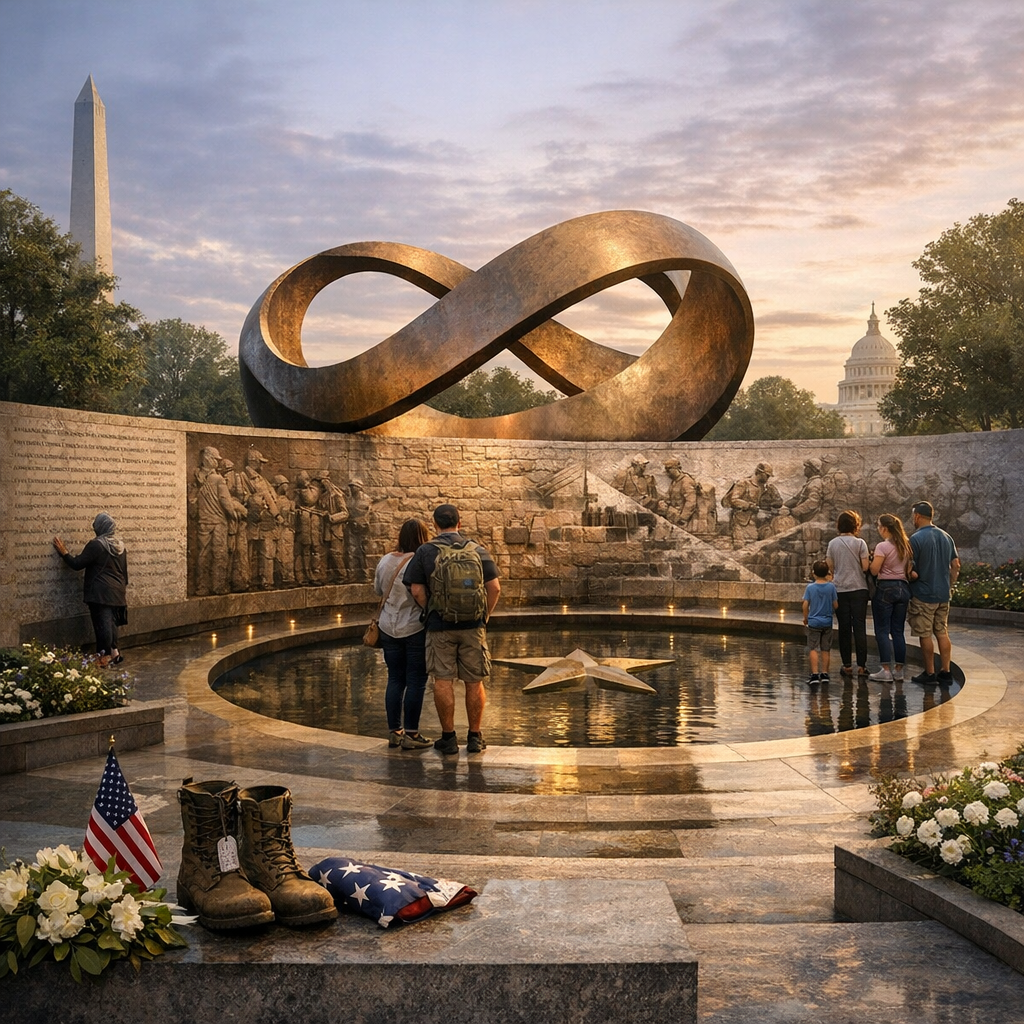
The design for a long-awaited national monument honoring those who served in the Global War on Terrorism has been publicly unveiled, offering the first substantial glimpse into how the United States intends to commemorate a conflict that defined more than two decades of military engagement. The proposal, highlighted in Defense News’ video report titled “A first look at the Global War on Terrorism memorial design”, reflects an effort to grapple with both the scale and the complexity of the post-9/11 era.
The planned memorial, to be located in Washington, D.C., seeks to balance traditional elements of military remembrance with contemporary design sensibilities. According to the presentation featured by Defense News, the concept emphasizes immersion and reflection, incorporating symbolic architecture and landscape features intended to represent service, sacrifice, and the enduring consequences of the conflict.
Designers appear to have moved away from strictly monumental forms in favor of a more experiential approach. Renderings indicate a space that visitors can walk through rather than simply observe, with layered elements that evoke both unity and fragmentation—an apparent reference to the diffuse and unconventional nature of the War on Terrorism, which spanned multiple countries and theaters of operation.
Unlike earlier memorials centered on clearly defined wars, the Global War on Terrorism presents unique challenges for commemoration. The conflict does not have a universally agreed-upon endpoint, nor is it associated with a single battlefield or outcome. As a result, the design attempts to account for a broad range of experiences, from frontline combat operations to intelligence, logistics, and support roles carried out across the globe.
The project has been in development for several years, shaped by input from veterans, families of the fallen, policymakers, and designers, including efforts supported by organizations such as the Global War on Terrorism Memorial Foundation. The unveiling marks a key step forward, though the memorial remains subject to further review, fundraising, and federal approval processes guided by entities like the National Park Service’s commemorative works program before construction can begin.
The Defense News report underscores the emotional weight attached to the project. For many veterans and families, the memorial represents a long-overdue recognition of service in a conflict that, despite its duration and impact, has often lacked a singular national moment of closure following events such as the September 11 attacks. The design’s emphasis on reflection and personal engagement appears intended to address that absence by creating a space where individual stories can be contemplated within a broader historical framework.
As the proposal moves forward, it is likely to invite both support and scrutiny. Questions surrounding representation, symbolism, and historical framing are expected to shape public discussion, particularly given the evolving understanding of the war on terrorism’s legacy.
What is clear from the initial unveiling, as outlined in Defense News’ “A first look at the Global War on Terrorism memorial design,” is that the project aims to do more than commemorate a military campaign. It seeks to capture the ambiguity, scale, and human cost of a prolonged and multifaceted conflict—an ambition that will ultimately determine how the memorial is received by those it is meant to honor and by the nation at large.