Israel Signals Escalation on Northern Front After Deadly Lebanon Clash
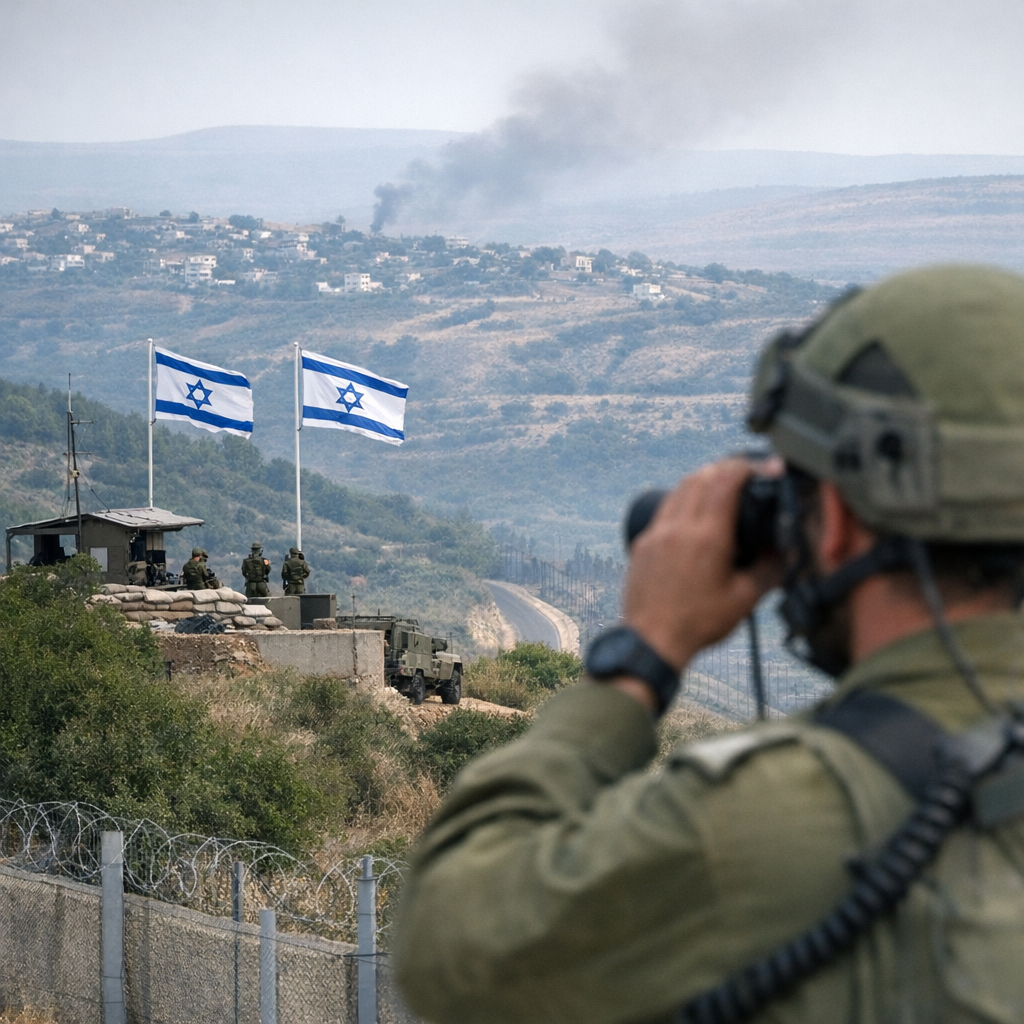
Israel signaled it will escalate its military posture along the northern border after four of its soldiers were killed in southern Lebanon, underscoring the volatility of the long-running standoff with Hezbollah and the risk of wider regional spillover.
According to a report by i24News titled “Israel vows forceful response after four soldiers killed in southern Lebanon”, the fatalities occurred during an operation near the frontier, where Israeli forces have been engaged for months in intermittent exchanges with the Iran-backed militia. Israeli officials described the incident as one of the deadliest episodes for its troops in the current phase of cross-border hostilities, and said it would not go unanswered. Ongoing clashes between Israel and Hezbollah have raised fears of a broader regional confrontation.
Senior Israeli leaders pledged a “forceful response,” framing the killings as part of a pattern of escalating attacks emanating from Lebanese territory. While officials did not detail the precise nature or timing of retaliation, the messaging suggested a readiness to intensify strikes against Hezbollah positions and associated infrastructure. Israel has in recent months carried out targeted airstrikes in southern Lebanon and beyond, aimed at curbing what it says are threats to its northern communities, as also reported by Reuters coverage of Israel-Hezbollah clashes.
The Israeli military said it is continuing to investigate the circumstances of the incident, including the sequence of events that led to the soldiers’ deaths. It has also reinforced units along the border, reflecting concerns that further attacks could follow. Residents in northern Israel have faced repeated disruptions amid ongoing exchanges of fire, while many communities remain partially or fully evacuated.
Hezbollah, which has not always publicly claimed responsibility for specific operations, has maintained a campaign of near-daily attacks since hostilities intensified alongside the war in Gaza. The group says its actions are intended to pin down Israeli forces and demonstrate solidarity with Palestinians, while Israel argues that Hezbollah is deliberately heightening tensions and placing civilians at risk on both sides of the border.
Diplomatic efforts to contain the violence have so far yielded limited results. International mediators, including the United States and France, have sought to revive understandings linked to UN Security Council Resolution 1701, aimed at pushing Hezbollah forces further north of the Litani River and reducing the frequency of cross-border fire. Yet the continued exchanges suggest that both sides see tactical advantages in sustaining pressure without tipping into full-scale war, as noted in reports on U.S. and French mediation efforts.
Analysts warn that incidents resulting in high casualties, such as the latest deaths of Israeli soldiers, increase the likelihood of miscalculation. A significant retaliation could trigger a corresponding escalation from Hezbollah, whose arsenal and entrenched positions present a far more formidable challenge than previous conflicts along the border.
For now, Israeli officials appear intent on signaling resolve while calibrating their next steps. The balance between deterrence and escalation remains precarious, with each incident sharpening public and political demands for security without a clear pathway to de-escalation.