Satellite Analysis Points to Possible Strike Impact at Key Israeli Airbase Following Iranian Missile Attack
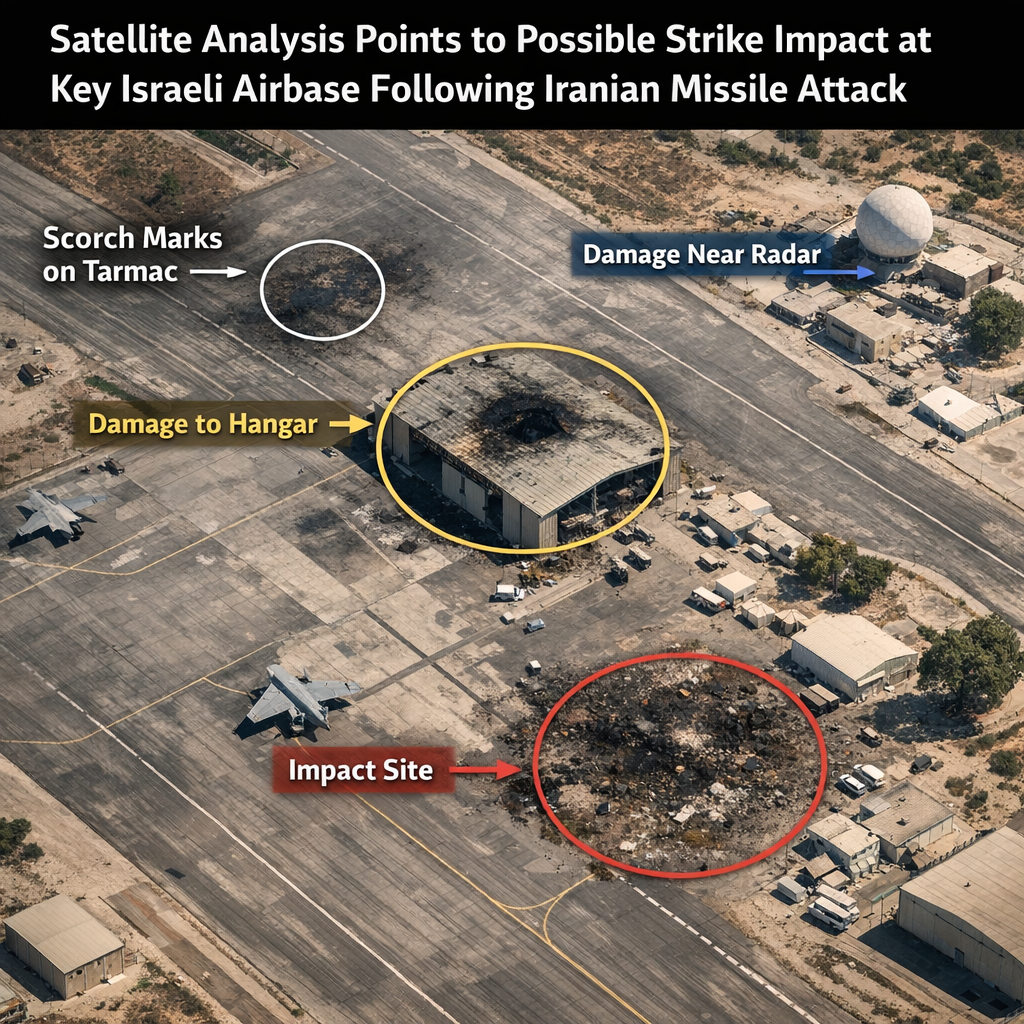
Satellite imagery analyzed in the aftermath of Iran’s recent missile attack on Israel indicates possible damage to the Ramat David airbase, according to reporting by i24NEWS in its article titled “Satellite imagery suggests possible damage to Israel’s Ramat David airbase from Iranian attack” (original report).
The imagery, reviewed by independent analysts and circulated in open-source intelligence channels, appears to show signs of impact within the perimeter of the strategically significant airbase in northern Israel. While the full extent of the damage remains unclear, the findings suggest that at least some of the Iranian projectiles may have evaded Israeli air defenses and struck near or within the facility.
Ramat David, one of the Israeli Air Force’s primary bases, plays a key role in the country’s northern defense posture. It hosts advanced fighter squadrons and serves as a critical hub for operations related to threats from Lebanon and Syria. Any confirmed damage to infrastructure at the base would carry both operational and symbolic implications.
Israeli authorities have not publicly confirmed significant damage to the site, maintaining tight control over military assessments and operational details following the attack. As is common during active security situations, official statements have emphasized the effectiveness of Israel’s multilayered missile defense systems, including Iron Dome and David’s Sling, in intercepting the majority of incoming threats.
The Iranian strike, part of a broader escalation between the two countries, marked one of the most direct and extensive exchanges in their long-standing Iran–Israel conflict. Tehran has framed its actions as retaliation for prior Israeli operations, while Israeli officials have warned of further responses if attacks on its territory continue.
Experts caution that satellite imagery, while increasingly central to modern conflict reporting, can be difficult to interpret conclusively without corroborating evidence. As noted in analyses of open-source intelligence (OSINT), shadows, debris patterns, and landscape features can sometimes be misread, and governments often delay or withhold confirmation of sensitive military impacts.
Nevertheless, the potential that a high-value Israeli airbase may have sustained damage underscores the evolving dynamics of regional warfare, where precision-guided munitions and long-range strike capabilities are reshaping traditional defense calculations. Even limited breaches in air defense coverage can have outsized psychological and strategic effects, particularly when they involve critical military infrastructure.
As independent verification efforts continue, analysts will likely focus on follow-up imagery and any changes in airbase activity, such as runway repairs or altered deployment patterns, to determine whether operations at Ramat David have been disrupted. For now, the situation remains fluid, with both sides signaling readiness for further escalation while maintaining ambiguity around the precise outcomes of the latest exchange.