US moves to bolster Kuwait defenses with $1.9 billion counter-drone sale
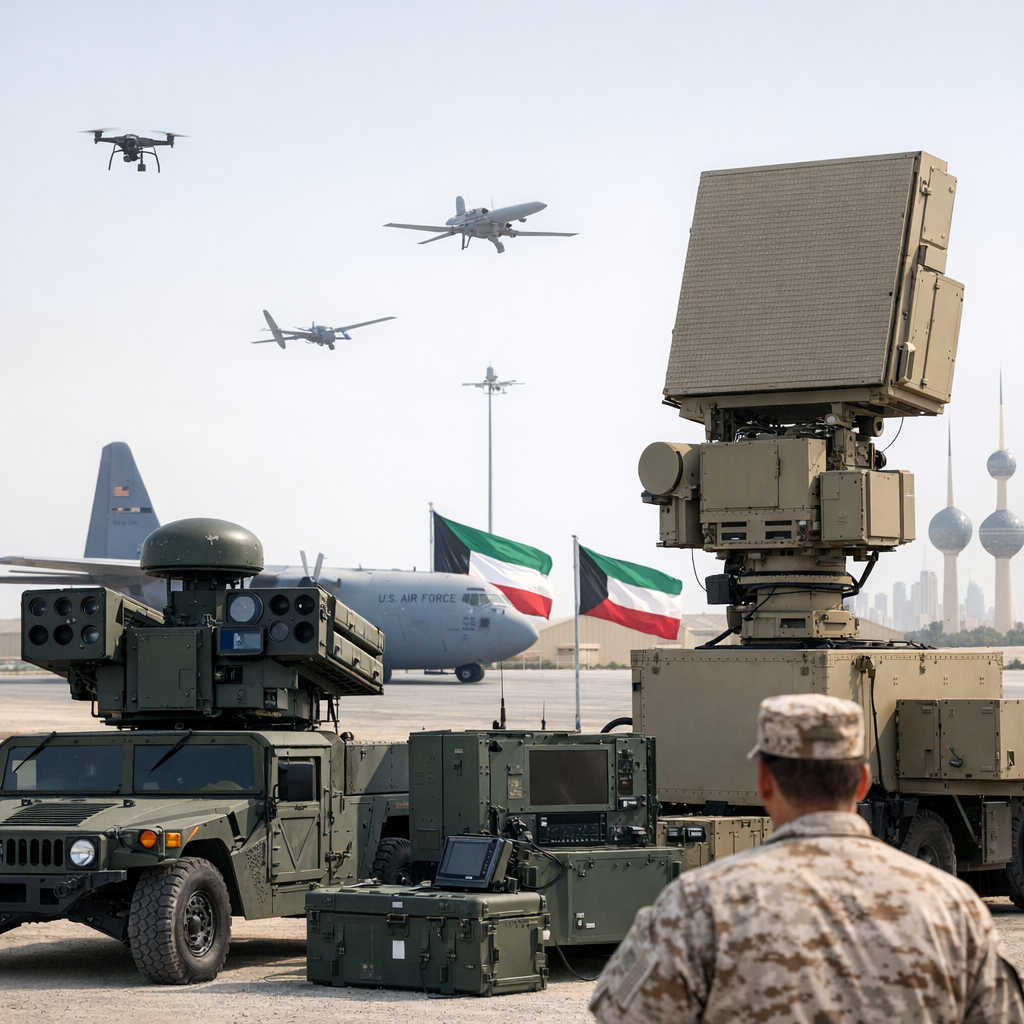
The United States has approved a major foreign military sale to Kuwait that could significantly enhance the Gulf nation’s ability to detect and counter unmanned aerial threats, underscoring growing regional concern about the proliferation of drones and loitering munitions.
According to a report by Defense News titled “US approves Kuwait request to buy nearly $2 billion of counter-drone platforms,” the proposed package is valued at roughly $1.9 billion and includes a combination of sensing, interception, and command-and-control systems designed to address increasingly sophisticated aerial threats. The deal reflects a broader strategic push by Washington to bolster the defensive capabilities of key partners in the Middle East amid evolving security challenges. The original report can be found here: Defense News article.
The Defense Security Cooperation Agency (DSCA), which oversees U.S. foreign military sales, notified Congress of the potential transaction, a required step before final approval. While such notifications do not guarantee that a deal will be completed, they indicate strong executive branch support. Kuwait has long been considered a close U.S. security partner, hosting American troops and serving as a logistical hub for regional operations.
The systems included in the package are intended to counter a wide spectrum of drone threats, from small commercial-grade quadcopters to more advanced unmanned aerial vehicles (UAVs) and loitering munitions that have been used with increasing frequency in conflicts across the Middle East and beyond. These threats have proven difficult to defend against using traditional air defense systems, prompting demand for specialized counter-drone technologies that can integrate radar, electronic warfare, and kinetic interception capabilities.
The proposed sale comes amid heightened concern among Gulf states about attacks on critical infrastructure, particularly energy facilities, by drone and missile systems. In recent years, regional actors have demonstrated the ability to deploy relatively low-cost unmanned systems with strategic impact, exposing vulnerabilities in existing air defense networks.
U.S. officials have argued that strengthening partners’ defensive capabilities contributes to regional stability and reduces the burden on American forces. The DSCA noted that the sale would improve Kuwait’s ability to meet current and future threats while enhancing interoperability with U.S. and allied systems.
Industry players are also likely to benefit from the package, which highlights continued demand for advanced counter-unmanned aerial systems (C-UAS). The global market for such technologies has grown rapidly as governments seek layered defenses against drones that are increasingly accessible and adaptable.
While the Pentagon and defense contractors have invested heavily in counter-drone research and deployment, experts caution that the technology remains an evolving field. Adversaries continue to adapt tactics, often using swarms, low-observable designs, or electronic countermeasures to evade detection and interception.
If completed, the Kuwait deal would represent one of the larger recent U.S. foreign military sales focused specifically on counter-drone capabilities. It also signals the extent to which unmanned threats have reshaped defense priorities, moving from a niche concern to a central element of modern security planning.