US Navy Jet Disables Oil Tanker in Gulf of Oman, Raising Stakes in Strategic Waterway
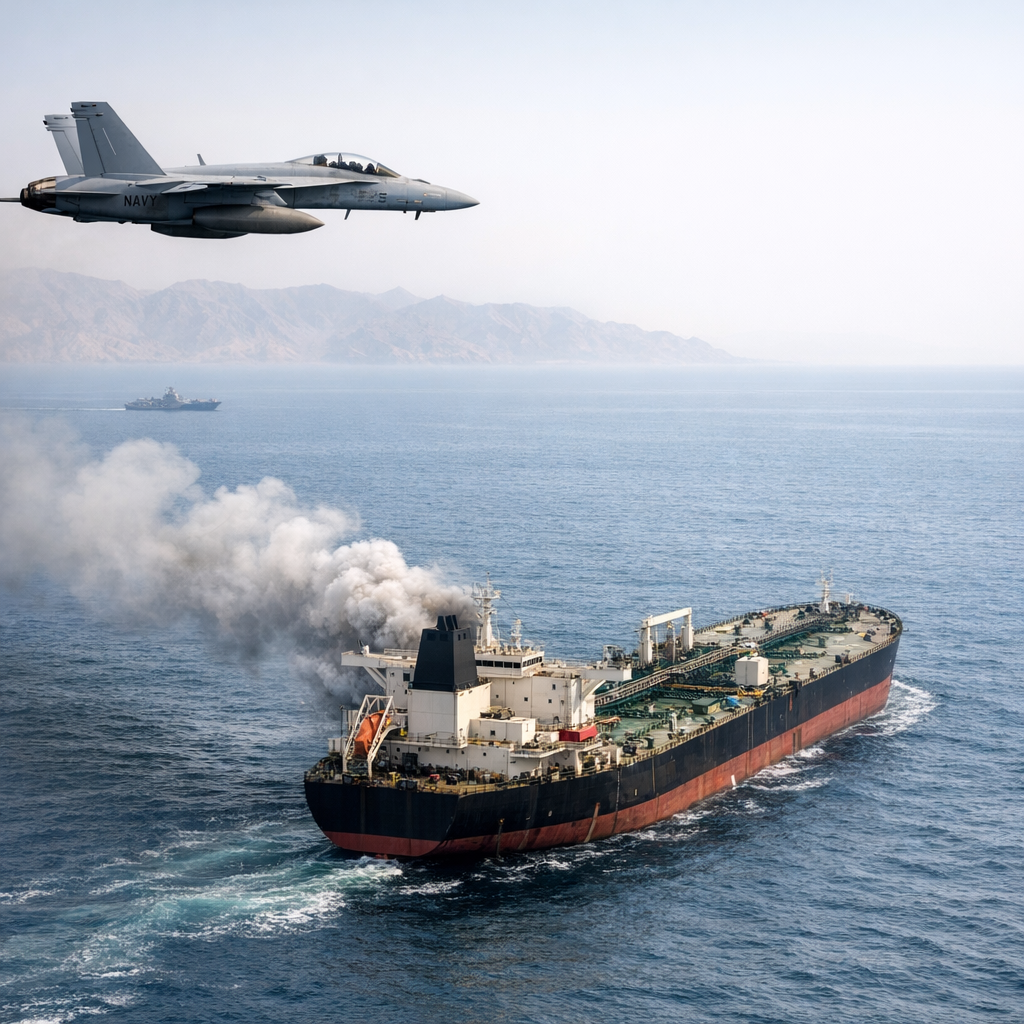
A U.S. Navy F/A-18 Super Hornet carried out a strike that disabled an oil tanker in the Gulf of Oman, according to a report published by Defense News, underscoring rising tensions in a strategically vital maritime corridor long vulnerable to confrontation.
The Defense News article, titled “US Navy F/A-18 Super Hornet strikes disables oil tanker in Gulf of Oman,” reports that the incident involved a precision strike intended to render the vessel inoperable rather than destroy it outright. U.S. officials, speaking on condition of anonymity in line with standard military practice, indicated that the action was taken in response to what they described as a credible threat linked to the vessel’s activities, though specific intelligence details were not publicly disclosed.
The Gulf of Oman, a key gateway connecting the Persian Gulf to the Arabian Sea, is a critical artery for global oil shipments. According to the U.S. Energy Information Administration, nearby waterways like the Strait of Hormuz handle a significant share of the world’s petroleum trade. Any military action in these waters carries immediate implications for energy markets and regional security. While the U.S. military has maintained a steady presence in the area for decades, direct strikes against commercial or quasi-commercial shipping remain rare and highly scrutinized.
According to the Defense News report, the targeted tanker was believed to be involved in operations that raised concerns among U.S. and allied forces. Analysts note that such concerns often include alleged sanctions evasion, covert transport of military matériel, or coordination with armed groups operating in the region. However, without official attribution or detailed evidence, the precise rationale remains a matter of speculation.
Pentagon officials emphasized that the strike was calibrated to minimize the risk of casualties and environmental damage, a significant consideration given the ecological sensitivity of the region and the potentially severe consequences of an oil spill. Early assessments cited in the report suggest that the vessel was disabled but not sunk, and that there was no immediate indication of a large-scale النفط leakage.
The incident comes amid a broader pattern of maritime friction involving the United States, Iran, and various non-state actors. The U.S. Central Command (CENTCOM) has frequently reported incidents affecting commercial vessels in the region. Over the past several years, commercial ships in and around the Strait of Hormuz and Gulf of Oman have been subject to seizures, sabotage, and drone attacks. These episodes have heightened the risk of miscalculation, particularly as regional powers test each other’s red lines.
Security experts say the use of a carrier-based fighter jet such as the F/A-18 Super Hornet signals a deliberate show of force while maintaining operational flexibility. The aircraft’s precision strike capabilities allow the U.S. Navy to respond quickly to perceived threats without committing larger assets or escalating to broader engagement.
The Defense News report notes that U.S. Central Command has not released full operational details, and officials have refrained from identifying the tanker by name or flag state. This lack of transparency, while common in active operational contexts, may complicate international responses and raise questions among shipping operators navigating the region.
In the immediate aftermath, shipping companies are likely to reassess risk calculations, including routing decisions and insurance costs. Even a single high-profile strike can ripple through global logistics networks, particularly in a region responsible for a substantial share of the world’s oil exports.
Diplomatic reactions remain limited but are expected to evolve as more information becomes available. Regional governments have historically urged restraint in such incidents, wary of escalation that could disrupt trade and provoke broader conflict. Whether this latest action will deter future activity or deepen existing tensions remains uncertain.
As reported by Defense News, the episode illustrates the fragile balance between deterrence and escalation in one of the world’s most strategically sensitive waterways.