Rutte Urges Deeper NATO-EU Alignment as Security Threats Grow More Interconnected
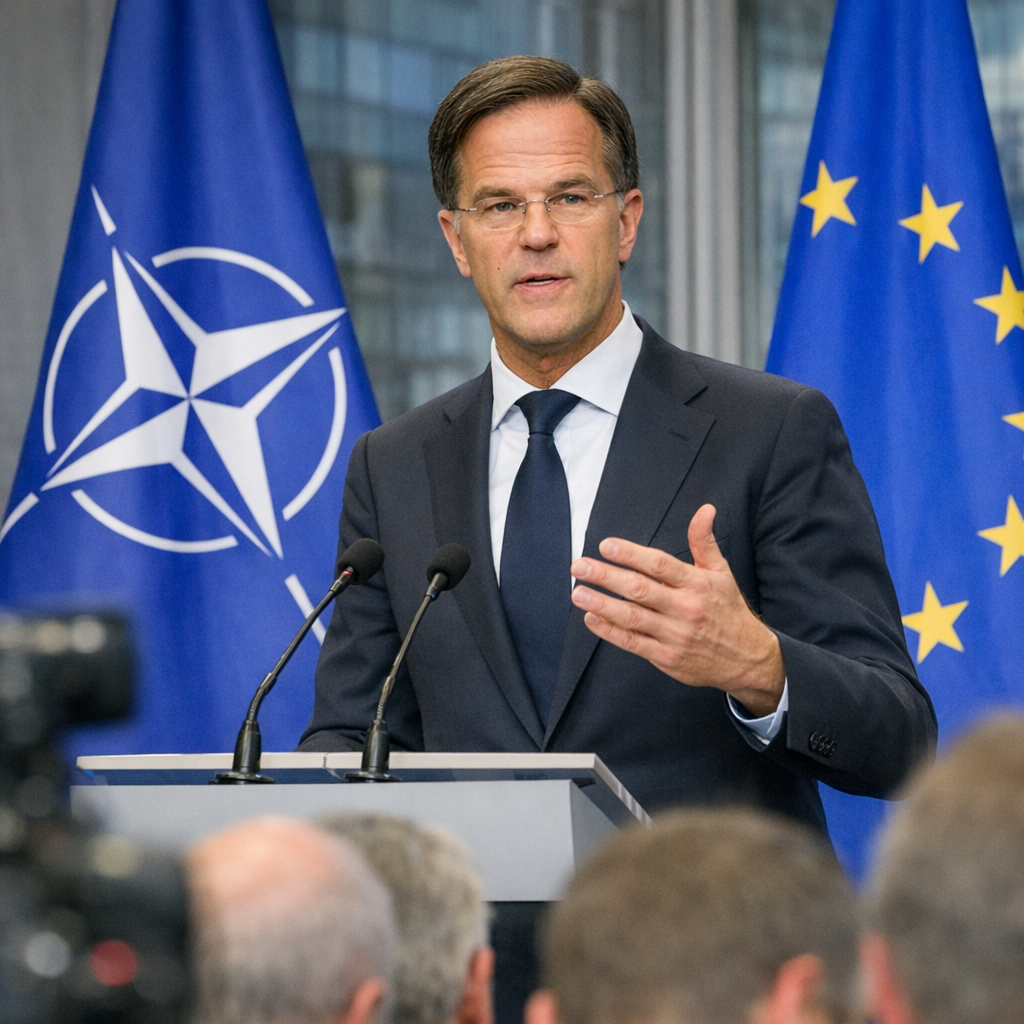
NATO Secretary General Mark Rutte underscored the strategic necessity of closer cooperation between NATO and the European Union, warning that transatlantic security challenges are becoming increasingly complex and interconnected. His remarks, published in an official NATO article titled “NATO Secretary General highlights the importance of NATO-EU cooperation” on NATO’s website, come amid heightened geopolitical tensions and evolving threats across Europe and beyond. (Source article)
Rutte emphasized that NATO and the EU, while distinct institutions, share a broad set of security interests that demand coordinated responses. He pointed to areas such as military mobility, defense industrial capacity, cyber defense, and countering hybrid threats as domains where closer alignment is not only beneficial but essential. According to the Secretary General, the ability to move troops and equipment swiftly across European borders, for example, remains a key logistical challenge that can only be addressed through synchronized political and regulatory frameworks between the two bodies.
The Secretary General also highlighted the growing importance of resilience in critical infrastructure, noting that sabotage, cyberattacks, and disinformation campaigns have become routine tools used by adversaries. In this context, he argued that NATO’s defense capabilities and the EU’s regulatory and economic instruments are complementary, and that their combined application can significantly strengthen collective security. (EU cybersecurity policy)
Rutte’s comments reflect ongoing efforts to deepen institutional ties between NATO and the EU, particularly following recent joint NATO-EU declarations aimed at formalizing cooperation. He stressed that avoiding duplication and ensuring coherence between the two organizations will maximize efficiency and strengthen deterrence. This approach is especially important as both bodies face increased demands on resources and must adapt to rapid technological changes in warfare and security.
The NATO chief also acknowledged the broader strategic environment, including Russia’s continued aggression in Ukraine and the long-term implications of instability in neighboring regions. He suggested that closer NATO-EU cooperation enhances not only military readiness but also political unity, which he described as a critical asset in maintaining a stable international order.
While the article on NATO’s website presents the Secretary General’s views in largely institutional terms, the underlying message is clear: Europe’s security architecture increasingly depends on the ability of NATO and the EU to act in concert. As threats become less conventional and more diffuse, the boundaries between defense, economic policy, and internal security are blurring, requiring a more integrated approach than either organization can achieve alone.
Rutte’s remarks signal a continuation of efforts to translate political commitments into practical coordination, a process that will likely shape the trajectory of European security policy in the years ahead.