Trump’s Camp David Meetings Fuel Uncertainty Over U.S. Strategy on Iran
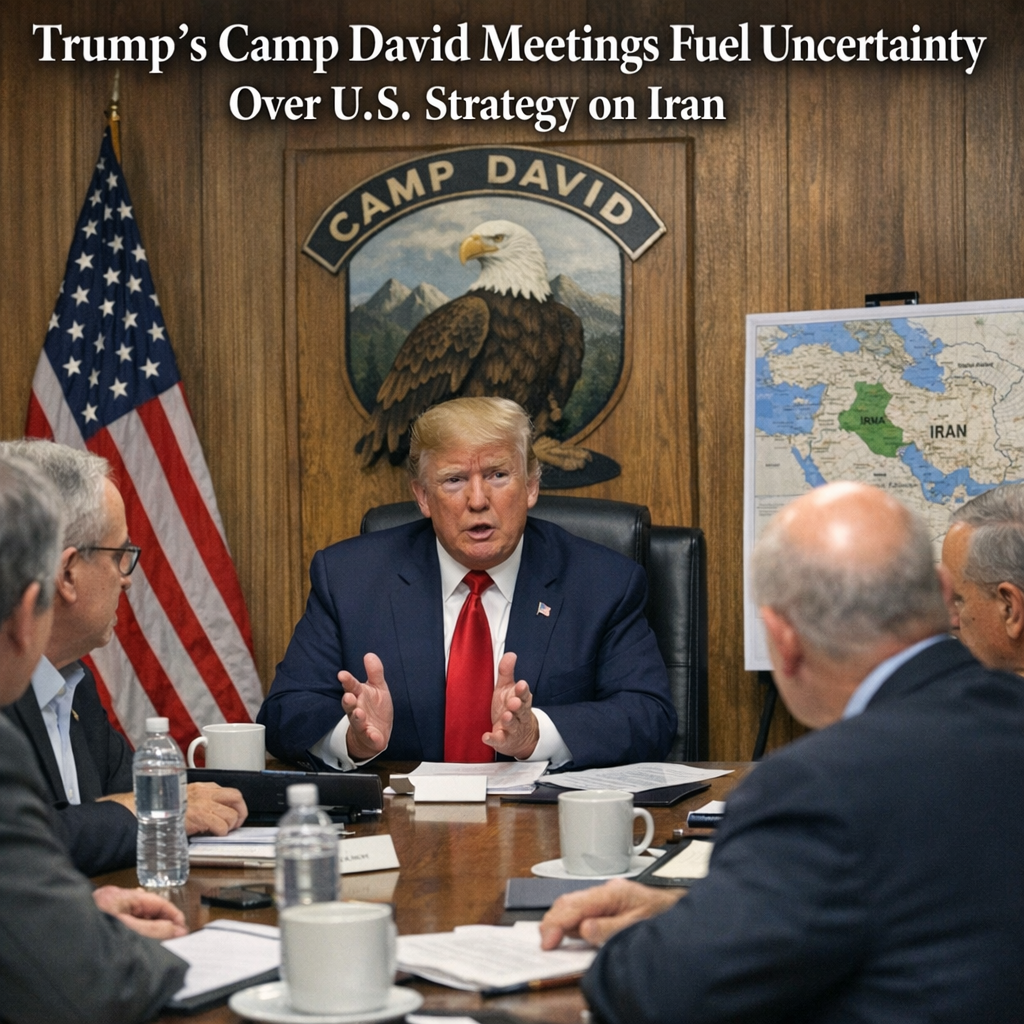
Questions over U.S. policy toward Iran intensified this week as President Donald Trump departed for Camp David for a series of high-level meetings, amid uncertainty about the administration’s diplomatic strategy and potential agreements with Tehran.
According to reporting by Military Times in its article “Trump heads to Camp David as questions swirl over Iran deal”, the president’s retreat to the Maryland presidential compound comes at a moment of heightened scrutiny from both Congress and national security observers. Lawmakers from both parties are seeking clarity on whether the administration is pursuing a new arrangement with Iran, potentially reshaping years of U.S. policy aimed at limiting Tehran’s nuclear ambitions.
Administration officials have offered limited public detail about the purpose of the Camp David discussions. However, multiple defense and intelligence briefings in recent days have suggested that internal disagreements persist over how to balance diplomatic engagement with continued pressure on Iran through sanctions and regional deterrence.
Members of Congress have voiced concern not only about the substance of any potential deal but also about the apparent lack of transparency. Several lawmakers have called for formal briefings, warning that bypassing congressional oversight could undermine confidence in any agreement reached. These concerns are amplified by memories of past disputes over executive authority in negotiating international accords, particularly those involving Iran’s nuclear program.
At the center of the debate is whether the administration is seeking a narrower, interim agreement focused on limiting Iran’s nuclear activities, or a broader framework that could include regional security issues and sanctions relief. Analysts note that each approach carries distinct risks. A limited agreement might fail to address long-term proliferation concerns, while a comprehensive deal could prove politically difficult to secure both domestically and internationally, as seen in debates surrounding the International Atomic Energy Agency’s monitoring of Iran and the earlier Joint Comprehensive Plan of Action (JCPOA).
Military planners are also closely watching developments. Any shift in U.S. posture toward Iran could have immediate implications for American forces in the Middle East, where tensions remain elevated. Defense officials are said to be weighing contingency plans in case diplomacy falters, including measures to bolster force protection and reassure regional allies.
Allies in Europe and the Middle East are similarly seeking clarity. European governments, which played a central role in previous nuclear negotiations, have signaled cautious interest in renewed diplomacy but are wary of abrupt policy shifts. Meanwhile, key regional partners, including Israel and Gulf states, have expressed skepticism about easing pressure on Iran without concrete and verifiable concessions.
The Camp David meetings are expected to include senior national security officials, military leaders, and diplomatic advisers. While the administration has framed the retreat as part of a broader strategic review, the timing underscores the urgency of the decisions at hand.
As Military Times reported, the lack of public detail has only fueled speculation about the administration’s intentions. Whether the outcome is a renewed diplomatic initiative, a continuation of the current pressure campaign, or some hybrid approach remains unclear. What is evident is that the decisions made in the coming days could significantly shape U.S. policy in the Middle East and redefine Washington’s approach to one of its most enduring geopolitical challenges.