Report Warns of Rising Orbital Debris Risks From China’s Rocket Launch Practices
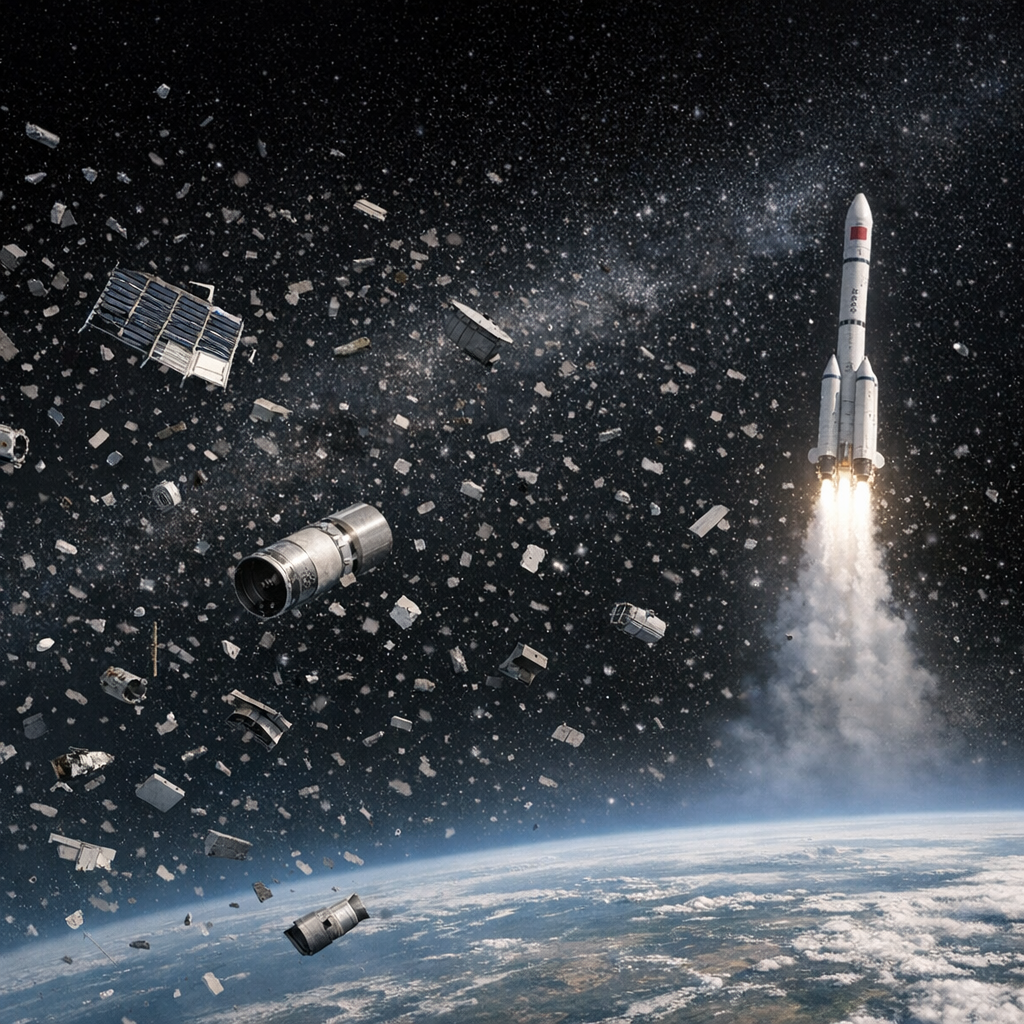
A new report has raised concerns about growing risks to satellites in low Earth orbit, warning that China’s launch practices are contributing to an increase in discarded rocket bodies lingering in space. The findings, highlighted in the Breaking Defense article “China dumping more rocket bodies in space, endangering low-earth orbit satellites: Report”, point to a pattern that experts say could complicate efforts to maintain a sustainable orbital environment.
According to the report, China has increasingly deployed rockets that leave large upper stages in orbit rather than ensuring controlled reentry or disposal. These objects can persist for extended periods, creating potential collision hazards for active satellites and other space infrastructure. Analysts cited in the report emphasize that even a single collision involving a sizable rocket body could generate thousands of fragments, amplifying the already growing problem of orbital debris.
The concerns come at a time when low Earth orbit is becoming more congested due to the rapid expansion of satellite constellations operated by both governments and private companies. As more assets are deployed, the margin for error narrows, and the cumulative risk posed by unmanaged debris rises. Experts warn that without improved mitigation practices, the likelihood of cascading collision events—sometimes referred to as the Kessler syndrome—could increase.
The Breaking Defense article notes that China is not alone in having contributed to space debris over past decades, but it suggests that current trends in Chinese launch operations stand out due to the scale and frequency of missions involving orbital rocket stages. In particular, heavy-lift launches associated with space station construction and other major programs have left behind objects that are difficult to track and avoid.
International guidelines, such as those promoted by the Inter-Agency Space Debris Coordination Committee, call for spacecraft and launch vehicle stages to be removed from orbit within 25 years or moved to disposal orbits. However, compliance varies, and enforcement mechanisms remain limited. The report underscores that voluntary adherence has not kept pace with the rapid evolution of space activity.
Industry observers quoted in the article stress the need for greater transparency and coordination among spacefaring nations. Enhanced tracking capabilities, clearer norms of behavior, and technological investments in debris removal are among the measures being discussed to address the issue. Some also argue that major space powers, including China, the United States, and others, will face increasing pressure to demonstrate responsible stewardship as orbital congestion worsens, a concern also highlighted by the European Space Agency’s space debris program.
The stakes extend beyond commercial and scientific missions. Many defense systems rely on satellites operating in low Earth orbit, making them vulnerable to disruptions caused by debris. As a result, the issue is increasingly viewed through both environmental and security lenses, with organizations like UNOOSA emphasizing its global implications.
While China has made advances in space technology and expanded its launch capacity, the report suggests that debris mitigation has not kept pace with its growing presence in orbit. Whether through improved rocket design, more frequent use of controlled reentry, or adherence to stricter international norms, analysts say meaningful changes will be necessary to reduce long-term risks.
As highlighted by Breaking Defense, the challenge of orbital debris is inherently global, with consequences that do not respect national boundaries. Without coordinated action, the accumulation of discarded rocket bodies and other debris could complicate space operations for decades to come.