NATO Talks Highlight Europe’s Growing Defense Role Amid Continued U.S. Pressure on Burden-Sharing
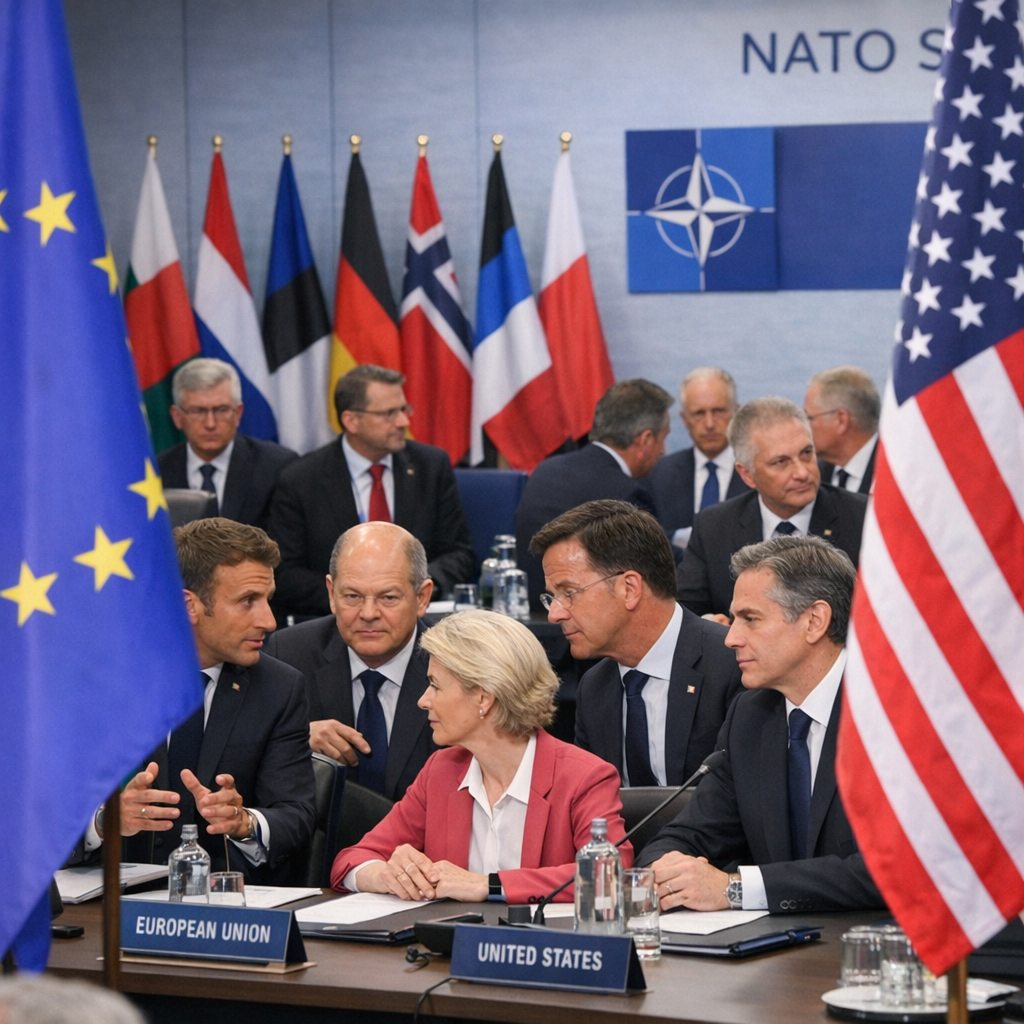
NATO Secretary General Jens Stoltenberg met with U.S. President Donald Trump in Washington on June 25 amid renewed focus on transatlantic burden-sharing, with both leaders signaling a recalibration of responsibilities between North America and Europe. According to a report published on NATO’s official website titled “Secretary General meets President Trump in Washington: Europe is stepping up”, the talks underscored growing European defense commitments alongside continued reliance on U.S. strategic support.
The meeting comes at a time of heightened geopolitical tension and sustained pressure on allied governments to increase military spending. Stoltenberg emphasized that European allies and Canada have increased defense investments in recent years, a trend he described as essential to maintaining NATO’s collective deterrence. He pointed to rising budgets, expanded capabilities, and greater contributions to NATO missions as evidence that Europe is responding to long-standing calls from Washington, echoing broader data from sources such as the Stockholm International Peace Research Institute (SIPRI) on rising global defense spending.
President Trump, who has consistently pressed NATO members to meet or exceed the alliance’s defense spending benchmark, reiterated his position that equitable burden-sharing remains central to the alliance’s credibility. The benchmark itself—committing at least 2% of GDP to defense—has been a cornerstone of alliance policy, as outlined by NATO’s official defense spending guidelines. While critical in the past of what he has characterized as disproportionate U.S. contributions, Trump acknowledged recent increases by European nations, framing them as a necessary evolution rather than a completed task, a stance frequently covered in outlets like BBC News reporting on NATO spending debates.
The NATO article highlights that both leaders discussed ongoing support for Ukraine and broader security challenges facing the alliance, including instability in neighboring regions and the need to adapt to emerging threats. Stoltenberg stressed that unity among allies remains NATO’s greatest strength, particularly as the alliance navigates a complex strategic environment, including its role in response to Russia’s war in Ukraine.
Despite periodic tensions over spending commitments, the meeting appeared to reinforce a shared interest in maintaining a strong transatlantic partnership. The tone described in NATO’s account suggests cautious alignment: Europe, in Stoltenberg’s words, is “stepping up,” while the United States continues to expect further progress, reflecting ongoing analysis from institutions like the Council on Foreign Relations on NATO’s evolving role.
The encounter reflects a broader shift within NATO, where European countries are increasingly taking on greater defense responsibilities, even as the alliance remains anchored by U.S. military power. As the NATO article makes clear, the question is no longer whether Europe will contribute more, but whether those contributions will be sufficient to satisfy longstanding American demands and to meet the evolving security challenges confronting the alliance.