Navy Raises Budget Cap for Next-Generation Trainer Jet Amid Growing Cost and Capability Demands
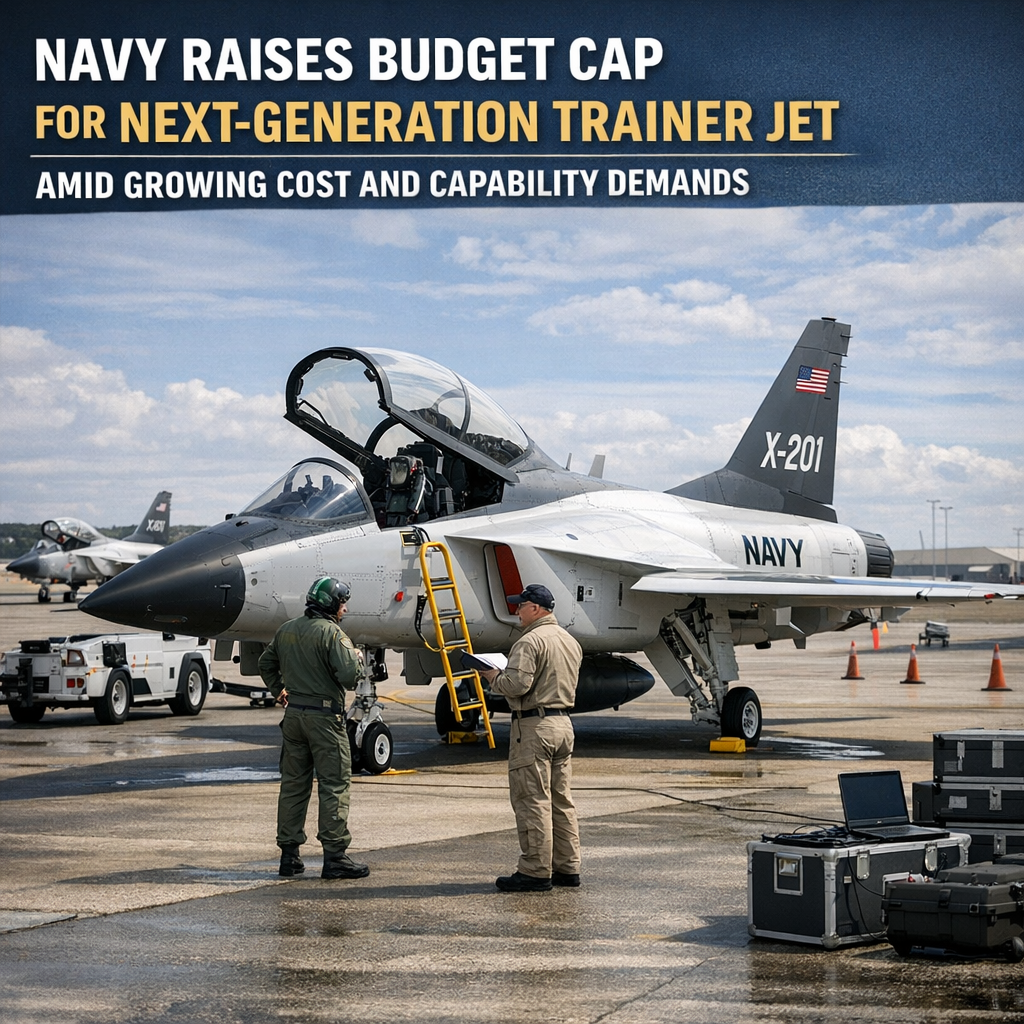
The U.S. Navy has raised the price ceiling for its next-generation trainer jet, a move that signals mounting cost pressures and evolving requirements for one of the service’s most closely watched aviation programs. The decision, first reported in “Navy lifts price ceiling for new trainer jet” by Breaking Defense, reflects a broader reassessment of how the Navy intends to prepare pilots for increasingly complex combat aircraft.
The trainer program, intended to replace the aging T-45 Goshawk fleet, is a critical link in the Navy’s pilot training pipeline. The existing aircraft have faced years of maintenance issues, availability shortfalls, and safety concerns, prompting urgent calls for a modern replacement capable of preparing aviators for fifth-generation platforms such as the F-35. However, the path to acquiring that replacement has proven more complicated than initially anticipated.
According to the Breaking Defense report, the Navy has now adjusted its cost expectations upward after determining that earlier budget constraints risked limiting competition or resulting in a system that would not meet long-term operational needs. By lifting the price ceiling, the service is signaling a willingness to accept higher upfront costs in exchange for more advanced capabilities and potentially lower lifecycle risks.
This shift highlights a recurring tension in Pentagon acquisition programs: the balance between affordability and performance. In recent years, the Navy and other services have faced criticism from lawmakers and oversight bodies for programs that underestimated costs or imposed unrealistic caps early in development. Those limits have sometimes led to delays, redesigns, or reduced capability. In this case, officials appear to be recalibrating before the program reaches a more advanced procurement stage.
Industry response is likely to be closely watched. A higher price ceiling could attract a broader set of bidders or encourage contractors to propose more technologically ambitious solutions. At the same time, it may raise concerns among budget hawks in Congress, particularly as the Pentagon navigates competing priorities that include shipbuilding, munitions stockpiles, and modernization initiatives across multiple domains.
The Navy’s trainer aircraft requirement is not simply about replacing an aging platform but about adapting to a rapidly evolving threat environment. Modern naval aviators must be prepared to operate in contested airspace, integrate with advanced sensors, and manage increasingly complex mission systems. Training aircraft are therefore expected to replicate aspects of these environments, often requiring sophisticated avionics, embedded simulation, and compatibility with digital training architectures.
By relaxing its cost cap, the Navy appears to be acknowledging that such capabilities come at a premium. The decision also suggests that early cost projections may not have fully accounted for inflation, supply chain pressures, or the technical demands of next-generation training systems.
Still, the move carries risks. Higher program costs could complicate future budget negotiations or lead to reductions in planned procurement quantities. Lawmakers may press the Navy to justify the revised ceiling and ensure that cost growth does not spiral further. Oversight will likely focus on whether the added expense translates into measurable improvements in training effectiveness and fleet readiness.
The Breaking Defense report underscores that the program remains in a formative stage, with key decisions about requirements, acquisition strategy, and contractor selection still ahead. The Navy’s willingness to revisit its assumptions now may help avoid more disruptive course corrections later, but it also sets the stage for renewed scrutiny as the program advances.
Ultimately, the revised price ceiling reflects the broader realities facing U.S. military modernization efforts. As technology becomes more sophisticated and operational demands increase, the cost of maintaining a competitive edge continues to rise. The Navy’s trainer jet program is shaping up to be another test of how the Pentagon manages that balance.